Scheduled around
production.
Cleaning scheduled around production, not in front of it.
- 01Shift-aware scheduling
- 02Floors built for equipment traffic
- 03Dock and exterior programs
- 04Safety expectations built in
A production facility does not stop for cleaning, and it should not have to. The work gets scheduled around shifts, changeovers and planned downtime — and the crew understands that the forklift always has the right of way.
Four things we hold to.
- 01
Shift-aware scheduling
Second shift, third shift, weekends and planned shutdowns. The schedule bends around production, not the other way around.
- 02
Floors built for equipment traffic
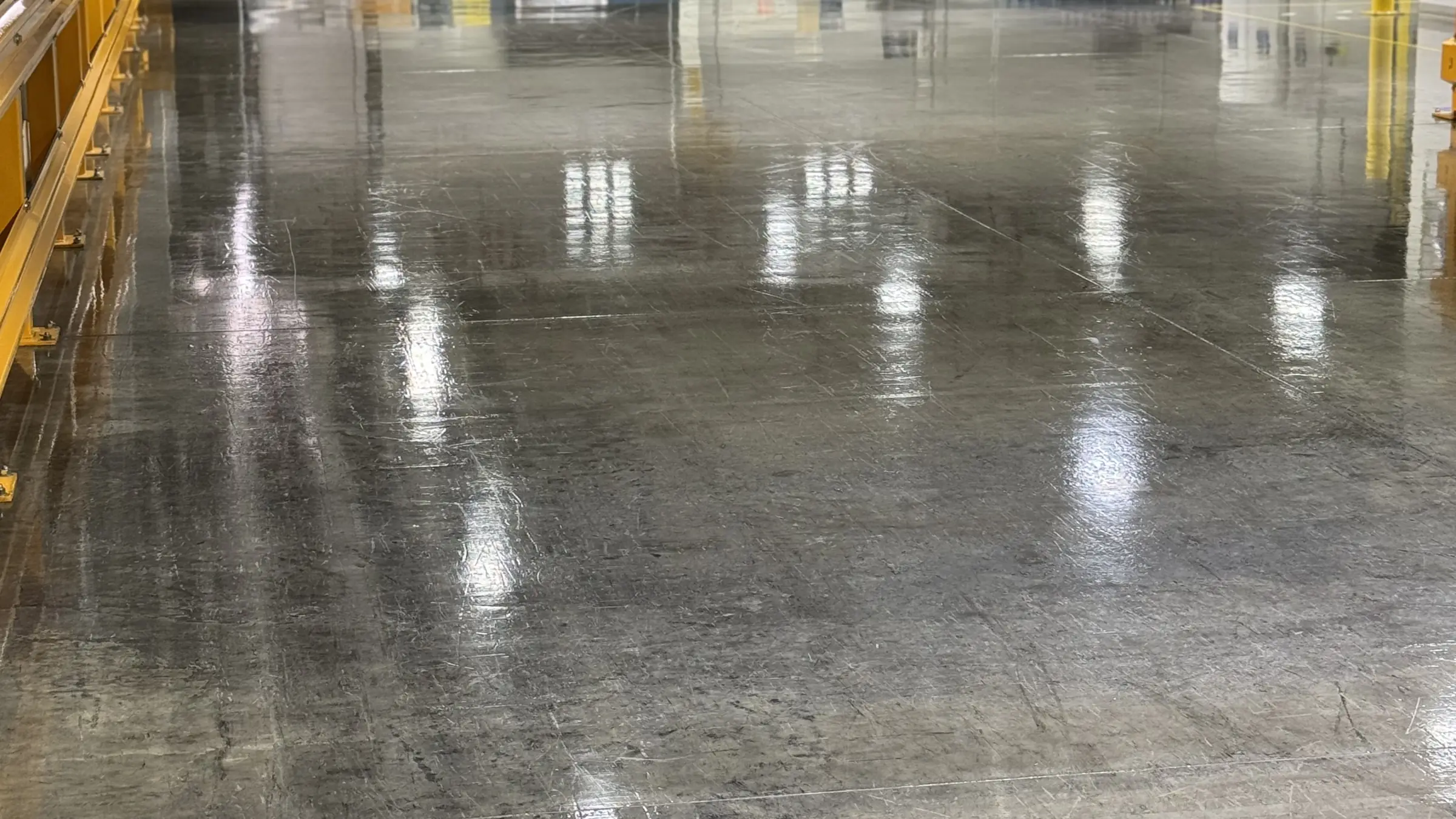
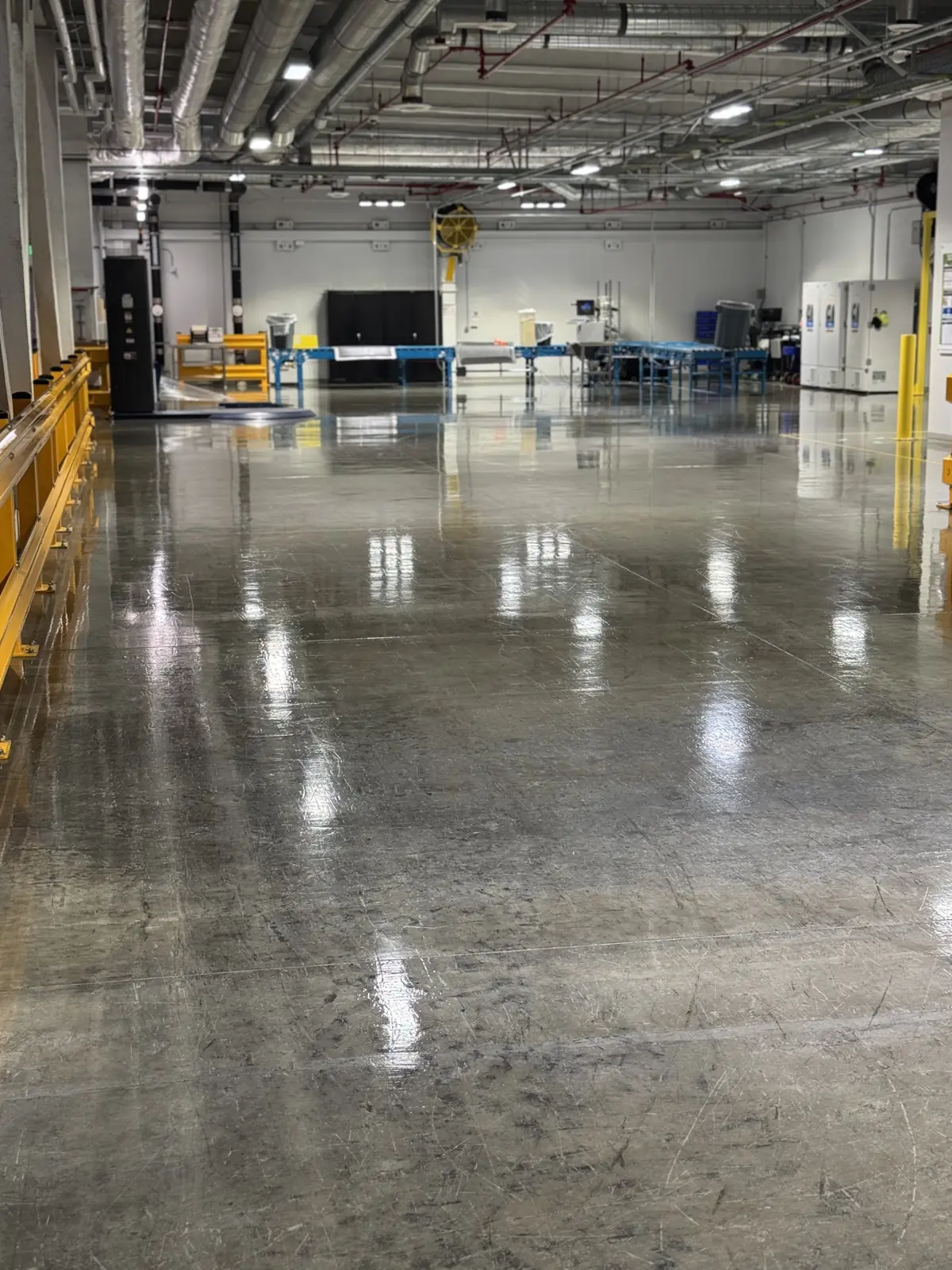
Auto-scrubbing, line-marking preservation and concrete care sized for forklift and pallet-jack traffic rather than office corridors.
- 03
Dock and exterior programs
Dock aprons, grease-loaded approaches and exterior walkways handled on a schedule before they become a slip-and-fall exposure.
- 04
Safety expectations built in
Crews work to the site's PPE, lockout and traffic rules. Your safety program governs the cleaning crew the same as any other contractor.
How does cleaning get scheduled around a multi-shift plant?
Around production, not in front of it — work is placed in the gaps a plant already has: end-of-shift changeovers, planned downtime, second and third shift, and weekends, so the floor crew and the forklift never compete for the same aisle at the same time.
A single-shift office building can be cleaned any time after 6pm. A plant running two or three shifts doesn't have that gap — the schedule has to be built against the site's actual production calendar, changeover windows, and planned maintenance shutdowns, then confirmed with the plant manager before it's fixed.
- Shift-boundary windows — the short gap at a shift change when a line or aisle is briefly idle
- Planned downtime and shutdown weeks, where a full deep-clean and floor program gets done at once
- Weekend and off-peak coverage for dock aprons, breakrooms, and restrooms that see traffic all week
- A defined hold procedure for when production runs long and the cleaning window shifts
What does OSHA require for housekeeping in a warehouse or plant?
29 CFR 1910.22 requires that all places of employment, passageways, storerooms, and walking-working surfaces be kept clean, orderly, and sanitary, that workroom floors be maintained clean and, so far as feasible, dry, and that hazards like spills, leaks, loose boards, or ice be corrected or guarded before anyone walks that surface again.
The rule doesn't specify a cleaning frequency or method — it specifies an outcome: floors clean and dry where feasible, aisles and passageways clear, and any hazard (a spill, ice, a protruding object, corrosion) either fixed immediately or guarded off until it is. Where a wet process is unavoidable, the rule calls for drainage and dry standing places such as false floors, platforms, or mats.
- Aisle and travel-lane clearance checked on every visit, not just the general floor area
- Spill response documented — what was found, where, and when it was cleared
- Dock apron and receiving-area debris cleared on a schedule that matches actual traffic
- PPE and lockout rules followed by the cleaning crew the same as any other contractor on site
Why do warehouse floors need a different program than an office building?
Forklift and pallet-jack traffic wears concrete and coatings in ways foot traffic doesn't — line markings fade, sealers abrade, and dust becomes a slip and equipment-maintenance issue. The floor-care cycle for a distribution center is built around load, traffic pattern, and coating type, not a generic monthly buff.
Floor program considerations: warehouse/plant vs. office
Primary wear source
- Warehouse / manufacturing
- Forklift, pallet jack, pallet drag
- Typical office
- Foot traffic
Line-marking preservation
- Warehouse / manufacturing
- Required — aisle and safety markings
- Typical office
- Not applicable
Dust control
- Warehouse / manufacturing
- High dusting on racking and overhead structure
- Typical office
- Standard vacuum/dust program
Coating choice
- Warehouse / manufacturing
- Sealed or coated concrete, sized for load
- Typical office
- VCT, carpet, or polished flooring
Typical cadence driver
- Warehouse / manufacturing
- Shift schedule and shutdown windows
- Typical office
- Nightly, after business hours
| Factor | Warehouse / manufacturing | Typical office |
|---|---|---|
| Primary wear source | Forklift, pallet jack, pallet drag | Foot traffic |
| Line-marking preservation | Required — aisle and safety markings | Not applicable |
| Dust control | High dusting on racking and overhead structure | Standard vacuum/dust program |
| Coating choice | Sealed or coated concrete, sized for load | VCT, carpet, or polished flooring |
| Typical cadence driver | Shift schedule and shutdown windows | Nightly, after business hours |
Nexara's floor care and stone and concrete polishing programs are scoped to which of these a given facility actually is, rather than applying an office-building default to a distribution floor.
What cleaning does a distribution center's dock area actually need?
Dock aprons collect grease, hydraulic drips, tire residue, and cardboard debris faster than any other surface on site, and a slick apron next to a loading trailer is a fall risk in wet weather. It's handled on a defined schedule — pressure washing and debris clearance — rather than folded into a general exterior sweep.
- Grease and hydraulic-fluid spot treatment at the dock apron, on a schedule tied to trailer volume
- Pressure washing for accumulated grime on approaches and loading areas
- Parking lot sweeping for debris, pallet fragments, and shrink wrap in the yard
- Exterior walkway checks feeding into the same hazard-correction standard OSHA applies indoors
Do breakrooms and restrooms need a different standard on a multi-shift site?
Yes — they see continuous traffic across three shifts instead of one daytime population, so restocking, restroom turnover, and breakroom cleaning are scheduled against shift-change volume rather than a single daily pass timed for an 8-to-5 office.
A restroom serving a single day shift can be cleaned once after close. A restroom serving three shifts is used around the clock, which means supply levels, floor condition, and fixture cleaning need to be checked more than once in a 24-hour cycle — timed to the shift changes where use spikes, not spread evenly across hours nobody's there.
Why does high dusting matter in a manufacturing or warehouse setting?
Overhead structure, racking, ductwork, and light fixtures in a plant or warehouse accumulate dust that ordinary floor-level cleaning never touches, and in some processes that buildup becomes a contamination or combustible-dust concern rather than just an appearance issue.
High dusting reaches racking, beams, ductwork, sprinkler heads, and light fixtures on a cycle set by the facility's own process risk and housekeeping standard — more frequent where dust accumulation intersects a safety or product concern, less frequent in general storage areas.
What facility managers ask us.
Can cleaning happen while the plant is running?
Some of it, yes — restrooms, breakrooms, and office areas can often be serviced during production. Floor work in active traffic lanes and high dusting near live equipment typically waits for a shift-boundary window or planned downtime, scheduled against the plant's actual calendar rather than a fixed clock time.
Who is responsible for OSHA housekeeping compliance — the facility or the cleaning contractor?
The facility. 29 CFR 1910.22 places the housekeeping duty on the employer operating the workplace. A contract cleaner executing a defined schedule for floors, spills, and clear aisles supports that duty; it does not shift the underlying OSHA responsibility away from the facility.
How often should warehouse floors be stripped and refinished?
It depends on coating type, traffic volume, and forklift load — a high-traffic aisle in a distribution center wears faster than a low-traffic storage bay. See how often to strip and wax commercial floors for the factors that set the cycle.
Does a cleaning crew need to follow the plant's safety program?
Yes. Crews working in an active production or warehouse environment follow the site's PPE, lockout, and traffic rules the same as any other contractor granted access — the facility's safety program governs, not the cleaning company's general practice.
What's the difference between floor care and pressure washing for a warehouse?
Floor care covers the interior concrete or coated floor — stripping, sealing, polishing, scrubbing. Pressure washing covers exterior and semi-exterior surfaces: dock aprons, loading approaches, and walkways where grease, tire marks, and weather-driven grime accumulate outside the building envelope.
Is high dusting a fire-safety issue in manufacturing facilities?
In some processes, dust accumulation on overhead structure and equipment can become a combustible-dust or contamination concern, which is a facility-specific risk assessment — Nexara's high dusting schedule is set to match whatever standard the facility's own safety program requires for that risk.
Can one cleaning contract cover multiple shift schedules?
Yes — that's the model for most multi-shift plants. The scope names which areas get serviced at which shift boundary, so the schedule reflects the plant's actual operating pattern instead of a single blanket time slot that doesn't fit a 24-hour operation.
Reviewed by Nexara Facility Services · Updated
Our crews, on site.
No proposal before a walkthrough
Let's walk your facility.
Every scope starts with a walkthrough. We look at the building, ask what is actually going wrong today, and come back with a written scope and a number — not a brochure.