Tour-ready,
every day.
Common areas that hold up to a tenant tour on any given day.
- 01Common areas held to a tour standard
- 02Multi-site consistency
- 03Tenant-responsive scheduling
- 04Glass, carpet and floors under one contract
For a property manager, cleaning is a tenant-retention line item. Lobbies, restrooms and glass are what a renewing tenant notices and what a prospective one judges. Nexara keeps those surfaces consistently presentable rather than presentable on inspection day.
Four things we hold to.
- 01
Common areas held to a tour standard
Lobbies, elevators, corridors and restrooms maintained to a standard that does not require advance notice to meet.
- 02
Multi-site consistency
One scope, one standard and one point of contact across a portfolio, instead of a different experience at every property.
- 03
Tenant-responsive scheduling
Work performed outside tenant business hours, with day-porter coverage where the building needs a visible presence.
- 04
Glass, carpet and floors under one contract
The specialized work is handled by the same company that handles the nightly scope — no coordinating three vendors for one building.
Why does office cleaning quality affect tenant retention?
A lobby, elevator, or restroom that looks worn is the first thing a renewing tenant notices at lease-renewal time and the first thing a prospective tenant judges on a tour — cleaning quality is one of the few building conditions a tenant experiences directly, every day, without a maintenance ticket involved.
Property managers rarely get direct feedback on HVAC performance or roof condition — tenants don't see those systems. They do see the lobby floor, the restroom, and the elevator cab, every single day. Consistently maintained common areas are one of the few building-condition signals a tenant experiences firsthand, which makes them a disproportionately visible line item at renewal time.
Day porter or night janitorial — which does an office building need?
Most multi-tenant buildings need both: night janitorial handles the full nightly scope after tenants leave, while a day porter provides a visible daytime presence for spot response — a spill, an overflowing bin, a restroom issue between the nightly service and the next morning.
Day porter vs. night janitorial
When
- Day porter
- During business hours
- Night janitorial
- After tenants leave
Primary job
- Day porter
- Spot response, visible presence, lobby upkeep
- Night janitorial
- Full nightly scope — vacuum, trash, restrooms, surfaces
Tenant interaction
- Day porter
- Visible, sometimes direct contact
- Night janitorial
- None — building is empty
Best fit
- Day porter
- High-traffic lobbies, buildings with public-facing tenants
- Night janitorial
- Every occupied office building
| Day porter | Night janitorial | |
|---|---|---|
| When | During business hours | After tenants leave |
| Primary job | Spot response, visible presence, lobby upkeep | Full nightly scope — vacuum, trash, restrooms, surfaces |
| Tenant interaction | Visible, sometimes direct contact | None — building is empty |
| Best fit | High-traffic lobbies, buildings with public-facing tenants | Every occupied office building |
See day porter services and janitorial services, or day porter vs. night janitorial for a fuller comparison of which combination fits a given building's tenant mix and traffic pattern.
How does a portfolio owner get consistent cleaning across multiple properties?
One written scope and one inspection standard applied identically across every property in the portfolio, with a single point of contact — rather than each building manager independently sourcing and supervising its own cleaning vendor to its own unwritten expectations.
A portfolio with a different cleaning vendor — or a different unwritten standard — at each property produces a different tenant experience at each property, which shows up in renewal conversations as inconsistency the owner can't easily explain. A single scope, one escalation path, and one contact across the portfolio removes that variable.
How is cleaning scheduled around tenant business hours?
The bulk of the nightly scope happens outside stated tenant hours, with any daytime work — glass, spot cleaning, day-porter coverage — scheduled to avoid disrupting active tenant space, confirmed against each tenant's actual hours rather than a generic 9-to-5 assumption.
- Nightly scope (vacuum, trash, restrooms, surfaces) after the latest tenant's stated closing time
- Daytime glass and spot work timed to avoid a tenant's customer-facing hours where applicable
- Day-porter presence scheduled for the hours a building actually needs a visible response, not a flat shift
- Access and key-holder logistics confirmed per tenant before the schedule is finalized
What counts as a common area in a multi-tenant building, and who's responsible?
Common areas are the shared spaces every tenant uses but no single tenant leases — lobbies, elevators, corridors, shared restrooms, and stairwells — and cleaning them is typically the property manager's responsibility under the building's operating budget, distinct from tenant-suite cleaning, which may or may not be included.
- Lobbies and building entries
- Elevators and elevator lobbies on each floor
- Shared corridors and stairwells
- Shared restrooms outside tenant suites
- Loading docks and shared mechanical-access areas
Whether tenant-suite interior cleaning is bundled into the same contract or handled separately is a lease and budget decision each property manager makes — Nexara's scope names exactly which areas are covered under which contract so there's no ambiguity about who's responsible for what.
Why put glass, carpet, and floor care under the same contract as nightly janitorial?
Coordinating separate vendors for nightly cleaning, glass, carpet, and floor care means separate schedules, separate access requests, and separate points of contact for a single building — under one contract, the same company that handles the nightly scope also handles the specialized work, with one schedule and one contact.
- Window cleaning for lobby glass, storefronts, and exterior windows
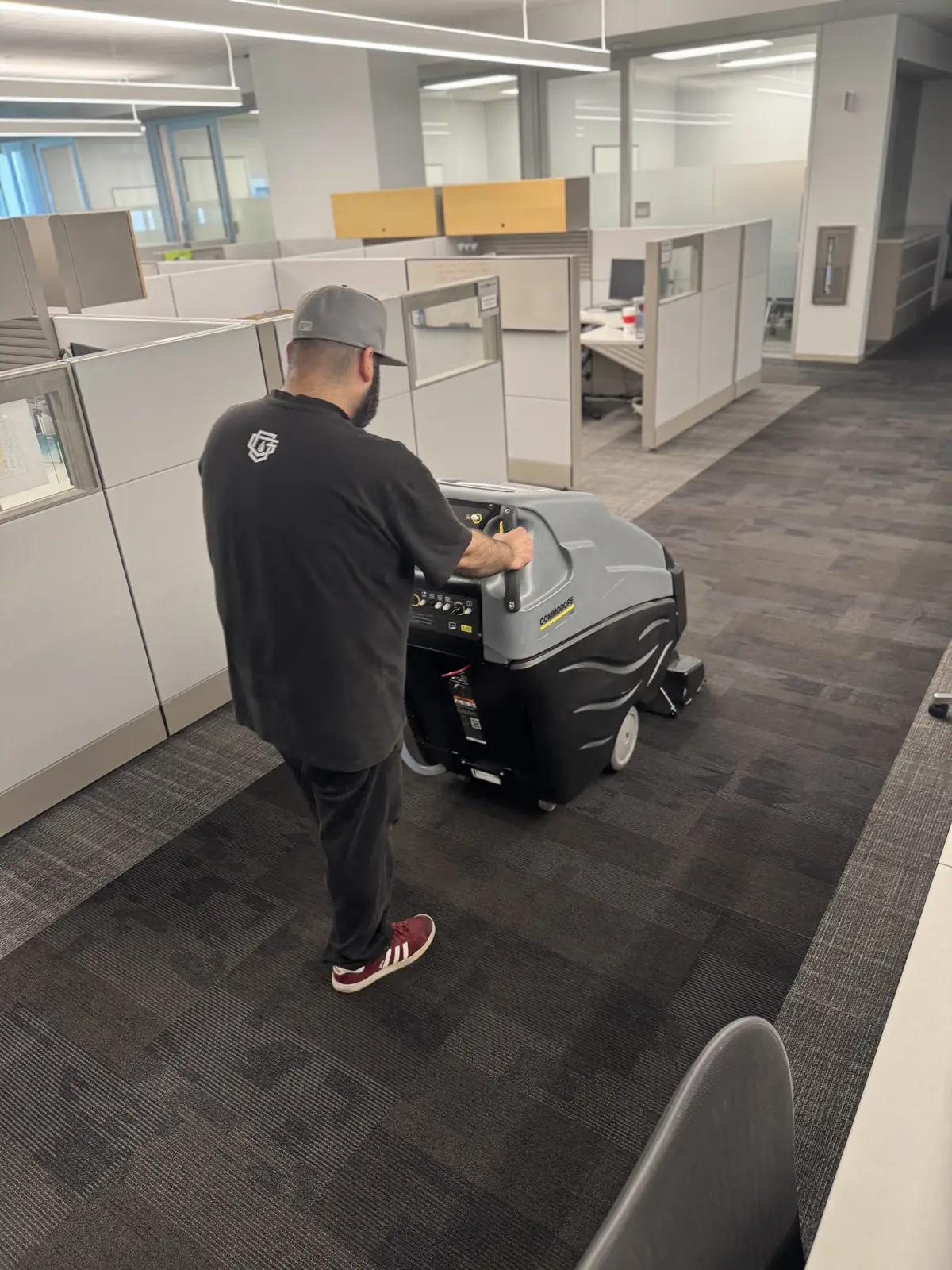
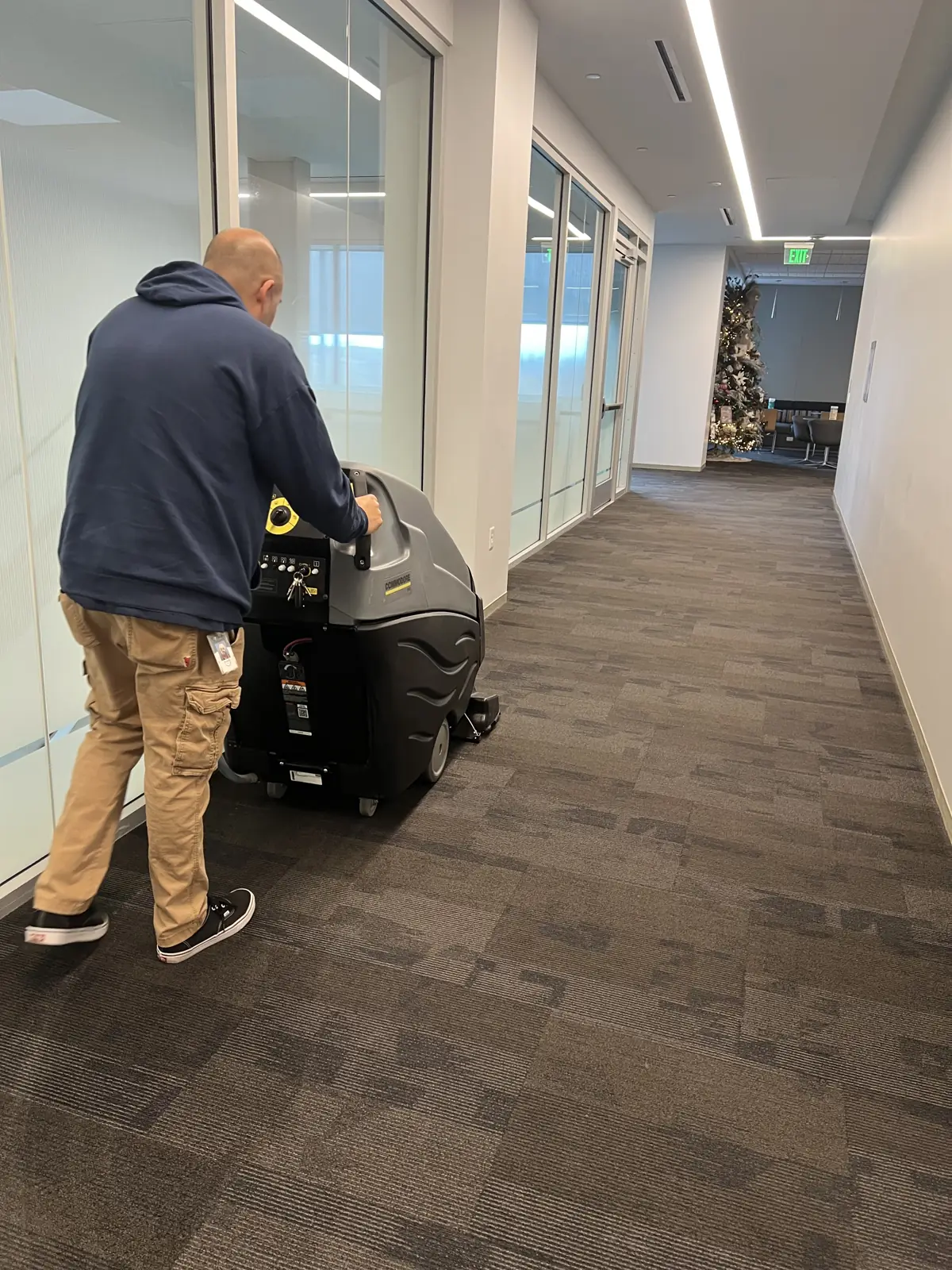
- Carpet cleaning for common-area and tenant-suite carpet on a fixed cycle
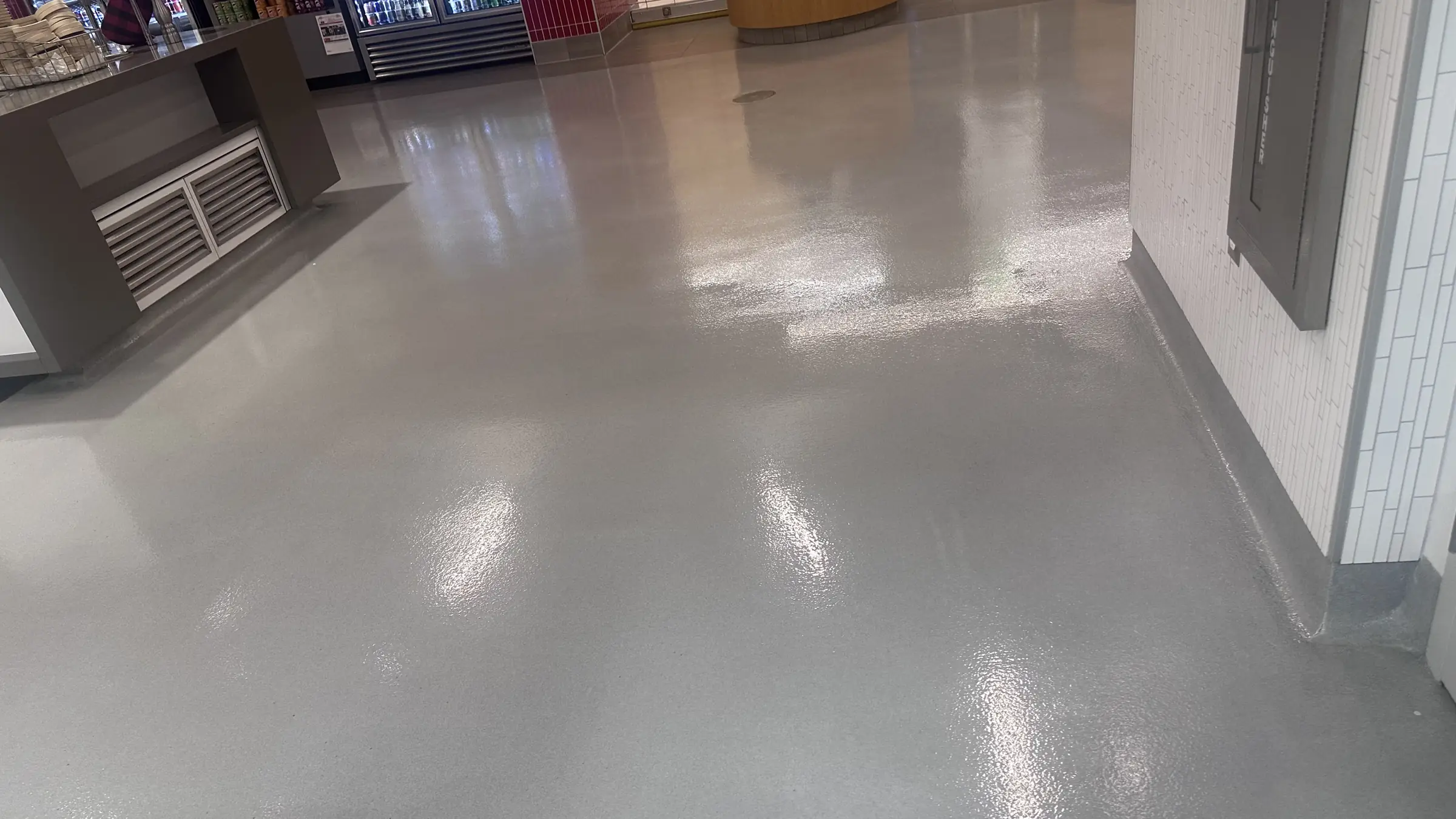
- Floor care for lobby stone, VCT corridors, and any hard-floor system in the building
- One scope document naming frequency and standard for each, instead of three separate vendor contracts
How does a property manager know the building is actually being maintained to standard?
Through a written inspection standard tied to the scope — specific areas checked on a set cadence, against a specific standard, with the result documented — rather than relying on tenant complaints as the only signal that something slipped.
A scope without an inspection standard behind it is a promise with no way to verify it. Nexara's accounts pair the written scope with a defined inspection routine — walk-throughs against the same checklist every time, results the property manager can review — so a service gap surfaces before a tenant has to report it.
- A fixed inspection checklist tied directly to the scope's named areas and frequencies
- A defined cadence for walk-throughs, separate from the nightly service itself
- A record the property manager can pull without asking the vendor to reconstruct it
- A direct escalation path when an inspection finds something below standard
What facility managers ask us.
How often should a lobby be deep-cleaned versus maintained nightly?
Nightly maintenance (vacuum, trash, glass spot-cleaning, surface wipe-down) happens every service night. Deep cleaning — full floor care, detailed glass, high dusting — runs on a separate, less frequent cycle defined in the scope, timed so the lobby never visibly degrades between deep-clean visits.
Does a day porter replace night janitorial, or work alongside it?
Alongside it, in almost every case. A day porter provides visible, spot-response coverage during business hours; night janitorial performs the full scope — vacuuming, trash, restrooms — after tenants leave. Very few occupied office buildings run on day-porter coverage alone.
Can cleaning be scoped differently for different tenants in the same building?
Common areas are typically one scope for the whole building. Tenant-suite interior cleaning can be scoped per tenant if the property manager wants that flexibility — the written scope should name which areas fall under which arrangement so there's no confusion at billing or inspection time.
What's included in a typical multi-tenant office cleaning contract?
Common-area nightly janitorial, restroom servicing, trash removal, and often glass and floor-care cycles are standard. Tenant-suite interior cleaning, carpet extraction frequency, and day-porter coverage are usually itemized separately since not every building or tenant needs the same combination.
How does a property manager handle cleaning across multiple buildings with one vendor?
Through a single written scope and inspection standard applied at every property, with one point of contact for the whole portfolio rather than a separate arrangement per building. That's how Nexara scopes a multi-site account across the Inland Empire and surrounding counties.
Who pays for common-area cleaning in a multi-tenant lease?
That's set by the lease structure, typically through the building's operating expenses passed through to tenants — a legal and accounting question for the property manager and their lease documents, not something a cleaning vendor's scope determines.
Reviewed by Nexara Facility Services · Updated
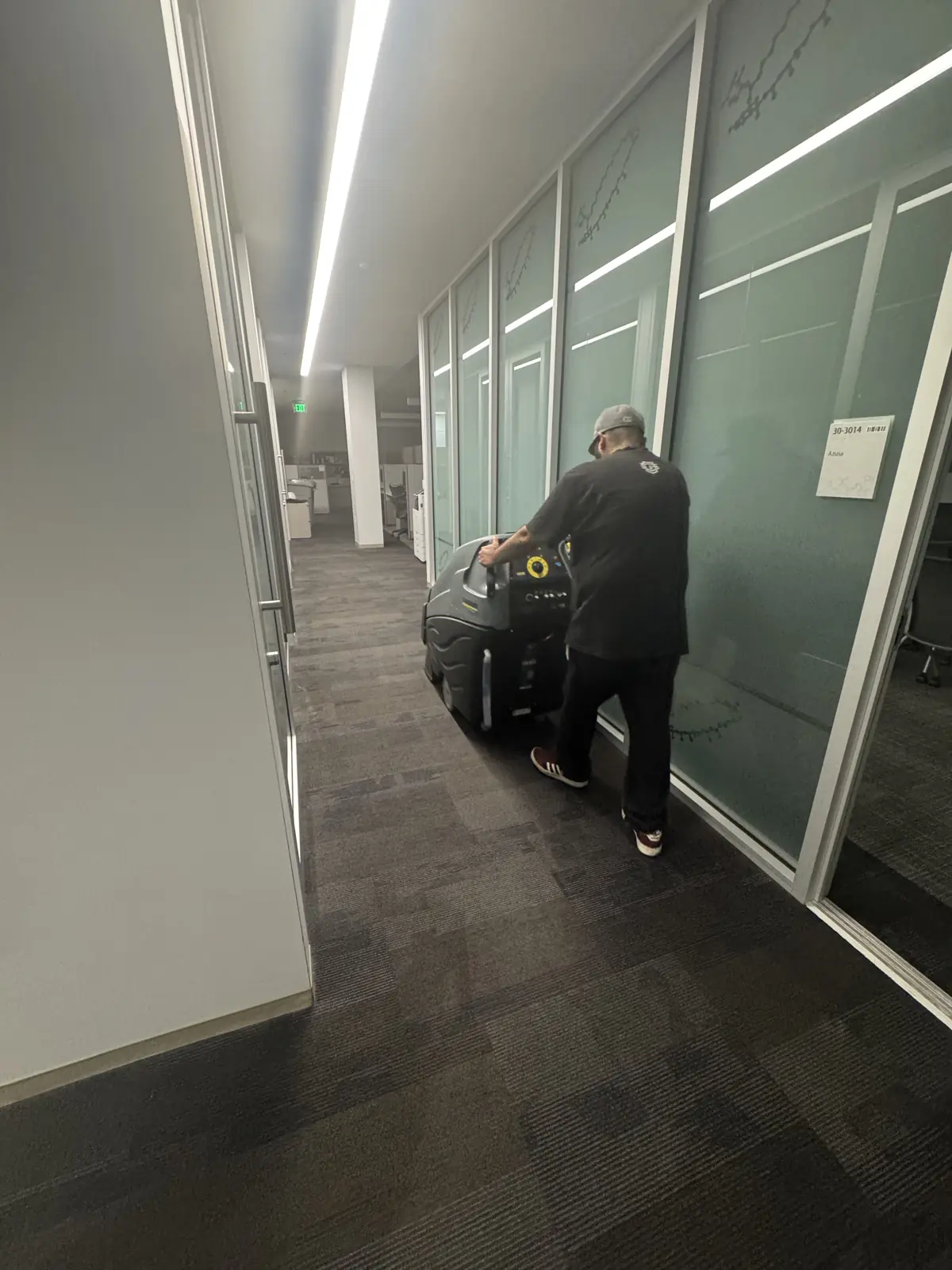
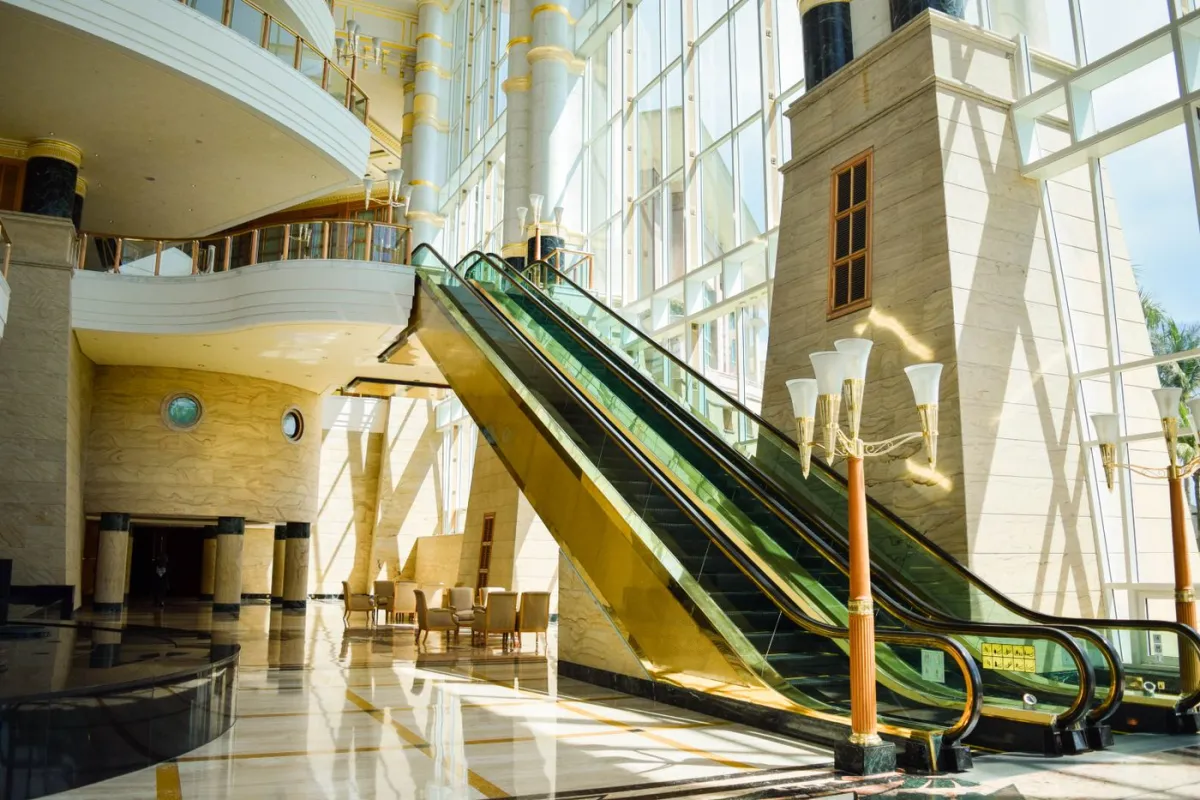
Our crews, on site.
No proposal before a walkthrough
Let's walk your facility.
Every scope starts with a walkthrough. We look at the building, ask what is actually going wrong today, and come back with a written scope and a number — not a brochure.