Built for the lab,
and the building around it.
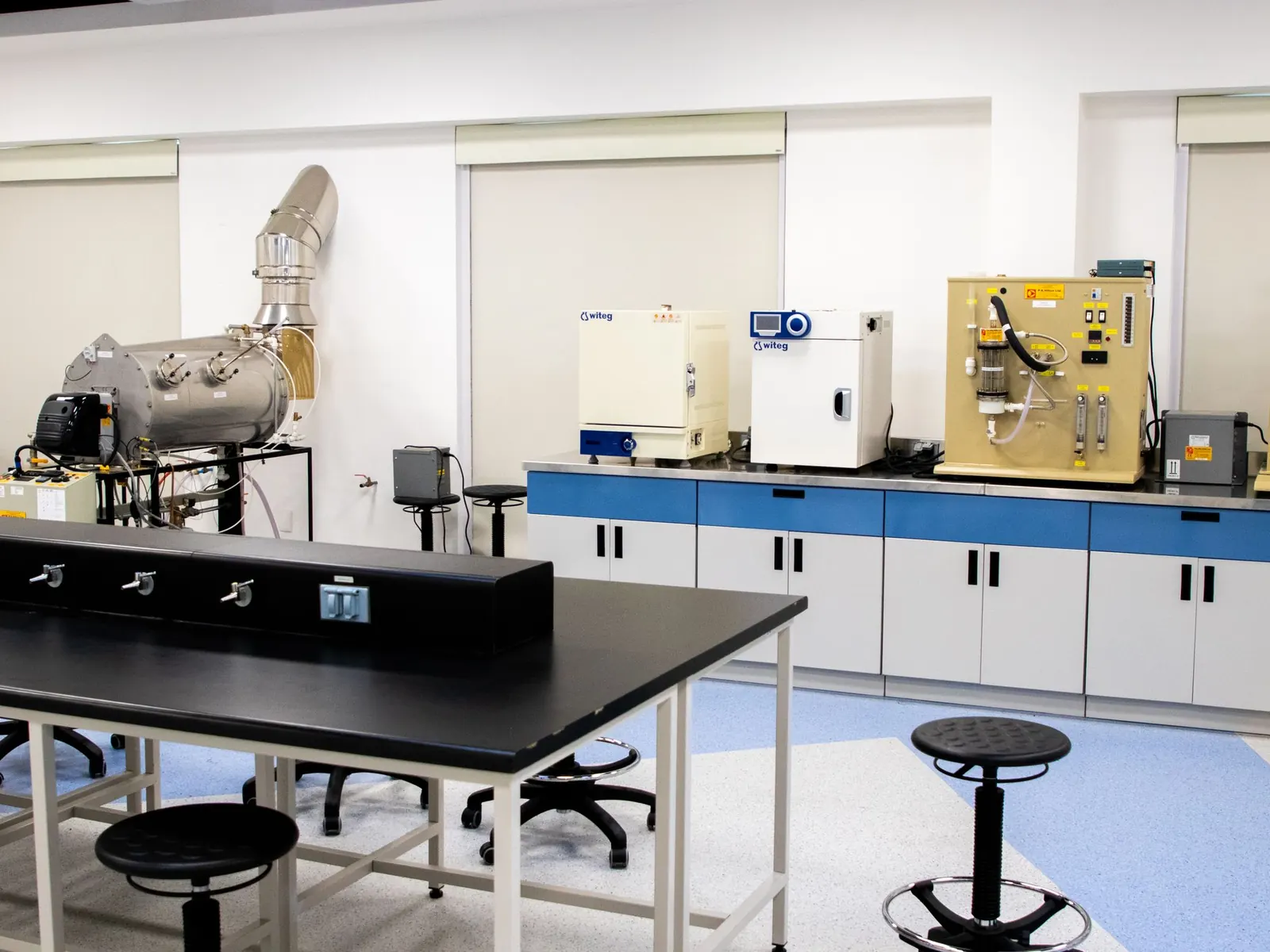
Lab-aware crews, controlled materials and documented procedures for life-science facilities.
- 01Zoned scopes
- 02Chemistry and materials by zone
- 03Records that support your QA
- 04Trained, consistent crews
A life-science building is two buildings in one: laboratories and controlled spaces with their own rules, and the offices, corridors and shared areas around them. The cleaning program has to know exactly where one ends and the other begins — who may enter, what chemistry is allowed, and what gets documented.
Four things we hold to.
- 01
Zoned scopes
Lab, controlled, support and office areas scoped separately, with entry, gowning and material rules defined for each.
- 02
Chemistry and materials by zone
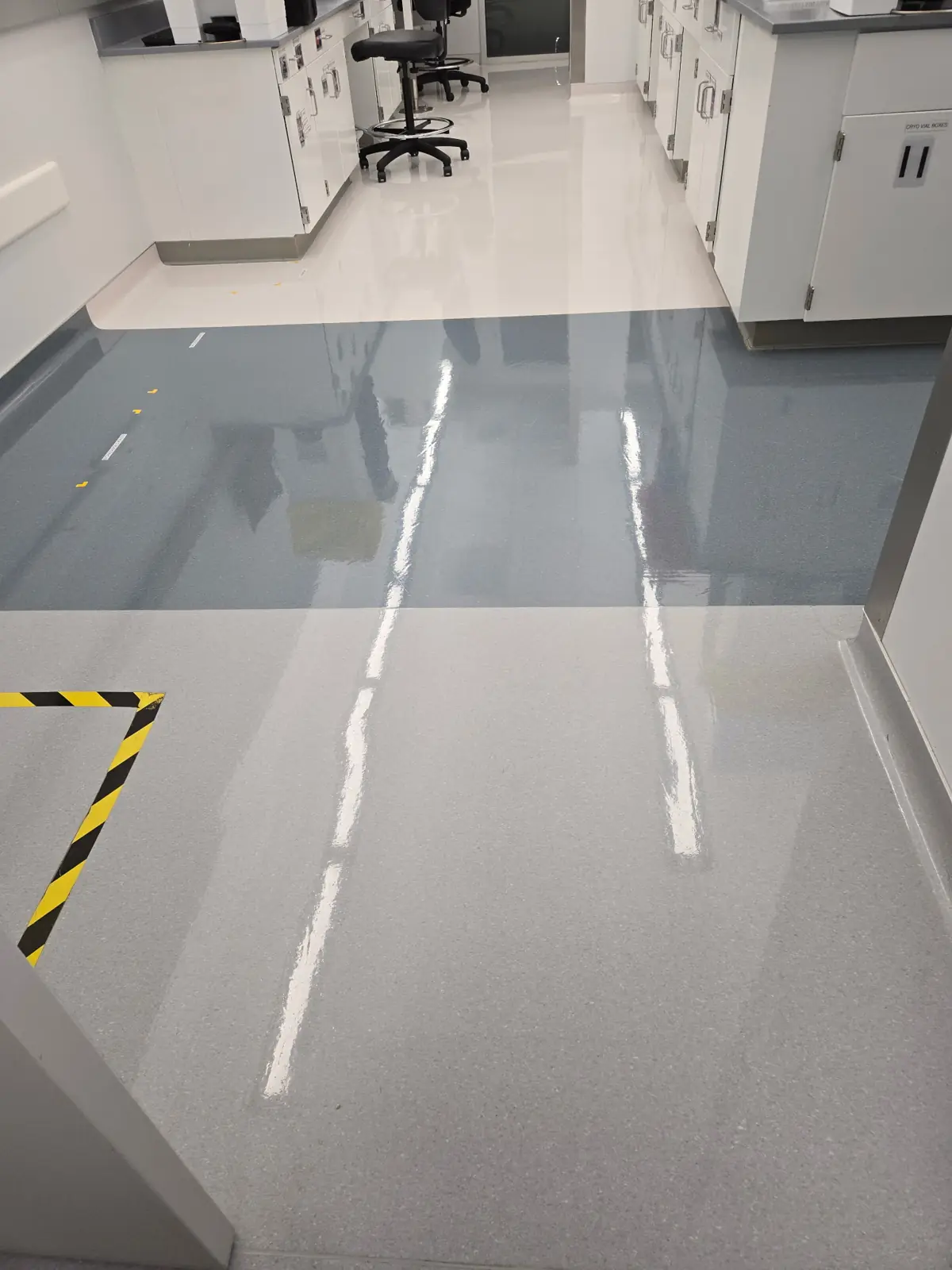
Approved agents and dedicated tools per zone, so cleaning never introduces a residue or cross-contamination problem.
- 03
Records that support your QA
Completion logs and inspection records in a format your quality team can review instead of reconstruct.
- 04
Trained, consistent crews
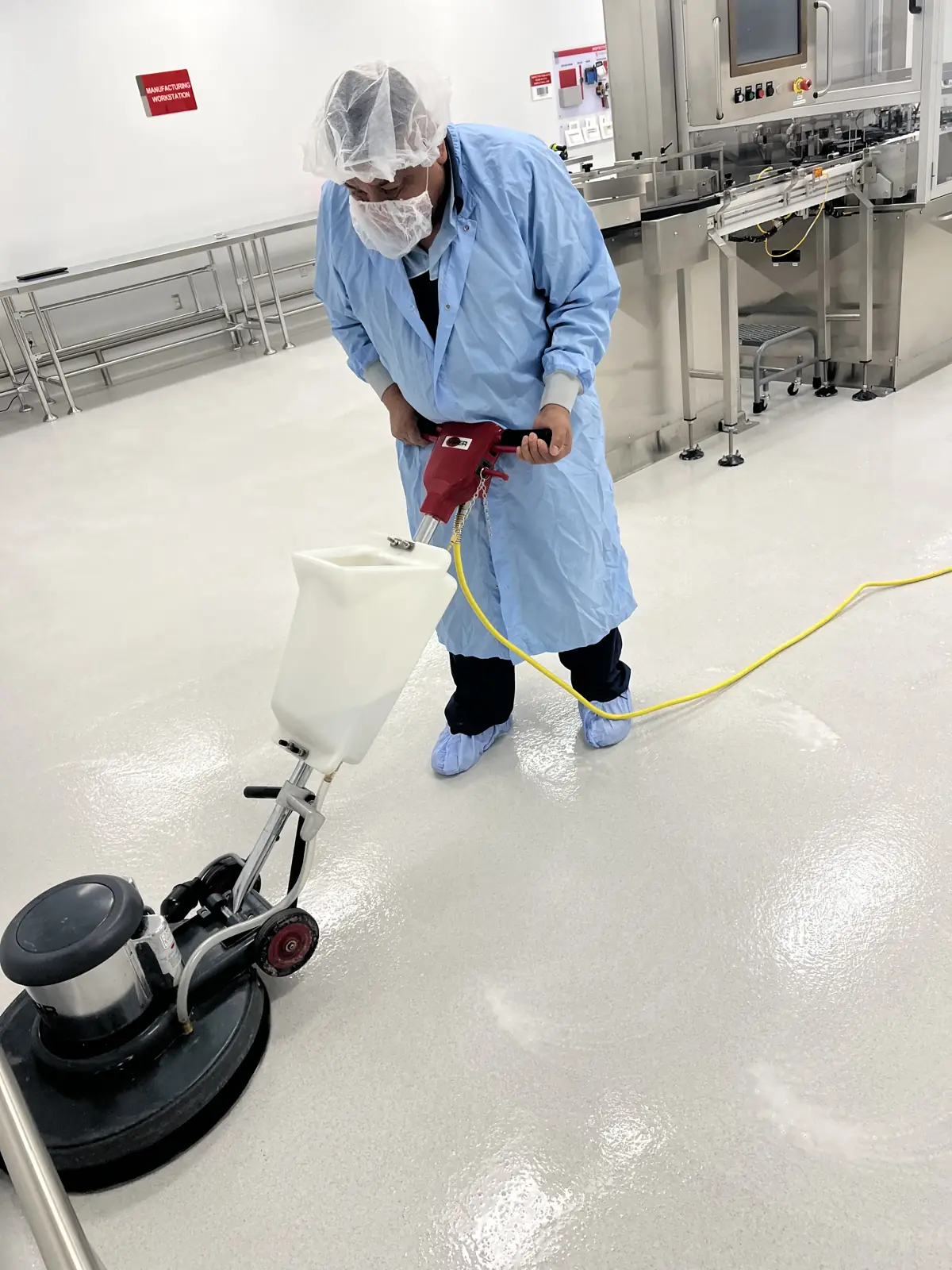
The same trained people on your site, briefed on your procedures, instead of a rotating crew learning the rules on the job.
Why is a life-science building treated as two different cleaning environments?
A life-science facility combines laboratories and controlled areas — with their own entry, gowning, and chemistry rules — alongside standard offices, corridors, and shared spaces that function like any commercial building. The cleaning program has to define exactly where one environment ends and the other begins.
Treating the whole building as a single office scope misses the controlled-area rules; treating the whole building as a lab scope over-engineers the general office space. A zoned scope names which areas fall under which rule set — lab and controlled space on one standard, office and support space on the janitorial standard used for commercial and office buildings — before a single visit is scheduled. Cleaning vs. sanitizing vs. disinfecting covers the chemistry vocabulary those zones use.
What do biosafety levels mean, and does Nexara clean BSL-rated labs?
Biosafety Levels (BSL-1 through BSL-4), defined in the CDC/NIH Biosafety in Microbiological and Biomedical Laboratories (BMBL) manual, describe escalating combinations of lab practice, safety equipment, and facility design tied to the risk of the agents handled. Nexara does not clean BSL-3 or BSL-4 containment spaces — that work sits with the facility's own staff or a specialized vendor.
Biosafety levels, general characteristics
BSL-1
- General risk profile
- Agents not known to consistently cause disease
- Typical containment features
- Open bench work, basic hygiene practice
BSL-2
- General risk profile
- Moderate hazard agents
- Typical containment features
- Biosafety cabinet for aerosol work, restricted access, self-closing doors
BSL-3
- General risk profile
- Serious or lethal disease via inhalation
- Typical containment features
- Work in biosafety cabinets, self-closing double-door entry, directional airflow
BSL-4
- General risk profile
- High individual risk, life-threatening disease, often no treatment available
- Typical containment features
- Class III cabinets or positive-pressure suits, isolated building or zone
| Level | General risk profile | Typical containment features |
|---|---|---|
| BSL-1 | Agents not known to consistently cause disease | Open bench work, basic hygiene practice |
| BSL-2 | Moderate hazard agents | Biosafety cabinet for aerosol work, restricted access, self-closing doors |
| BSL-3 | Serious or lethal disease via inhalation | Work in biosafety cabinets, self-closing double-door entry, directional airflow |
| BSL-4 | High individual risk, life-threatening disease, often no treatment available | Class III cabinets or positive-pressure suits, isolated building or zone |
What does 'cleanroom classification' mean for a facility services scope?
ISO 14644-1 classifies the air cleanliness of cleanrooms and clean zones by the concentration of airborne particles, on a scale from ISO Class 1 (cleanest) to ISO Class 9 — the tighter the class, the fewer particles the space, and everything and everyone entering it, can introduce.
The classification itself is a facilities-engineering and air-handling question, driven by HEPA filtration and airflow design — not something a cleaning vendor sets. What a cleaning program controls, within whatever class a room is rated to, is the materials, procedure, and gowning discipline used inside it, so cleaning activity itself doesn't introduce particles the room's own air system is designed to exclude.
- Low-shedding, classified-room-rated wipes and mop systems where the zone requires them
- Gowning and entry procedure specific to the room's classification, confirmed with the facility's own protocol
- No cross-use of tools between a classified area and general space
- Cleaning scheduled around the room's own airflow recovery time, not just staff availability
How does a zoned cleaning scope work in a life-science building?
The scope names each zone — lab, controlled/classified space, vivarium-adjacent support, and general office — separately, with its own entry rule, chemistry list, and material set, so a single written document governs the whole building without applying one zone's rules to another.
Typical zone breakdown in a life-science facility
General office and corridors
- Entry/gowning
- None beyond standard access
- Chemistry
- Standard commercial chemistry
General lab support (non-controlled)
- Entry/gowning
- Facility-defined PPE
- Chemistry
- Facility-approved, lab-compatible agents
Classified / controlled space
- Entry/gowning
- Facility-defined gowning and entry log
- Chemistry
- Low-particulate, facility-approved only
Vivarium-adjacent support
- Entry/gowning
- Facility EHS protocol, case by case
- Chemistry
- Facility-specified only — extreme caution
| Zone | Entry/gowning | Chemistry |
|---|---|---|
| General office and corridors | None beyond standard access | Standard commercial chemistry |
| General lab support (non-controlled) | Facility-defined PPE | Facility-approved, lab-compatible agents |
| Classified / controlled space | Facility-defined gowning and entry log | Low-particulate, facility-approved only |
| Vivarium-adjacent support | Facility EHS protocol, case by case | Facility-specified only — extreme caution |
Does Nexara clean vivarium or animal-housing areas?
Not as a general practice. Vivarium and animal-housing spaces carry their own biosafety, allergen, and IACUC-governed protocols that are typically handled by the facility's own trained animal-care or EHS staff — any work Nexara performs adjacent to a vivarium is limited to clearly defined support space and confirmed in writing with the facility's EHS team first.
This is a caution, not a capability claim: a vivarium's cleaning and decontamination protocol is specialized and site-specific. Where a facility wants a support area serviced, that scope is written narrowly and reviewed with the facility's EHS contact before it's added to the account — it's never assumed as part of a general life-science scope.
How does Nexara coordinate with a facility's EHS team?
Through a written scope reviewed and approved by the facility's EHS or lab-safety contact before work begins, plus the same escalation path used across every Nexara account — anything observed outside the defined scope reaches a named contact immediately rather than being resolved by the crew's own judgment.
- 01
Scope review with EHS
Zone boundaries, chemistry, and entry rules are confirmed with the facility's EHS or lab-safety contact before the account starts.
- 02
Crew briefing per zone
Crews are briefed on the specific zones they're assigned to, against the facility's own rules, not a generic lab-cleaning standard.
- 03
Records for QA review
Completion records are kept in a format the facility's own quality or EHS team can review directly.
- 04
Direct escalation
Anything observed outside the written scope — an unexpected substance, an unlocked controlled door, damage — goes straight to the named EHS or facilities contact as soon as it's found.
What facility managers ask us.
Does Nexara clean inside active laboratories?
Nexara's scope covers general lab support space, lab floors and common areas outside active containment work, and the offices and corridors around a life-science facility, confirmed with the facility's EHS team. Active containment work inside classified or BSL-3/4 spaces is outside Nexara's scope and sits with the facility's own trained staff or a specialized vendor.
What is ISO 14644-1 and does it affect the cleaning schedule?
ISO 14644-1 is the standard that classifies cleanroom air by airborne particle concentration, with a lower class number meaning a cleaner room (ISO 5 is far cleaner than ISO 8). It's set by the facility's engineering and air-handling design, not by the cleaning vendor — but it does drive which materials, gowning, and procedures a cleaning program uses inside a classified space.
Are San Diego and Orange County life-science facilities part of Nexara's coverage?
Nexara's coverage includes San Diego County and Orange County alongside the Inland Empire home base. Confirm a specific facility's location against current coverage before assuming service — coverage can be scoped per account.
What's the difference between a BSL rating and an ISO cleanroom class?
BSL (biosafety level) rates the biological risk of the organisms handled and the containment practices required around them. ISO cleanroom class rates air cleanliness by particle count. A facility can have both ratings simultaneously for the same room, governing different things — biological containment and particulate control.
Does a life-science cleaning scope include chemical residue control?
It should. The chemistry and materials used in lab-adjacent zones are chosen from the facility's approved list to avoid leaving a residue that could interfere with its work, and dedicated tools are used per zone so nothing carries over from a general area into a controlled one. See GMP and regulated facilities for the same control in production space.
Who decides which zones a cleaning crew can enter?
The facility's own EHS or lab-safety team, in the written scope confirmed before the account starts. Zone boundaries aren't a cleaning-company judgment call — they're set by the facility and documented so every crew member knows exactly which zones they're cleared for.
- CDC and NIH — Biosafety in Microbiological and Biomedical Laboratories (BMBL), 6th edition, Section IV
- ISO 14644-1:2015 abstract (via AFNOR) — classification of air cleanliness by particle concentration
- U.S. FDA — Guidance for Industry: Sterile Drug Products Produced by Aseptic Processing (2004), Table 1
Reviewed by Nexara Facility Services · Updated
Our crews, on site.
No proposal before a walkthrough
Let's walk your facility.
Every scope starts with a walkthrough. We look at the building, ask what is actually going wrong today, and come back with a written scope and a number — not a brochure.