Clean above
eye level.
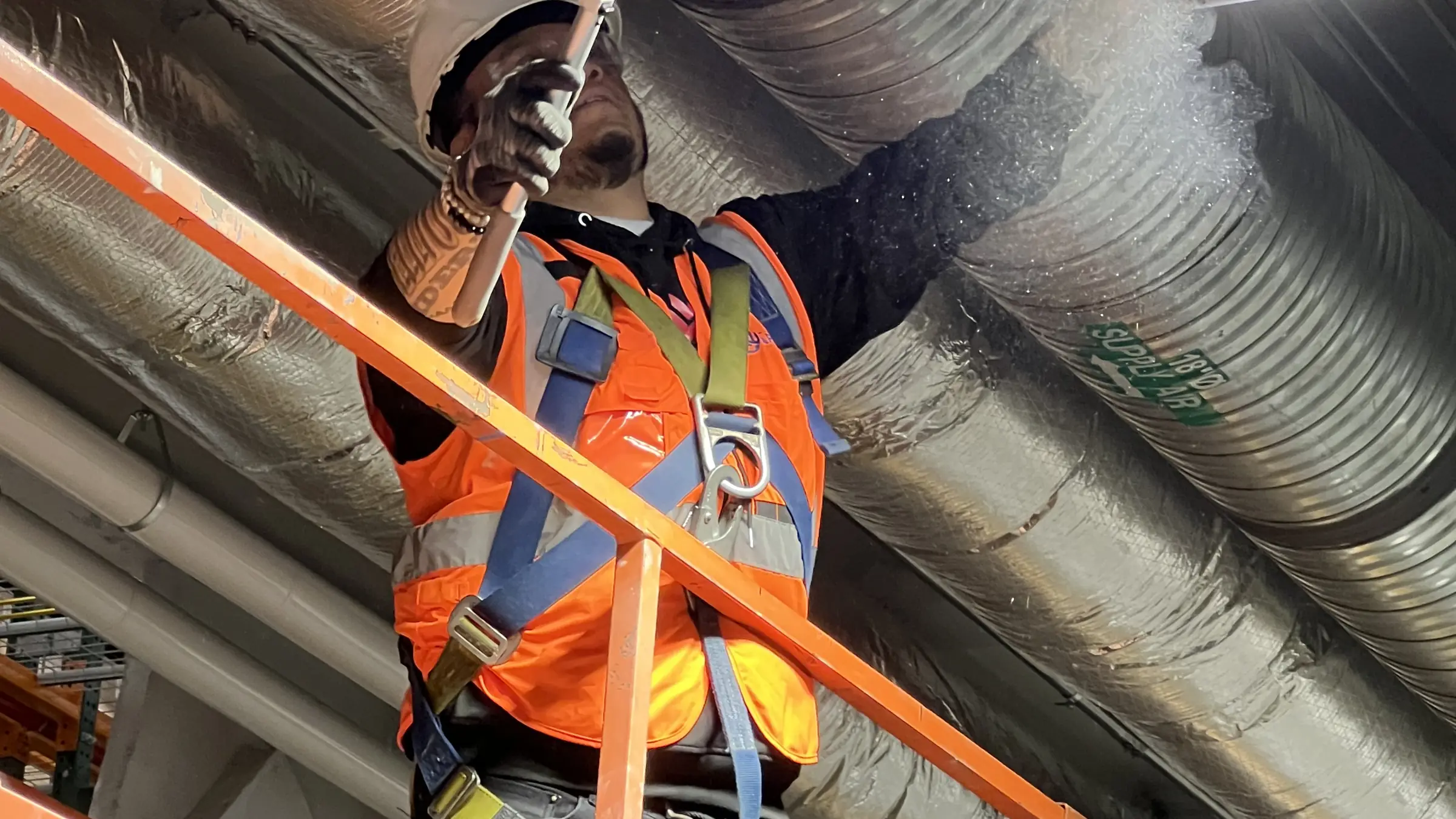
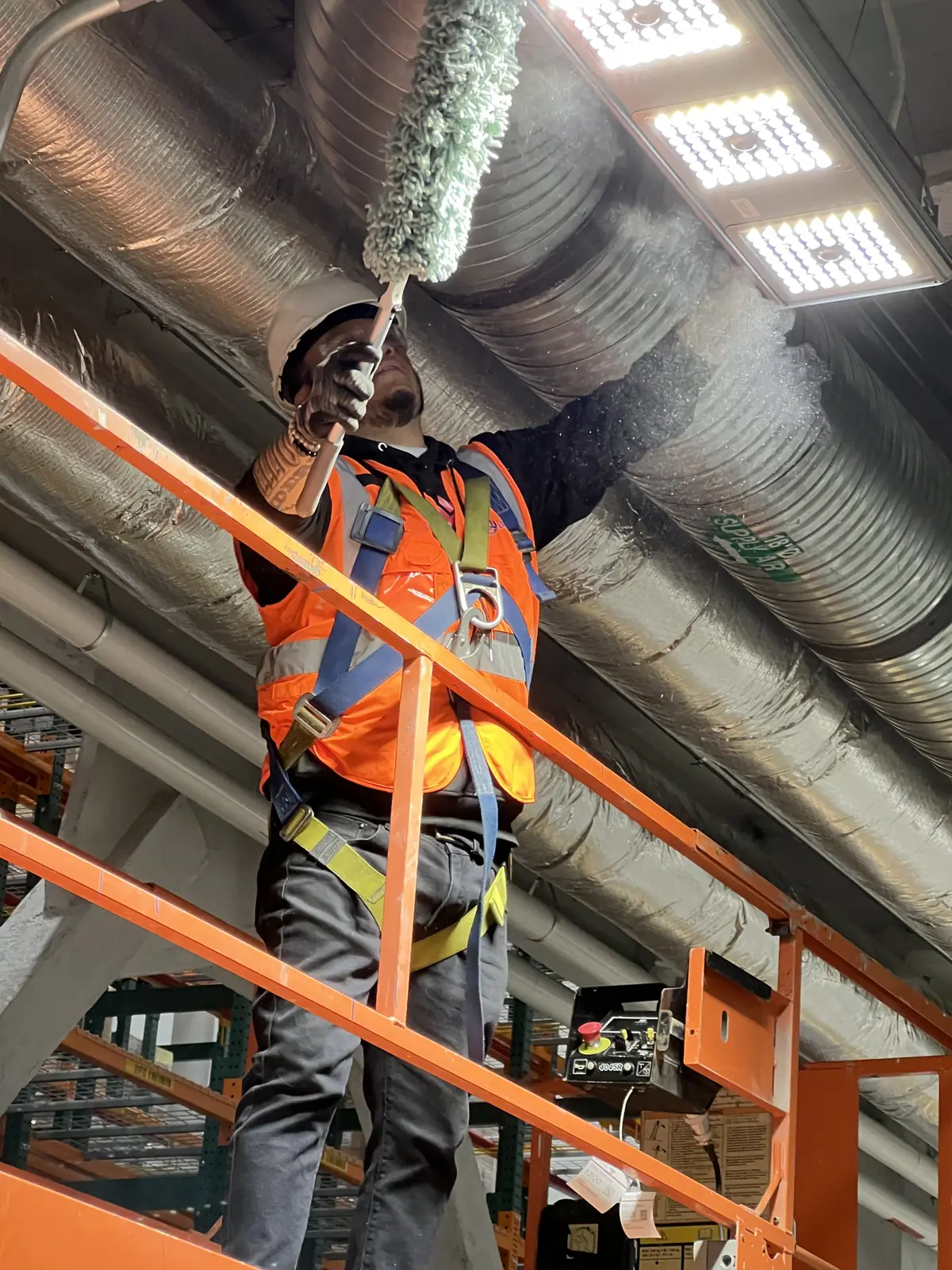
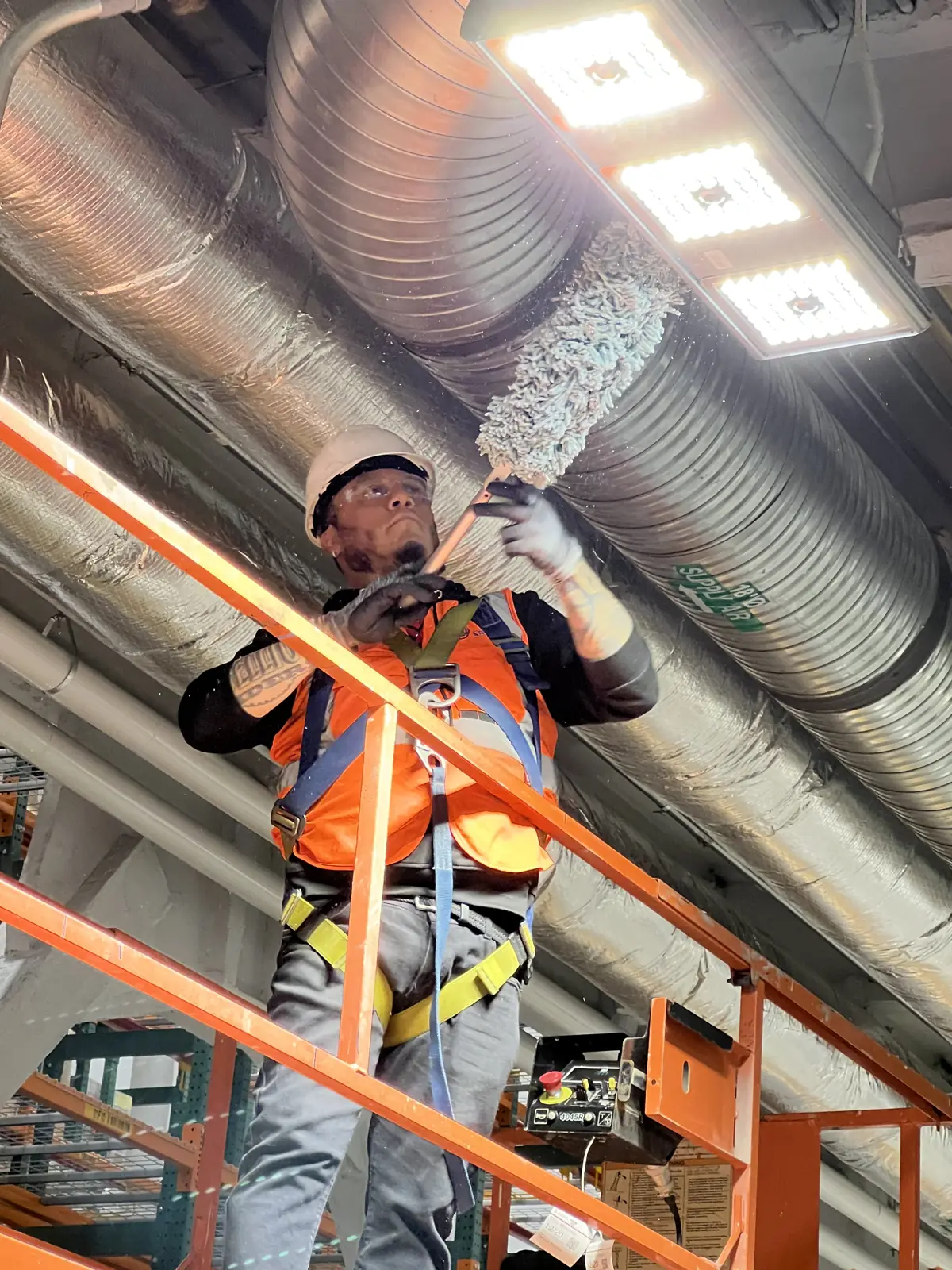
Rafters, ductwork, light fixtures, racking tops and overhead structure — cleaned on a schedule instead of ignored until an audit.
- Rafters, trusses, beams and roof deck
- Ductwork, pipe runs and cable trays
- Light fixtures and suspended signage
- Tops of racking, doors, frames and equipment
Dust that settles on overhead structure does not stay there. It falls onto product, equipment and freshly cleaned floors, it collects around light fixtures and ductwork, and in a food, GMP or life-science environment it is an inspection finding waiting to happen. High dusting brings the overhead zone into the cleaning program.
What's included.
- 01
Rafters, trusses, beams and roof deck
- 02
Ductwork, pipe runs and cable trays
- 03
Light fixtures and suspended signage
- 04
Tops of racking, doors, frames and equipment
- 05
HEPA vacuum and controlled wiping methods matched to the environment
- 06
Scheduled around production, with the floor below protected
Why does dust on rafters and ductwork matter if no one can see it?
Overhead dust doesn't stay overhead — it falls onto product, equipment and freshly cleaned floors below, and in food-adjacent, GMP or life-science environments it's the kind of finding an auditor photographs. In warehouses and plants, accumulated dust on horizontal surfaces is also a housekeeping hazard, not just an appearance issue.
OSHA's guidance on combustible dust is direct on this point: dust deposits should not be allowed to accumulate on surfaces, and routine housekeeping should be in place to keep dust from building up, because an accumulated layer can become an explosion hazard once it's dispersed into the air by a disturbance or a primary event OSHA — Hazard Communication Guidance for Combustible Dusts, OSHA 3371-08. Rafters, ductwork and racking tops are exactly the horizontal surfaces where that accumulation happens unseen.
Most cleaning contracts are written around what's at eye level and below — floors, counters, fixtures — because that's what shows up on a walkthrough. Overhead structure gets left out by default unless someone specifically writes it into the scope, which is why it tends to go years without attention in facilities that otherwise run a tight cleaning program.
Where does overhead dust actually collect?
Rafters, trusses and roof deck; ductwork, pipe runs and cable trays; light fixtures and suspended signage; and the tops of racking, door frames and equipment. Any horizontal or near-horizontal surface above eye level collects dust that a standard floor-and-surface clean never touches.
- Rafters, trusses, beams and roof deck
- Ductwork, pipe runs and cable trays
- Light fixtures and suspended signage
- Tops of racking, doors, frames and equipment
Airflow patterns matter here too. HVAC returns and open bay doors pull dust upward and across a space in ways that don't match where dust settles at floor level, so a real inspection walks the overhead zone with a light and a lift rather than assuming the dustiest floor areas point to the dustiest rafters.
How is high dusting actually done without contaminating the space below?
HEPA vacuum extraction pulls dust up rather than blowing it into the air, and lift-assisted or pole-reach methods bring crews to the surface instead of relying on compressed air or dry dusting that just redistributes particles downward. Product and equipment below get protected before work starts.
High dusting method by situation
HEPA vacuum extraction
- Used for
- Ductwork, racking tops, fine dust
- Why
- Captures dust instead of dispersing it into the air
Lift-assisted access
- Used for
- High rafters, roof deck, tall racking
- Why
- Reaches structure that pole tools can't
Controlled wiping / microfiber
- Used for
- Light fixtures, ledges, signage
- Why
- Removes settled dust without scattering it
Below-surface protection
- Used for
- Any zone with exposed product or equipment
- Why
- Covers or clears the area before overhead work starts
| Method | Used for | Why |
|---|---|---|
| HEPA vacuum extraction | Ductwork, racking tops, fine dust | Captures dust instead of dispersing it into the air |
| Lift-assisted access | High rafters, roof deck, tall racking | Reaches structure that pole tools can't |
| Controlled wiping / microfiber | Light fixtures, ledges, signage | Removes settled dust without scattering it |
| Below-surface protection | Any zone with exposed product or equipment | Covers or clears the area before overhead work starts |
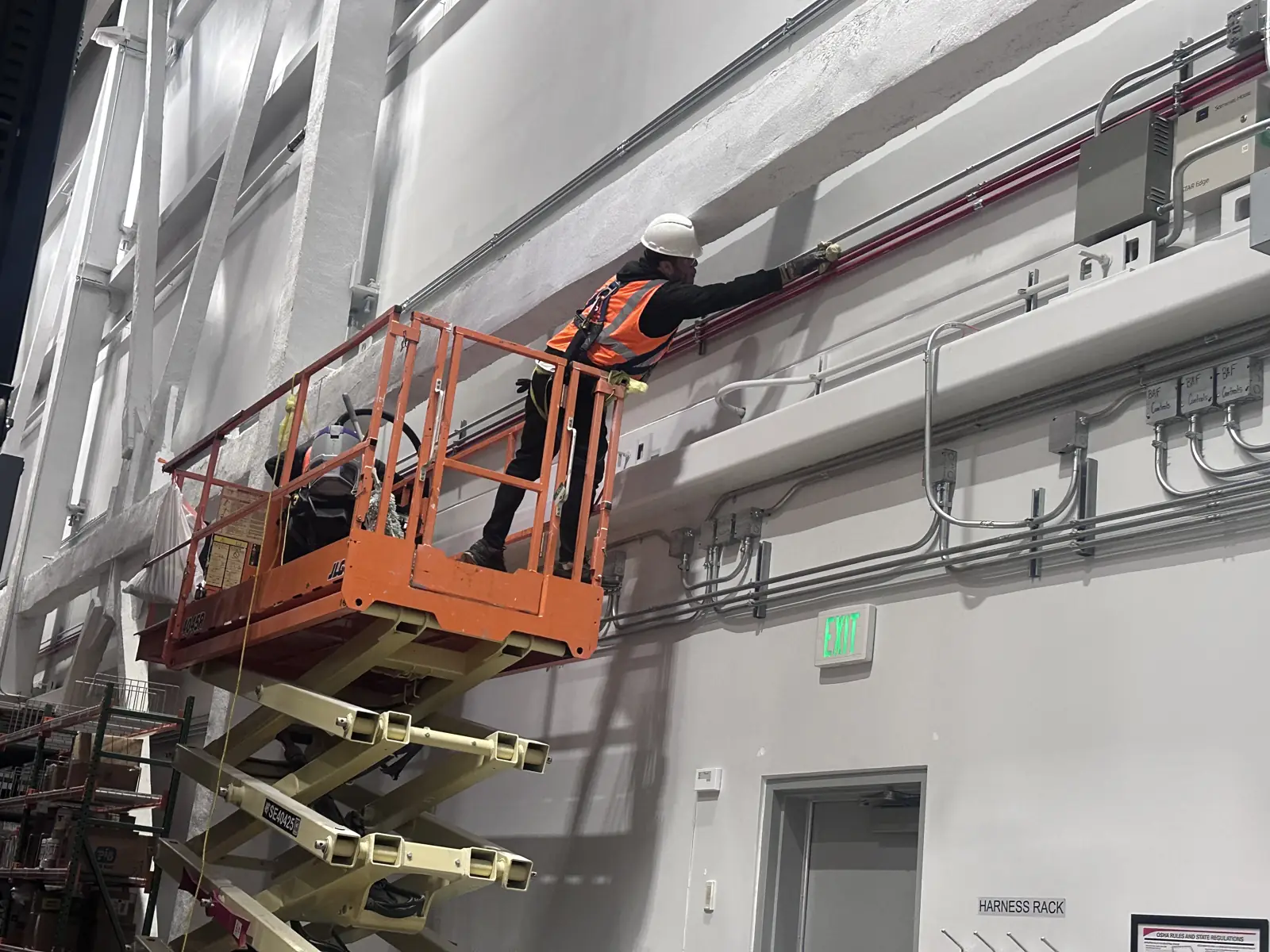
Crews working overhead in an occupied production space also stage the job around fall protection and lift access rather than treating it as routine ladder work — a rafter or high-bay light fixture is a different access problem than a shelf, and the plan for reaching it gets written before the lift shows up on site.
Why is high dusting treated differently in GMP and food-adjacent facilities?
In a GMP, food-adjacent or life-science environment, overhead dust is a contamination and audit risk, not just a housekeeping one — it can fall onto product zones, and an inspector who spots it overhead assumes the rest of the cleaning program is equally inconsistent.
That's the case Nexara makes to plant managers who've never had a dedicated overhead program: an audit finding on a light fixture or a duct run reflects on the whole facility's cleaning discipline, even if the production floor is spotless. GMP and regulated facilities get overhead dusting scheduled and documented as part of the same program that covers the production floor, and the GMP cleaning requirements guide covers the records side.
How often should high dusting happen?
Frequency is set by how fast dust builds up and what sits below it. The starting points Nexara uses when writing a scope: warehouses quarterly to semi-annually, manufacturing and food-adjacent production quarterly or tighter, and GMP or life-science sites on whatever cadence their documented cleaning program specifies.
- Warehouses and distribution centers — quarterly to semi-annually
- Manufacturing and food-adjacent production — quarterly, tighter if the process generates particulate
- GMP and life-science facilities — set by the site's documented cleaning program
- Schools, gyms and high-ceiling public spaces — annually to semi-annually
High dusting is usually scheduled around a shutdown window or production pause so overhead work doesn't drop dust onto an active line — the same scheduling discipline used for post-construction cleaning phases.
Which facilities need a dedicated high dusting program?
Warehouses and distribution centers, manufacturing and food-adjacent production, GMP and life-science facilities, and schools, gyms or other high-ceiling public spaces all accumulate overhead dust that a standard cleaning contract typically excludes by default, whether or not it's ever been flagged before.
- Warehouses and distribution centers
- Manufacturing and food-adjacent production
- GMP and life-science facilities
- Schools, gyms and high-ceiling public spaces
Can high dusting be added to an existing janitorial contract without renegotiating everything?
Yes. High dusting is typically scoped as a separate, lower-frequency line item that runs alongside a standard janitorial program — same site, same point of contact, but its own schedule and documentation rather than a change to the nightly cleaning agreement.
For a plant or warehouse in Rancho Cucamonga or San Bernardino County that's never had an overhead program, the usual starting point is a walk-through assessment: how much overhead structure exists, what condition it's in, and what a realistic first cleaning and ongoing frequency looks like before anything is scheduled. A first cleaning after years of neglect is often heavier than any cleaning after that — the backlog gets worked off once, then the ongoing schedule keeps it from building back up.
What facility managers ask us.
Is high dusting different from regular janitorial dusting?
Yes. Standard janitorial dusting covers reachable surfaces — desks, sills, shelving at normal height. High dusting specifically targets overhead structure: rafters, ductwork, light fixtures and racking tops, using lift access or pole-reach tools that a nightly clean doesn't include.
Will high dusting disrupt production?
It's scheduled around production, typically during a shutdown window, off-shift, or a planned pause, with the floor and any exposed product below protected before work starts. The goal is dust removed, not redistributed onto an active line.
How do you clean dust off equipment without using compressed air?
HEPA vacuum extraction is the standard method — it captures dust as it's removed instead of blowing it into the air, where it can resettle or become a combustible hazard. Controlled wiping handles fixtures and ledges that don't need vacuum access.
Do you need special equipment to reach high rafters?
Yes — lift-assisted access for high structure and extended-pole tools for mid-height surfaces. The method is matched to ceiling height and what's directly below, since a lift isn't always practical over racking or active equipment.
Is high dusting required by law?
There's no single mandate naming 'high dusting,' but OSHA's guidance on combustible dust calls for routine housekeeping to keep dust from accumulating on surfaces, and FDA's drug GMP rule, 21 CFR 211.56, requires buildings to be maintained in a clean and sanitary condition. Whether it's 'required' depends on the facility's regulatory context.
Can high dusting be added to an existing janitorial contract?
Yes. It's typically scoped as a separate, less-frequent line item alongside a standard janitorial program — same vendor, different frequency and method, tracked on its own schedule rather than folded into nightly cleaning.
What happens if overhead dust is never addressed?
It accumulates indefinitely, eventually falling onto product, equipment or freshly cleaned floors, and it becomes the finding an auditor or inspector points to first. In combustible-dust environments, unaddressed accumulation is also a recognized housekeeping hazard.
Reviewed by Nexara Facility Services · Updated
Our crews, on site.
Other services.
- Janitorial & Commercial CleaningJanitorial
- Floor Care & Hard Surface MaintenanceFloor Care
- Concrete & Natural Stone PolishingStone Polishing
- Commercial Carpet CleaningCarpet Cleaning
- Commercial Window CleaningWindow Cleaning
- Pressure Washing & Exterior CleaningPressure Washing
- Day Porter ServicesDay Porter
- Parking Lot SweepingLot Sweeping
- Post-Construction CleanupConstruction Cleanup
No proposal before a walkthrough
Let's walk your facility.
Every scope starts with a walkthrough. We look at the building, ask what is actually going wrong today, and come back with a written scope and a number — not a brochure.