Someone on site
while you're open.
Continuous daytime coverage for restrooms, common areas, trash and spills — the building stays right between night cleanings.
- Restroom checks, restocking and touch-up cleaning on a set round
- Lobby, entry, elevator and common-area upkeep
- Trash and recycling removal during operating hours
- Spill response and immediate cleanup
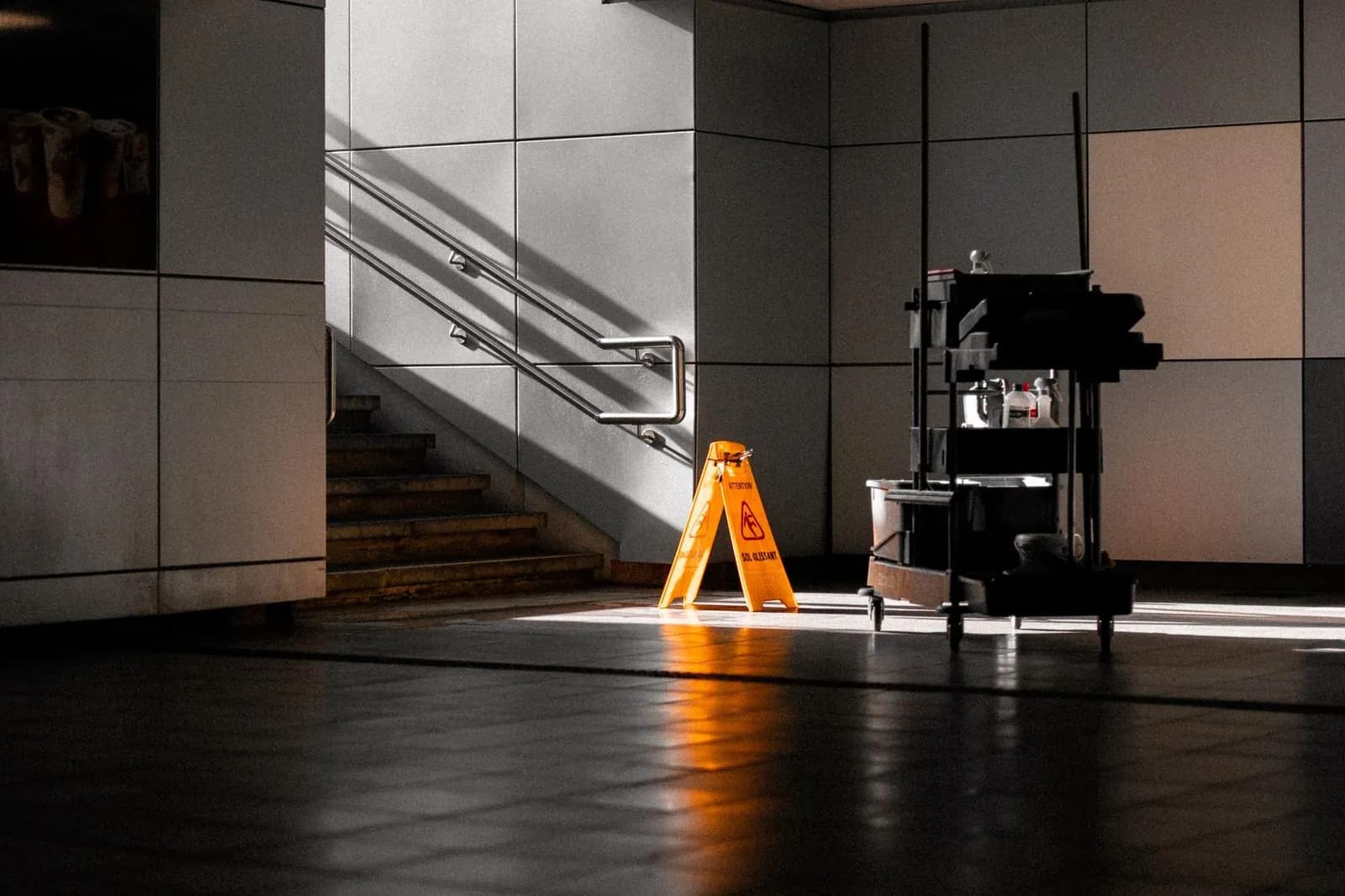
Night cleaning resets a building. Day porter coverage keeps it that way while people are using it. A porter restocks restrooms before they run out, catches the spill before it becomes a slip, and keeps lobbies and break rooms presentable through the busiest hours of the day.
What's included.
- 01
Restroom checks, restocking and touch-up cleaning on a set round
- 02
Lobby, entry, elevator and common-area upkeep
- 03
Trash and recycling removal during operating hours
- 04
Spill response and immediate cleanup
- 05
Break room, kitchen and conference room resets
- 06
A visible, uniformed service presence during business hours
What does a day porter actually do during a shift?
A day porter works a set round through the day: checking and restocking restrooms, wiping high-touch surfaces, clearing trash, resetting break rooms and conference rooms, and responding immediately to spills — the visible, in-the-moment upkeep that a nightly clean can't cover.
- Restroom checks, restocking and touch-up cleaning on a set round
- High-touch surface wipe-downs — door handles, elevator buttons, handrails, light switches
- Lobby, entry and common-area upkeep between visitors
- Trash and recycling removal during operating hours
- Spill response and immediate cleanup
- Break room, kitchen and conference room resets between uses
- A visible, identifiable presence during business hours
The round itself is written before the porter's first shift, not improvised on site. A round names the stops, the order they're checked in and roughly how long each one takes, so coverage doesn't drift depending on who's working that day. For a multi-tenant building, the round also has to account for tenant move-ins, deliveries and after-hours events without leaving core areas uncovered in between.
Is it better to add a day porter or extend night janitorial hours?
They solve different problems. Extra night hours deep-clean more of the building once; a day porter keeps the building presentable while people are actively using it. A high-traffic lobby or a restroom serving hundreds of daily visitors needs the second, not more of the first.
Day porter vs. added night hours
Who sees the result
- Day porter
- Anyone in the building during the day
- Added night hours
- Only whoever arrives before the next mess starts
Best for
- Day porter
- High-traffic restrooms, lobbies, spills, tours
- Added night hours
- Deeper floor care, detail work, low-traffic zones
Response to a spill or overflow
- Day porter
- During the shift, once it's reported or found on a round
- Added night hours
- Waits for the next scheduled visit
Visible service presence
- Day porter
- Yes — on site
- Added night hours
- No — work happens after hours
| Question | Day porter | Added night hours |
|---|---|---|
| Who sees the result | Anyone in the building during the day | Only whoever arrives before the next mess starts |
| Best for | High-traffic restrooms, lobbies, spills, tours | Deeper floor care, detail work, low-traffic zones |
| Response to a spill or overflow | During the shift, once it's reported or found on a round | Waits for the next scheduled visit |
| Visible service presence | Yes — on site | No — work happens after hours |
Many properties run both: night janitorial resets the building, and a day porter holds that reset through the busiest hours. A full comparison of when each model fits is in Day Porter vs. Night Janitorial. The mistake to avoid is treating them as the same line item with different hours — a porter's value is presence and response speed during occupied hours, not a smaller version of the nightly clean moved earlier in the day.
How often should restrooms be checked during the day?
The check interval for each restroom is set in the written scope from its actual traffic: a busy lobby restroom is checked several times a shift, a back-office restroom far less. Whatever the interval, the checkpoint pattern — check, restock, touch up, log — stays the same on every round.
- 01
Check
Visual inspection of fixtures, floors, supply levels and odor on a set interval.
- 02
Restock
Paper, soap and any consumables replenished before they run out, not after.
- 03
Touch up
Counters, fixtures and high-touch points wiped on the same round.
- 04
Log
The round is recorded — time, initials, any issue flagged — so there's a record if a complaint comes in.
A restroom serving a busy lobby, a manufacturing floor break area, or a school corridor between classes needs a shorter interval than one tucked in a low-traffic back office. The interval is set per restroom, not applied uniformly across a building, because traffic volume rarely is uniform either.
What counts as a high-touch surface, and how often should it get wiped?
Door handles, elevator buttons, handrails, light switches, counters and shared equipment are high-touch surfaces — the ones the most people touch in a day. CDC guidance lists these among high-touch surfaces and says high-traffic spaces may warrant more frequent cleaning.
The CDC's facility-cleaning guidance names door handles, stair rails, elevator buttons, touchpads, restroom fixtures, counters and desks as high-touch surfaces, and says that in a high-traffic space you may choose to clean more frequently or disinfect in addition to cleaning CDC — When and How to Clean and Disinfect a Facility. A day porter's round is built around exactly that logic — the surfaces most people touch get hit every pass, not once a night.
Which buildings benefit most from day porter coverage?
Multi-tenant office and medical buildings, manufacturing plants running daytime shifts, schools and district offices during the school day, and any property that needs to be tour-ready benefit most — anywhere restrooms, lobbies or common areas see continuous daytime use.
- Multi-tenant office and medical buildings
- Manufacturing plants with daytime shifts
- Schools and district offices during the school day
- Property managers who need a building ready for tours
How is a day porter scoped — full-time, part-time or shared across a building?
It depends on square footage, traffic and restroom count. A single-tenant building might need one porter for a defined shift; a multi-tenant property often shares porter coverage across common areas while each tenant's suite stays on the standard janitorial schedule.
This gets defined in the written scope, not guessed at: hours of coverage, the round frequency, and which areas the porter owns versus what stays on the nightly janitorial schedule. A medical office building in Ontario or Riverside with steady patient traffic may justify a full shift; a smaller multi-tenant building may only need coverage over the lunch peak. Commercial and office buildings are where this question comes up most.
Does day porter coverage change during peak occupancy or a scheduled event?
Yes. A building hosting a tour, an inspection, an all-hands event or a seasonal traffic spike typically gets additional porter rounds added for that window, rather than running the standard daily schedule through a day that's obviously going to see heavier use.
A property manager who knows a lease-up tour or a district visit is coming can request the extra rounds in advance so the building is ready before the visitors arrive, not scrambling once they're already in the lobby. This is the same forward-scheduling logic used across Nexara's other scheduled services — the program flexes around a known event instead of treating every day identically.
- Facility tours and prospective-tenant walkthroughs
- Health, safety or licensing inspections
- All-hands meetings, open houses or community events
- Seasonal traffic increases — enrollment periods, holiday retail, plant ramp-ups
What facility managers ask us.
Does a day porter replace night janitorial cleaning?
No. A day porter maintains the building during operating hours — restrooms, spills, common areas — while night janitorial handles the deeper reset: floors, trash removal building-wide, detail cleaning. Most facilities run both on separate schedules.
Can a day porter handle a spill immediately, or does it wait for a scheduled round?
Responding during the shift is the point of the role. A porter on site can be sent to a reported spill as soon as it's called in, rather than it waiting for the next night's crew — that daytime presence is the main advantage over adding night hours instead.
How is day porter coverage scheduled for a school?
Around the school day and its highest-traffic windows — before school, lunch periods, dismissal — with restroom checks and common-area upkeep concentrated where students and staff move through in volume. The exact round is set in the site's written scope.
Should a day porter be identifiable to tenants and visitors?
It helps. When tenants, visitors and staff can recognize who is responsible for upkeep during the day, spills and supply problems get reported faster. Uniform and identification expectations belong in the written scope, particularly in a multi-tenant or school setting.
Can day porter hours flex around a specific event, like a tour or inspection?
Scope can be adjusted for a known event — additional rounds before a facility tour, an inspection, or a high-visitor day. That's coordinated in advance rather than left to chance. See K-12 and education for how school-day coverage is scheduled.
What's logged during a porter's shift?
Round times, restocking, and any issue flagged — spills, supply shortages, maintenance needs spotted along the way. That log gives a property manager a record, not just an assumption that the building was covered.
Is day porter service available for multi-tenant buildings where tenants don't share a cleaning contract?
Yes — day porter coverage for shared common areas (lobbies, shared restrooms, elevators) can be scoped separately from each tenant's individual suite cleaning, which typically stays on its own contract and schedule.
Reviewed by Nexara Facility Services · Updated
Other services.
- Janitorial & Commercial CleaningJanitorial
- Floor Care & Hard Surface MaintenanceFloor Care
- Concrete & Natural Stone PolishingStone Polishing
- Commercial Carpet CleaningCarpet Cleaning
- Commercial Window CleaningWindow Cleaning
- Pressure Washing & Exterior CleaningPressure Washing
- High DustingHigh Dusting
- Parking Lot SweepingLot Sweeping
- Post-Construction CleanupConstruction Cleanup
No proposal before a walkthrough
Let's walk your facility.
Every scope starts with a walkthrough. We look at the building, ask what is actually going wrong today, and come back with a written scope and a number — not a brochure.