First impression,
curb to door.
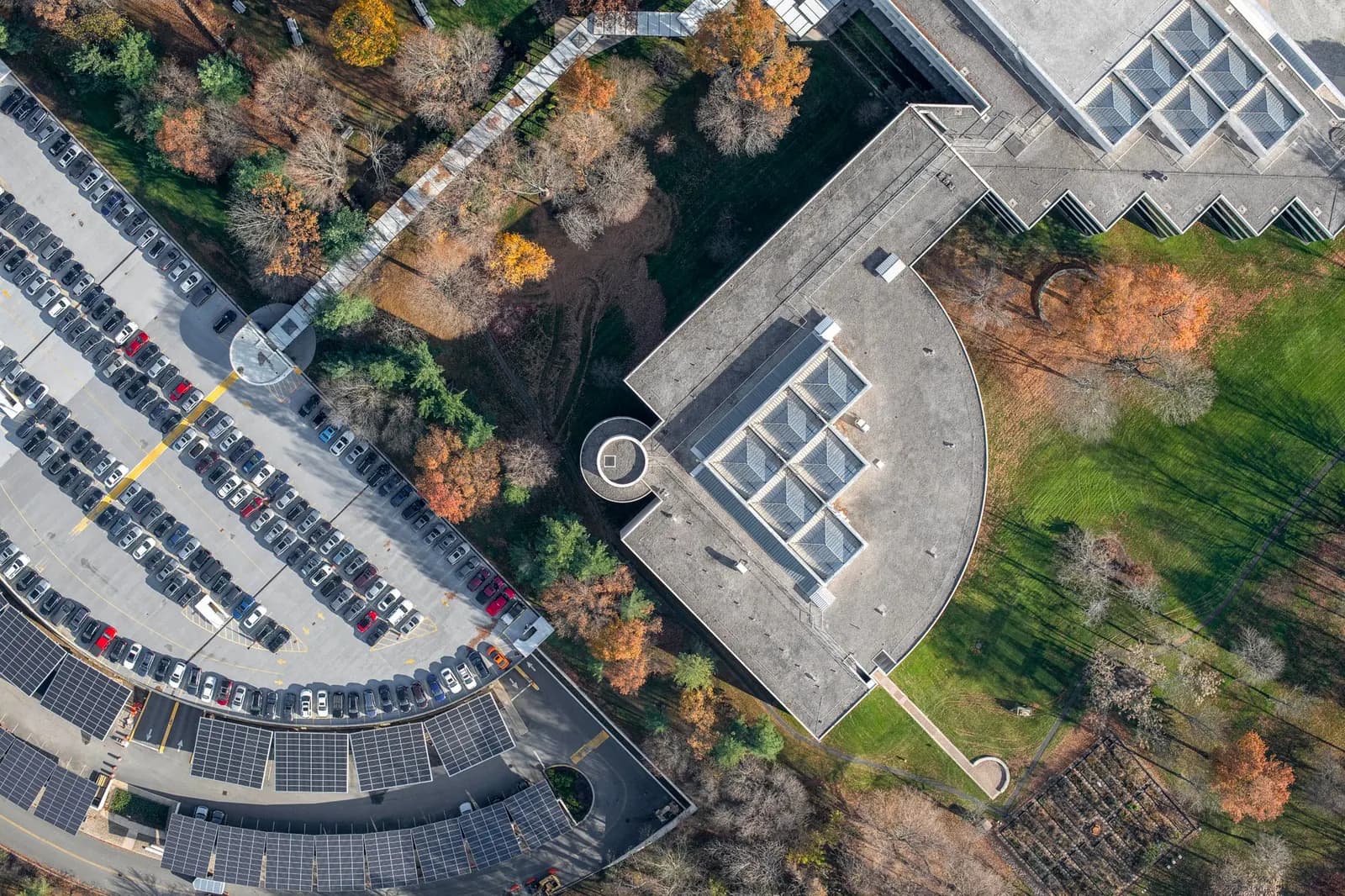
Scheduled sweeping for parking lots, structures and truck courts — litter, debris and grit removed before anyone notices it.
- Scheduled parking lot and parking structure sweeping
- Truck court, dock apron and yard debris removal
- Litter pickup across landscaped edges and walkways
- Storm drain inlet areas kept clear of debris
The parking lot is the first part of a property a tenant, customer or inspector sees, and the part most often left to chance. Scheduled sweeping keeps litter, debris and grit off the lot, out of the storm drains and off the soles of everyone walking into the building.
What's included.
- 01
Scheduled parking lot and parking structure sweeping
- 02
Truck court, dock apron and yard debris removal
- 03
Litter pickup across landscaped edges and walkways
- 04
Storm drain inlet areas kept clear of debris
- 05
Pairs with pressure washing for oil and stain treatment
Why does the parking lot matter more than most property managers think?
The parking lot is the first part of a property a tenant, customer or inspector sees, and it's usually the part left to chance between move-ins. Scheduled sweeping keeps litter, debris and grit off the lot and out of storm drains before anyone walking in notices it underfoot.
A swept lot signals the rest of the property is managed the same way. An unswept one raises the question before a visitor even reaches the door.
It's also the surface every tenant, delivery driver and prospective renter crosses before reaching anything else on the property — a torn-up entry drive or a lot littered with fast-food wrappers colors the first impression of a building regardless of how clean the lobby is once someone actually gets inside.
What does a parking lot sweeping visit actually cover?
Scheduled sweeping of the main lot and any parking structure, truck court and dock apron debris removal, litter pickup across landscaped edges and walkways, and keeping storm drain inlet areas clear of debris that would otherwise wash or blow into them.
- Scheduled parking lot and parking structure sweeping
- Truck court, dock apron and yard debris removal
- Litter pickup across landscaped edges and walkways
- Storm drain inlet areas kept clear of debris
- Pairs with pressure washing for oil and stain treatment
The scope names which zones get swept on which visit — main lot, structure, truck court and dock apron don't always need the same crew stop every time — and the storm drain inlet check happens on every pass regardless of what else is scheduled that day.
Why does parking lot debris connect to stormwater compliance?
Trash and debris on a parking lot don't stay there — rain washes them into gutters and storm drains. The regional stormwater permit lists litter, debris and sediment among the discharges Inland Empire cities must prohibit or control, and the State Water Board's 2015 Trash Amendments target trash in state waters.
The State Water Resources Control Board adopted the Trash Amendments on April 7, 2015, amending the Ocean Plan and the inland surface waters plan to give the Water Boards a consistent statewide approach to trash, focused on high trash-generating areas California State Water Resources Control Board — Trash Control. Locally, the San Bernardino County MS4 permit names “pet waste, yard waste, litter, debris, sediment” among the discharges its cities must prohibit or control Order No. R8-2010-0036. A property's own parking lot is upstream of all of it: debris that never builds up on the lot never reaches the drain.
Do truck courts and dock aprons need different sweeping than a retail lot?
Yes. Truck courts and dock aprons accumulate cardboard fragments, banding material, pallet debris and tracked-in grit from constant trailer traffic — heavier, denser debris than a retail lot's litter and leaf load, and it needs more frequent attention.
Sweeping needs by lot type
Retail / restaurant pad
- Typical debris
- Litter, food wrappers, leaves
- Frequency driver
- Customer visibility, foot traffic volume
Office park
- Typical debris
- Leaves, general litter
- Frequency driver
- Lower volume, seasonal debris
Distribution / truck court
- Typical debris
- Cardboard, banding, pallet debris, grit
- Frequency driver
- Continuous trailer and forklift traffic
School / district property
- Typical debris
- Litter, leaves, seasonal debris
- Frequency driver
- Student and visitor traffic patterns
| Lot type | Typical debris | Frequency driver |
|---|---|---|
| Retail / restaurant pad | Litter, food wrappers, leaves | Customer visibility, foot traffic volume |
| Office park | Leaves, general litter | Lower volume, seasonal debris |
| Distribution / truck court | Cardboard, banding, pallet debris, grit | Continuous trailer and forklift traffic |
| School / district property | Litter, leaves, seasonal debris | Student and visitor traffic patterns |
A truck court is also where sediment and grit get carried in on tires from unpaved yard areas or the highway, then ground into the pavement by trailer weight if it isn't swept off regularly. That grit behaves differently than retail litter — it doesn't blow away or get picked up by hand, so mechanical sweeping is the only practical way to remove it.
Does sweeping replace pressure washing, or do they work together?
They're complementary, not interchangeable. Sweeping removes loose debris and grit; it doesn't touch bonded oil staining or ground-in tire marks. Properties typically run sweeping on a tighter cycle and pair it with periodic pressure washing for staining that sweeping alone can't lift.
Running both on a coordinated schedule also means the pressure washing crew isn't fighting loose grit and litter that a sweep would have already cleared — each service does the part it's actually suited for. A property that only runs one or the other tends to notice the gap eventually: sweeping alone leaves staining that keeps darkening year over year, and pressure washing alone gets outpaced by the debris that piles back up between visits.
How often should a commercial lot be swept?
Nexara's starting points in a written scope: retail centers and high-traffic properties weekly to biweekly, office parks and lower-traffic sites monthly, and distribution truck courts weekly or more, driven by continuous trailer and forklift traffic rather than a calendar default.
- Retail and shopping centers — weekly to biweekly
- Office parks and multi-tenant properties — biweekly to monthly
- Distribution and logistics facilities — weekly, sometimes more during high-volume periods
- Schools and district properties — aligned with the school calendar and seasonal debris load
Distribution properties in Ontario, Fontana and along the San Bernardino County corridor are where the tightest truck-court cycle usually lands, because trailer traffic there is continuous. See manufacturing and warehouse for the interior side of the same sites.
What equipment is used, and does it need special access to the property?
Sweeping runs on mechanical sweeper equipment sized to the lot — a smaller unit for tight parking structures, a larger regenerative-air or mechanical broom sweeper for open surface lots — and it needs the lot clear of parked vehicles during the scheduled window to actually reach every section.
That access requirement is usually the main scheduling constraint, more than the equipment itself. A retail lot that's full during the day and empty overnight schedules differently than an office park that's the reverse — the sweep has to land in the window where the surface is actually reachable, not just when it's convenient on paper. Where a lot has reserved or assigned spaces, the schedule also has to work around whichever vehicles are least likely to move on a given night.
What facility managers ask us.
Do you sweep parking structures the same as surface lots?
The equipment and access differ — structures need machines sized for ramps, tight columns and lower clearances — but the goal is the same: debris and grit removed on a set schedule before it accumulates or tracks into the building.
Can sweeping remove oil stains from a parking lot?
No. Sweeping removes loose debris and surface grit, not bonded oil staining. Oil and grease marks need pressure washing with a degreaser, which is why the two services are typically scheduled together rather than as substitutes for each other.
Why does storm drain debris matter for a property owner, not just the city?
Because the regional stormwater permit requires cities to prohibit or control litter, debris and sediment entering the storm drain system, and cities carry that into local ordinances that apply to the property. Debris swept off the lot is debris that never becomes the property's discharge.
How is truck court sweeping different from retail lot sweeping?
Truck courts accumulate cardboard, banding material and pallet debris from constant trailer and forklift traffic — denser and more frequent than a retail lot's litter and leaf load — so they typically need a tighter sweeping cycle.
Does sweeping happen during business hours or after?
Most commercial sweeping runs during low-traffic windows — early morning or after close — so the equipment isn't competing with parked cars or pedestrian traffic. The exact timing is set in the property's written scope.
What happens to the debris that's swept up?
The scope should say: debris is collected by the sweeper and disposed of, not pushed to a curb or landscaped edge where it re-enters the lot or washes into a storm drain on the next rain.
Can sweeping frequency change seasonally?
Yes — fall leaf drop, landscaping cycles and seasonal storm activity all change debris load, and a written scope can adjust frequency for those periods rather than running one fixed schedule year-round.
Reviewed by Nexara Facility Services · Updated
Other services.
- Janitorial & Commercial CleaningJanitorial
- Floor Care & Hard Surface MaintenanceFloor Care
- Concrete & Natural Stone PolishingStone Polishing
- Commercial Carpet CleaningCarpet Cleaning
- Commercial Window CleaningWindow Cleaning
- Pressure Washing & Exterior CleaningPressure Washing
- Day Porter ServicesDay Porter
- High DustingHigh Dusting
- Post-Construction CleanupConstruction Cleanup

No proposal before a walkthrough
Let's walk your facility.
Every scope starts with a walkthrough. We look at the building, ask what is actually going wrong today, and come back with a written scope and a number — not a brochure.