Soil out.
Fiber life in.
Extraction and encapsulation programs that extend carpet life instead of just making it look clean for a week.
- Hot water extraction for restorative deep cleaning
- Low-moisture encapsulation for fast-turnaround interim cleaning
- Traffic-lane and entryway focus where soil actually loads
- Spot and stain treatment
Commercial carpet fails from soil that is never actually removed — vacuumed surfaces look acceptable while abrasive grit grinds down fiber underneath. Nexara runs carpet programs designed around traffic patterns, with interim encapsulation between restorative extractions so the carpet lasts closer to its rated life.
What's included.
- 01
Hot water extraction for restorative deep cleaning
- 02
Low-moisture encapsulation for fast-turnaround interim cleaning
- 03
Traffic-lane and entryway focus where soil actually loads
- 04
Spot and stain treatment
- 05
Scheduled programs tied to traffic, not guesswork
Interim cleaning vs. restorative extraction — what's the actual difference?
Interim cleaning — encapsulation or bonnet cleaning — is a low-moisture method that improves appearance and dries fast between deeper cleans. Restorative cleaning — hot water extraction — flushes trapped soil out of the fiber and carpet backing, and is the deep clean interim methods are designed to extend the interval between.
Interim vs. restorative carpet cleaning
Encapsulation
- What it does
- Low-moisture interim clean; encapsulates soil for vacuum removal
- Typical dry time
- Shortest — low moisture
Bonnet cleaning
- What it does
- Surface-level interim clean using a rotating absorbent pad
- Typical dry time
- Short — low moisture
Hot water extraction
- What it does
- Restorative deep clean; flushes soil from fiber and backing
- Typical dry time
- Longest — depends on airflow and humidity; scheduled after hours
| Method | What it does | Typical dry time |
|---|---|---|
| Encapsulation | Low-moisture interim clean; encapsulates soil for vacuum removal | Shortest — low moisture |
| Bonnet cleaning | Surface-level interim clean using a rotating absorbent pad | Short — low moisture |
| Hot water extraction | Restorative deep clean; flushes soil from fiber and backing | Longest — depends on airflow and humidity; scheduled after hours |
Neither method replaces the other. Interim cleaning is a maintenance step that keeps carpet presentable between restorative cycles; it doesn't reach the soil that's already worked down into the pile and backing. Restorative extraction is the only method that actually removes that trapped soil, which is why a program built on interim cleaning alone eventually stops improving appearance no matter how often it's run.
Why does commercial carpet wear out faster than it should?
Commercial carpet most often fails from soil that's never actually removed — vacuuming clears surface debris while abrasive grit works down into the fiber and grinds it apart from underneath. Carpet that looks clean on a walk-through can still be losing fiber life every day traffic crosses it.
This is why a program built around traffic patterns outperforms a flat building-wide schedule. Entry lanes and corridors load soil far faster than a conference room used twice a week, and treating both the same either wastes money on the low-traffic space or under-serves the high-traffic one.
Grit tracked in from a parking lot or dock apron is the single biggest contributor to this kind of wear, which is why entry matting and the condition of the pavement just outside the door matter as much as the cleaning schedule itself. See parking lot sweeping for how exterior grit is kept from reaching the entry in the first place, and commercial and office for how carpet fits a multi-tenant building's program.
How often should commercial carpet be cleaned?
The Carpet and Rug Institute recommends professional deep cleaning every 12 to 18 months, and more often where needed. High-traffic zones like entrances and lobbies sit at the “more often” end. Interim encapsulation runs on a shorter cycle in between to keep appearance up without the extraction downtime.
Zoning the building by traffic — entries, corridors, open office, conference rooms — and setting a frequency per zone gets closer to the carpet's actual soil load than a single number applied everywhere. A conference room used twice a week and a lobby crossed by hundreds of people a day should never be on the same cleaning calendar just because they're carpeted with the same product.
Facilities that only clean when carpet visibly looks dirty are almost always cleaning too late — visible soil is a small fraction of what's actually accumulated in the pile by the time it shows on the surface. A set schedule tied to traffic zone, rather than a visual trigger, catches the soil while extraction can still fully remove it.
How long does commercial carpet take to dry after cleaning?
Low-moisture encapsulation puts little water into the carpet, so it dries fast enough for traffic to resume the same day. Hot water extraction puts far more water into the pile and backing, and dry time depends on airflow and humidity — which is why restorative work is normally scheduled after hours or over a weekend.
- Encapsulation and bonnet cleaning: fast dry, minimal disruption, good fit for weekly or biweekly appearance cycles
- Hot water extraction: longer dry time, scheduled overnight or on weekends to avoid wet-floor traffic
- Air movement and dehumidification during extraction shorten dry time in enclosed or low-airflow spaces
Offices and schools generally schedule extraction over a weekend for exactly this reason — Monday morning traffic on carpet that hasn't fully cured can re-soil the pile faster than normal and, on some backings, leave a slightly different texture until the fibers fully set. Waiting out the dry window is part of getting the full value from the cleaning.
What happens between scheduled cleanings when a spill or stain occurs?
Spot and stain treatment is handled as its own task, separate from the scheduled interim or restorative cycle, so a spill doesn't sit until the next visit. Fast response on fresh spills prevents them from setting into the fiber, where they become far harder to remove on the next full cleaning.
Break rooms, entries and conference rooms typically generate the most spot calls. A program that includes responsive spot treatment as a standing line item, rather than an add-on quote every time, closes that gap. Coffee, food and beverage spills respond well to fast treatment; the same stain given a day to dry and oxidize is a different, harder job.
Does a manufacturer's carpet warranty require specific cleaning practices?
Carpet warranties can depend on proper maintenance. The Carpet and Rug Institute notes that its Seal of Approval cleaners are recommended, and sometimes required, by the manufacturer, and it publishes the CRI 204 commercial maintenance standard. Facility managers should confirm their specific warranty terms rather than assume any cleaning method qualifies.
This is one of the reasons a written scope of work matters for carpet care as much as it does for the rest of a janitorial program — a dated record of what method was used, when, and by whom is exactly what a warranty claim asks for, and it's far easier to produce from a documented schedule than to reconstruct after the fact. Facility managers evaluating a new carpet vendor can use the same janitorial scope of work template as a starting point for building that record.
What facility managers ask us.
How long does commercial carpet take to dry?
Low-moisture encapsulation dries quickly because it uses little water. Hot water extraction takes much longer, depending on airflow and humidity, which is why restorative work is normally scheduled after hours or over a weekend to avoid wet-floor traffic during business hours.
How often should commercial carpet be cleaned?
Entry and traffic lanes load soil far faster than open areas, so a single building-wide frequency usually wastes money in one place and under-serves another. The Carpet and Rug Institute recommends professional deep cleaning every 12 to 18 months, more often where traffic demands it.
What's the difference between encapsulation and bonnet cleaning?
Both are low-moisture interim methods. Encapsulation coats soil particles in a polymer that crystallizes for vacuum removal; bonnet cleaning uses a rotating absorbent pad to lift surface soil. Encapsulation generally handles embedded soil better; bonnet cleaning is faster for light surface refresh.
Can a fresh stain be removed without a full carpet cleaning?
Yes, and it should be treated as soon as possible. Spot and stain response is handled separately from the scheduled cleaning cycle so a spill doesn't sit and set into the fiber before the next visit.
Will cleaning my carpet void the manufacturer's warranty?
Not if the cleaning method matches what the warranty requires. Some manufacturers recommend or require specific cleaning products or certified cleaners, per the Carpet and Rug Institute. Confirm your warranty's terms and keep service records rather than assuming any method qualifies.
Does carpet cleaning need to be scheduled separately from janitorial service?
It can be scoped either way. Some facilities include interim encapsulation in the recurring janitorial services program and schedule restorative extraction on its own longer cycle; others run carpet care as a fully separate service.
What areas does Nexara serve for commercial carpet cleaning?
Carpet care is usually part of an office or school program, so it follows the recurring coverage: Ontario, Rancho Cucamonga, Riverside, Upland and Fontana first. Standalone extraction projects elsewhere in San Bernardino and Riverside counties, or further out, are quoted after a walkthrough when the square footage justifies it.
Reviewed by Nexara Facility Services · Updated
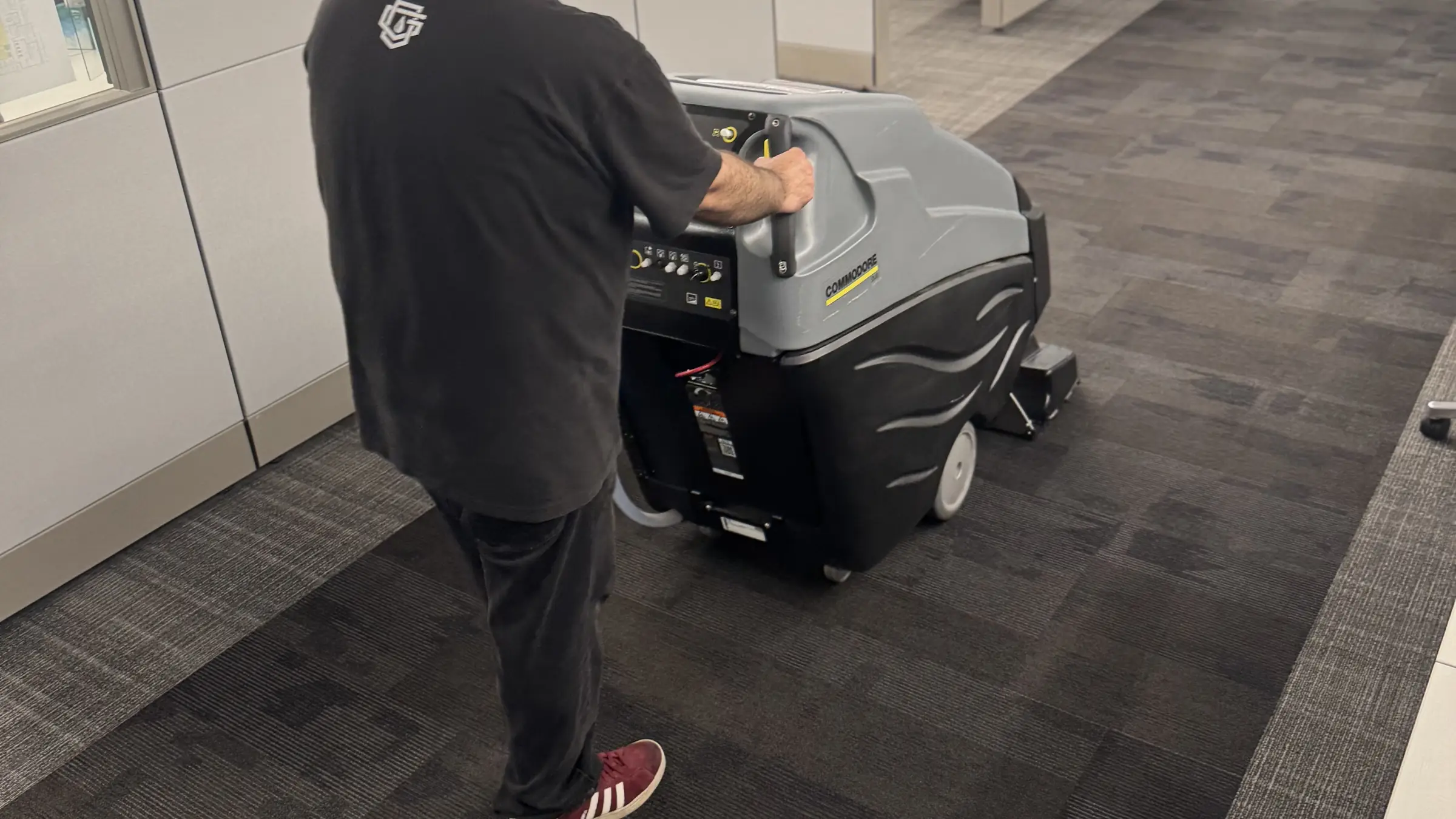
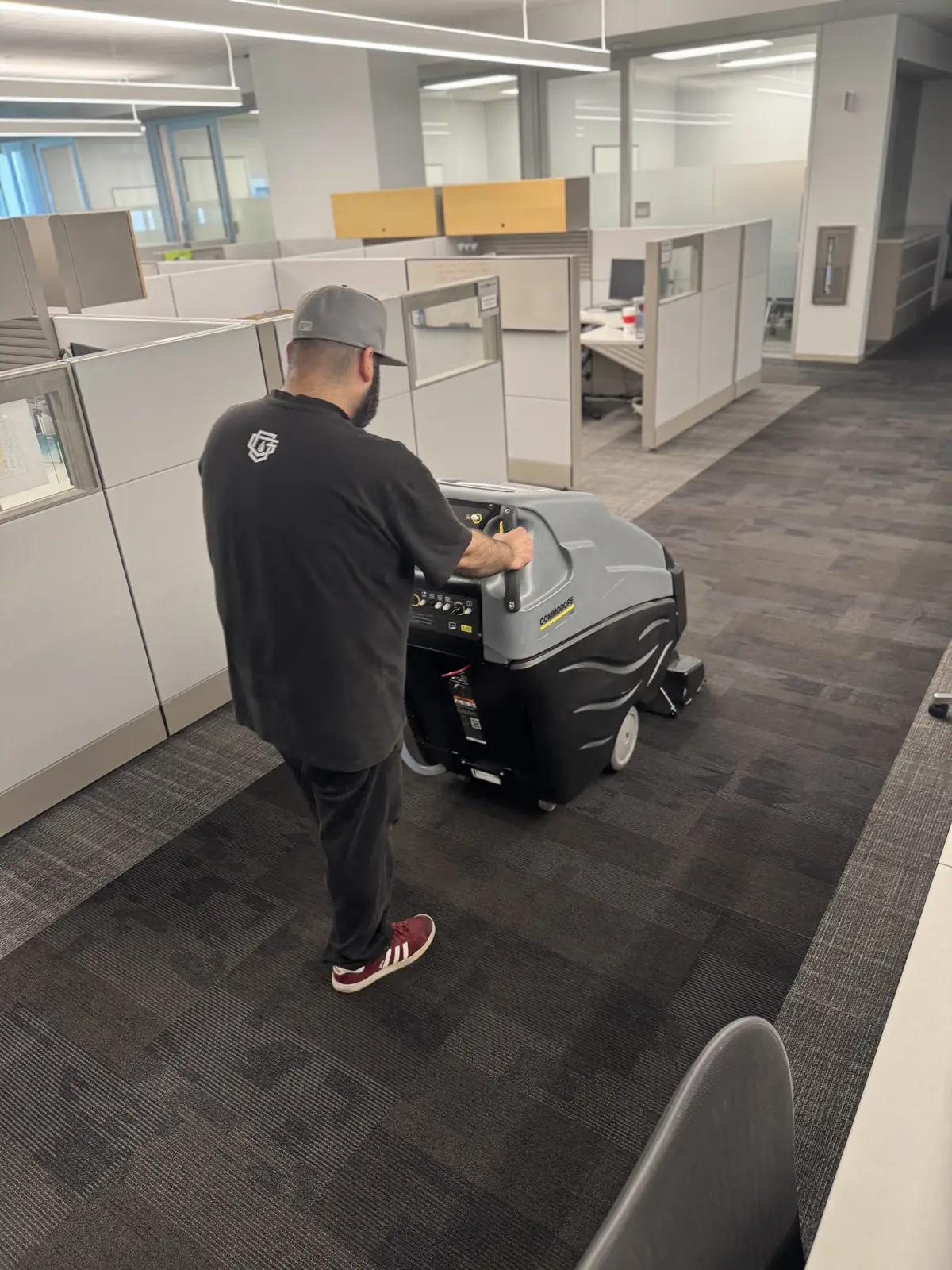
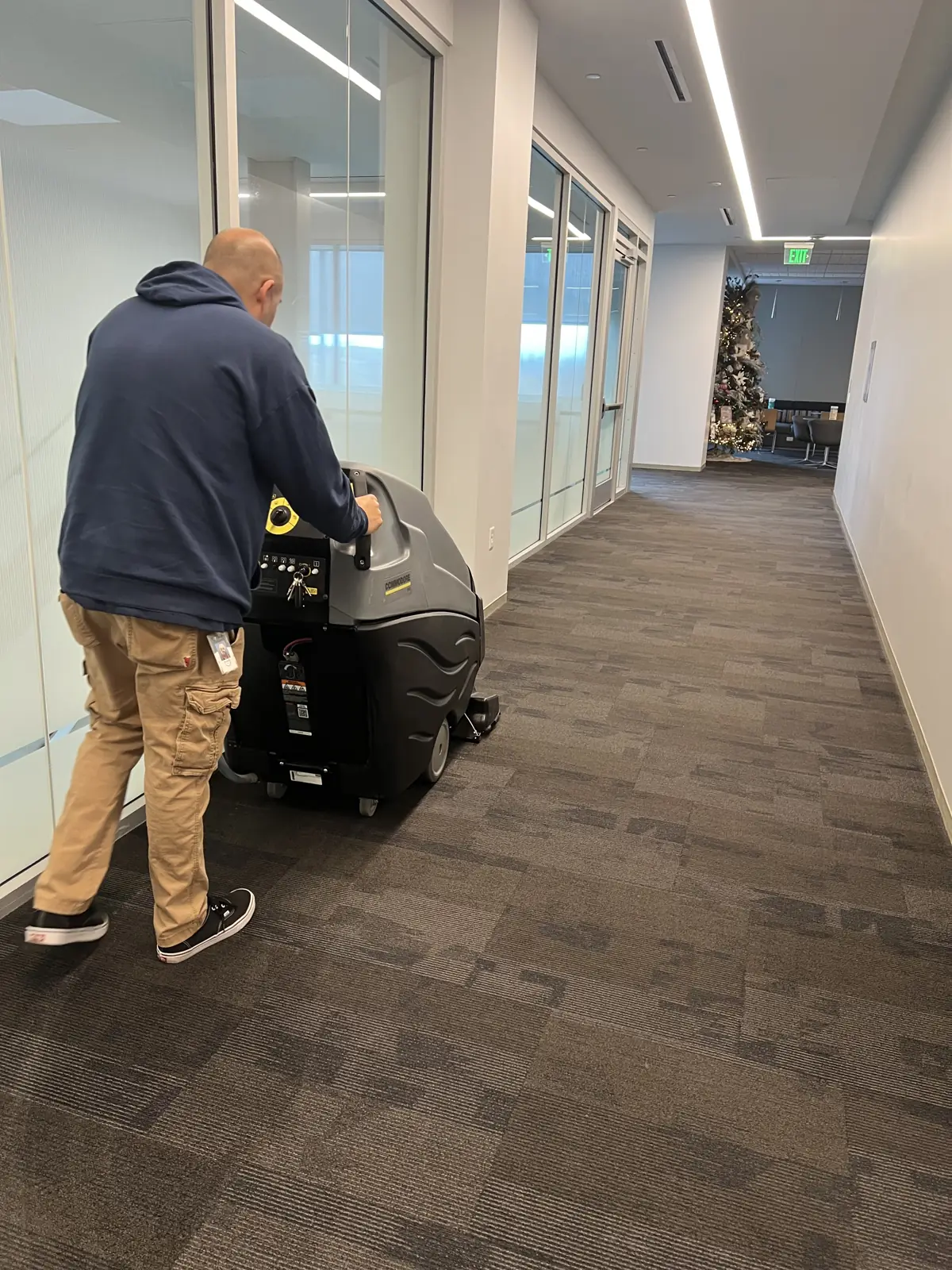
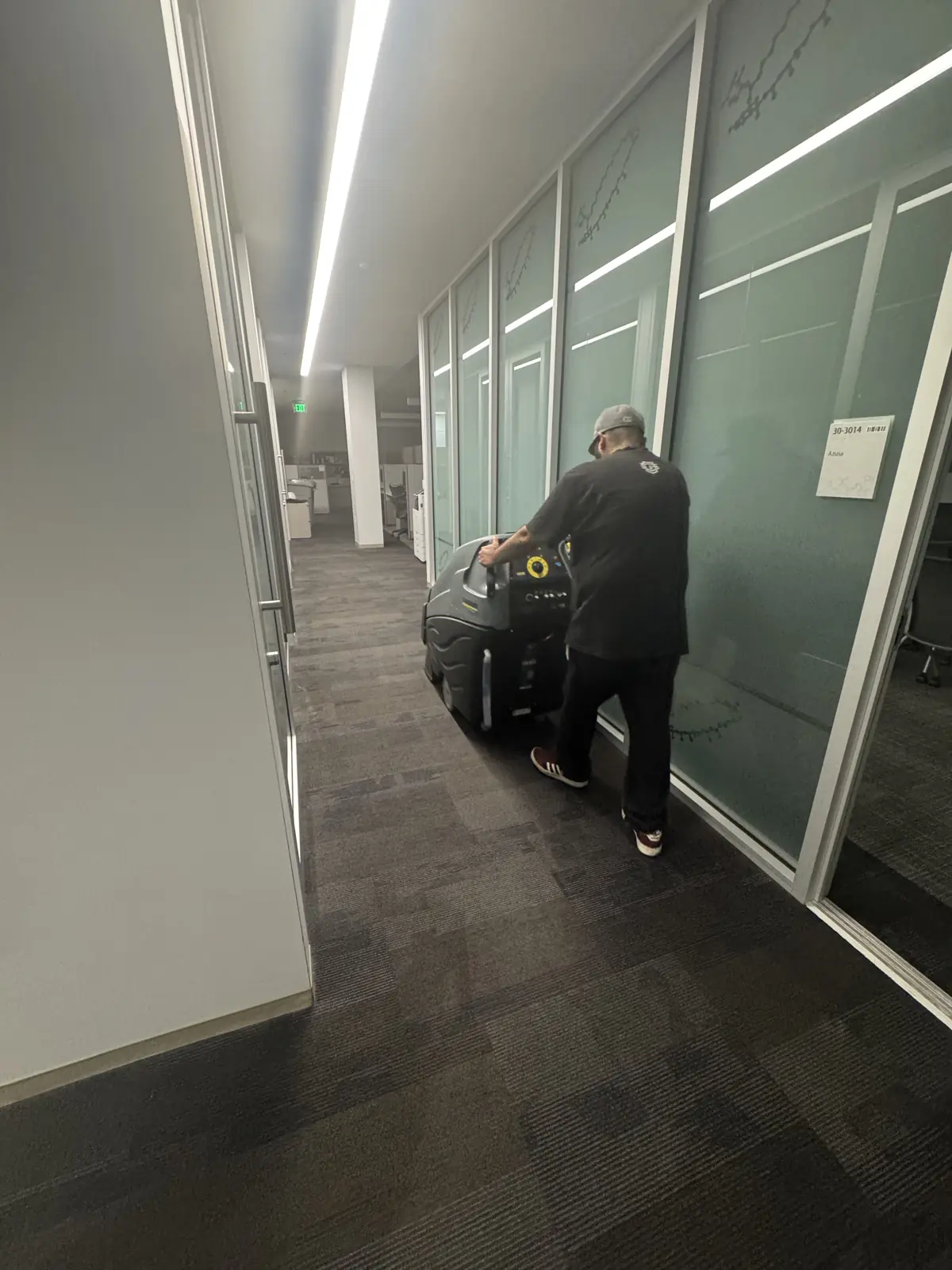
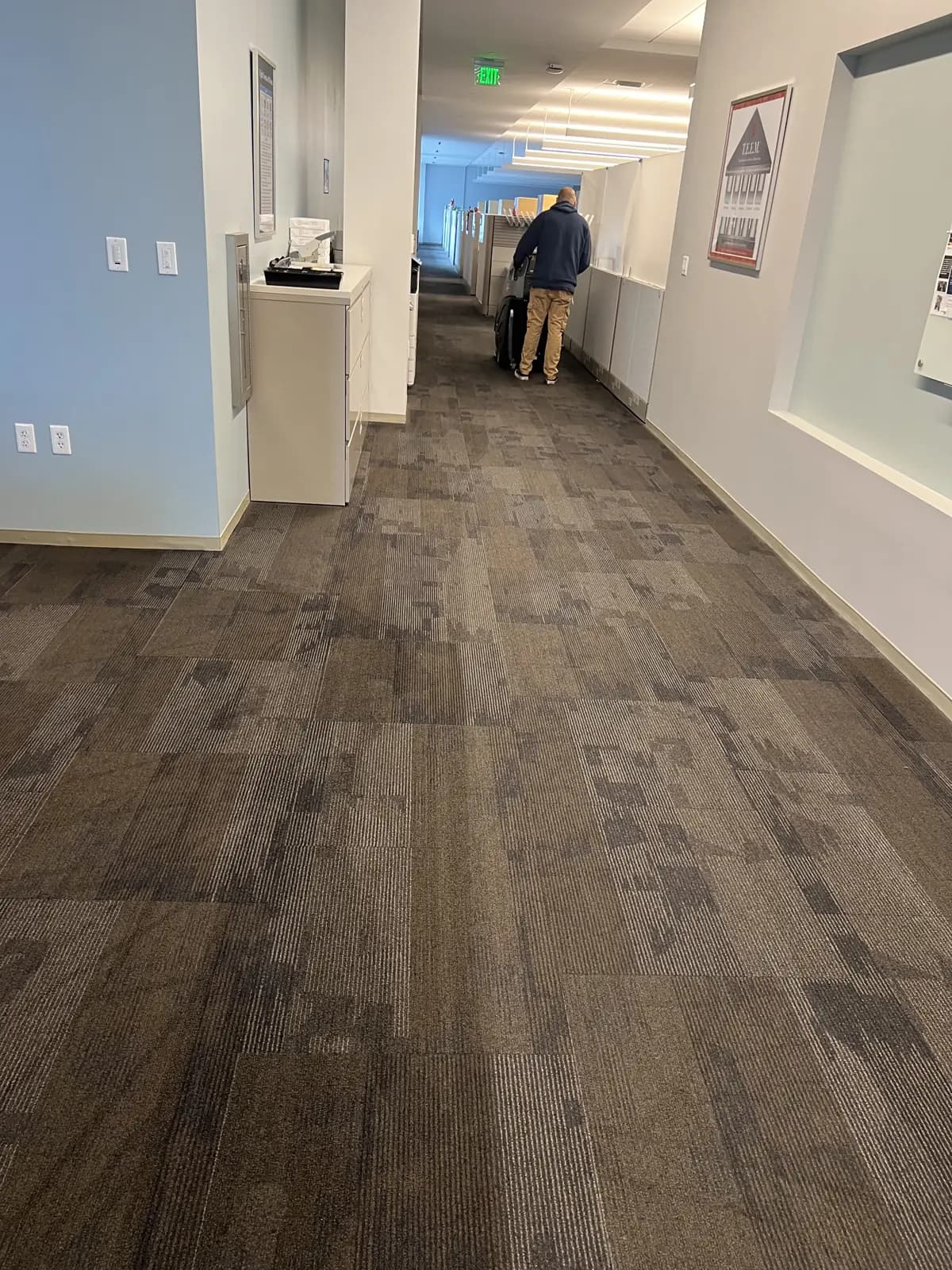
Our crews, on site.
Other services.
- Janitorial & Commercial CleaningJanitorial
- Floor Care & Hard Surface MaintenanceFloor Care
- Concrete & Natural Stone PolishingStone Polishing
- Commercial Window CleaningWindow Cleaning
- Pressure Washing & Exterior CleaningPressure Washing
- Day Porter ServicesDay Porter
- High DustingHigh Dusting
- Parking Lot SweepingLot Sweeping
- Post-Construction CleanupConstruction Cleanup
No proposal before a walkthrough
Let's walk your facility.
Every scope starts with a walkthrough. We look at the building, ask what is actually going wrong today, and come back with a written scope and a number — not a brochure.