
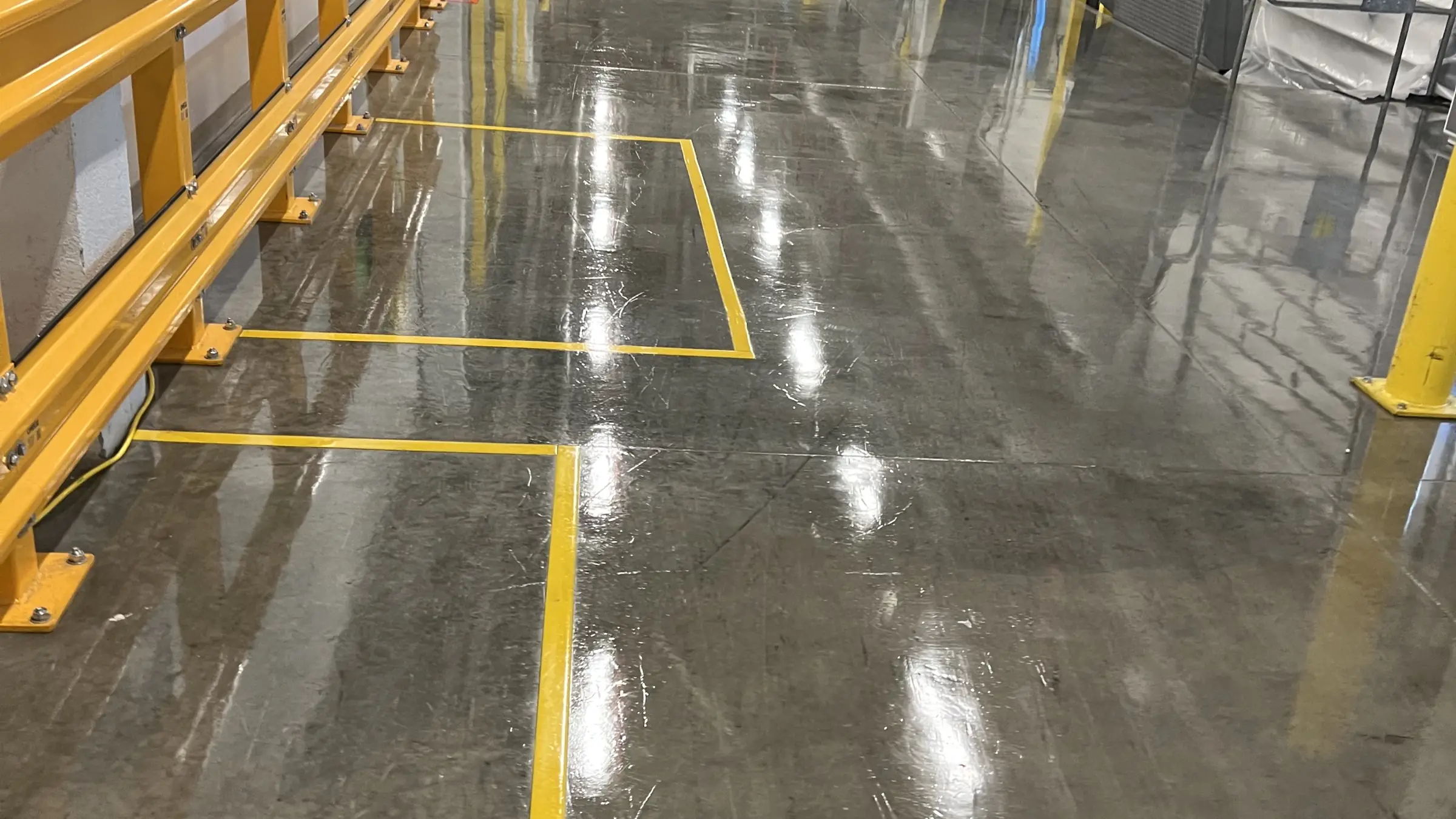
Refined,
not coated.
Mechanical diamond polishing and restoration for concrete, marble, terrazzo and natural stone — refinishing the surface, not coating it.
- Progressive diamond grinding and honing to specified gloss
- Densification and stain protection
- Marble, travertine and terrazzo restoration and polishing
- Scratch and etch repair on natural stone
Polished concrete and natural stone are finished mechanically, not chemically. Done correctly, the result is a durable surface that holds up under traffic and can be maintained rather than recoated. Done incorrectly, you get swirl marks, uneven gloss and a floor that has to be ground again. This is specialized work, and it is one of the reasons Nexara exists.
What's included.
- 01
Progressive diamond grinding and honing to specified gloss
- 02
Densification and stain protection
- 03
Marble, travertine and terrazzo restoration and polishing
- 04
Scratch and etch repair on natural stone
- 05
Ongoing maintenance programs to protect the finish
Polished concrete vs. a coating: what's the actual difference?
Polishing mechanically refines the concrete itself with progressively finer diamond abrasives, so the shine comes from the slab and can be renewed by re-polishing. A coating sits on top of the surface and eventually chips, peels or wears through, requiring full stripping and reapplication rather than simple maintenance.
This distinction matters most under forklift and pallet-jack traffic. A coating that fails in a traffic lane needs the whole lane recoated; a polished floor that dulls in the same lane gets re-honed in that section without touching the rest of the slab.
Cost comparisons that only look at the initial install miss this. A coating is usually cheaper to apply the first time, but it's a recurring recoat cycle for the life of the building. Polishing costs more up front and then drops to periodic re-densification and spot re-honing — a different cost curve, not just a different finish.
Marble, travertine and terrazzo: restoration or replacement?
Etching, dull spots and light scratches on natural stone are almost always surface-level and can be honed out and re-polished; replacement is rarely the right first call. Depth of damage and the specific stone determine the approach, which is why restoration work is assessed in person rather than quoted from a description.
- Marble — softer stone, prone to etching from acidic spills; honed and re-polished to remove surface etch
- Travertine — porous, often filled; restoration includes re-filling voids as well as polishing
- Terrazzo — a stone-and-binder composite, ground and polished in stages similar to concrete
- Granite — harder and more chemical-resistant, but still loses gloss over years of traffic and can be re-polished
A stone floor rarely fails all at once. It's more common to see a dull, high-traffic lane through an otherwise glossy lobby, or a cluster of etch marks near an entrance where acidic spills or the wrong cleaning product did their damage. Restoration work is scoped to the affected area first, with a full-floor re-polish reserved for stone that's dulled evenly across its whole surface.
How does concrete grinding and polishing actually work?
Concrete polishing runs progressively finer diamond abrasives across the slab in stages, exposing and refining the surface until it reaches the specified gloss level, then applies a densifier and stain protection to harden and seal the exposed surface. Skipping steps or moving too fast between grits is what causes swirl marks and uneven gloss.
- 01
Assessment
The slab is inspected for existing coatings, cracks, and aggregate exposure level before grinding starts.
- 02
Progressive grinding
Diamond abrasives run in stages from coarse to fine, refining the surface without gouging or over-grinding.
- 03
Honing to spec
Grinding continues to the specified gloss and aggregate-exposure level — not a fixed number of passes.
- 04
Densification
A chemical densifier hardens the surface and reduces dusting under traffic.
- 05
Stain protection
A protective treatment is applied to resist oil, chemical and traffic staining without masking the polished surface.
The specified gloss level is a decision made up front, not an automatic maximum. A warehouse floor is often finished to a lower gloss for traction reasons, while a retail showroom or lobby is finished higher for appearance. Grinding further than the specified level doesn't improve the result — it just adds labor without a corresponding benefit.
Why do some polished floors end up with swirl marks or uneven gloss?
Swirl marks and uneven gloss come from skipping grit stages, moving too fast through the grinding sequence, or using equipment not matched to the slab's aggregate hardness — errors that require re-grinding to correct. This is specialized mechanical work, not a chemical application, and it's one of the reasons the work is priced and assessed on-site rather than by square footage alone.
Where does polished concrete and stone restoration get used most?
Polished concrete is most common in warehouse and production floors, showrooms and retail spaces; natural stone and terrazzo restoration is concentrated in commercial lobbies, entrances and institutional corridors where the original stone was specified for appearance and durability rather than cost.
Common settings by surface
Polished concrete
- Typical setting
- Warehouse, production, showroom floors
- Primary driver
- Durability under wheeled traffic
Marble / travertine
- Typical setting
- Lobbies, entrances
- Primary driver
- Appearance and building-class expectations
Terrazzo
- Typical setting
- Institutional corridors, schools
- Primary driver
- Long-life surface installed decades ago
Granite
- Typical setting
- Reception counters, entry surrounds
- Primary driver
- Hardness and stain resistance
| Surface | Typical setting | Primary driver |
|---|---|---|
| Polished concrete | Warehouse, production, showroom floors | Durability under wheeled traffic |
| Marble / travertine | Lobbies, entrances | Appearance and building-class expectations |
| Terrazzo | Institutional corridors, schools | Long-life surface installed decades ago |
| Granite | Reception counters, entry surrounds | Hardness and stain resistance |
For manufacturing and warehouse accounts, polished concrete is usually part of a broader floor program that also includes routine auto-scrubbing — see floor care for how the two are scheduled together.
How is a polished surface maintained once it's finished?
A polished surface is maintained with routine dust mopping or auto-scrubbing and periodic re-densification rather than recoating, since the gloss comes from the ground surface itself, not a topical layer. Ongoing maintenance protects the investment made in the original polish and stretches the interval before a full re-grind is needed.
Neglecting routine maintenance is the most common way a polished floor loses its shine early — grit tracked in from a dock or parking area acts as an abrasive under foot and wheel traffic, dulling the surface faster than the polish itself wears out.
Pairing polished concrete or restored stone with a dedicated entry-matting and dock-area cleaning plan protects the investment far more cheaply than re-grinding a dulled floor every couple of years. See pressure washing for how exterior approaches and dock aprons — the source of most of that tracked-in grit — are kept from loading soil onto the interior floor in the first place.
For manufacturing and warehouse and commercial and office facilities in Rancho Cucamonga and across the Inland Empire, a maintenance plan set at the same time as the original polish or restoration keeps the schedule realistic instead of guessed at after the fact.
What facility managers ask us.
What is the difference between polished concrete and a floor coating?
Polishing mechanically refines the concrete itself with progressively finer diamonds, so the shine comes from the slab. A coating sits on top and eventually chips, peels or wears through. Polished surfaces are maintained and re-polished; coatings have to be stripped and reapplied.
Can damaged marble or terrazzo be restored instead of replaced?
Usually. Etching, scratches and dull spots are surface-level and can be honed out and re-polished. The stone is assessed in person before recommending a scope, because the right approach depends on the specific material and how deep the damage runs.
How long does a concrete polishing project take?
It depends on slab condition, the specified gloss level, and square footage — a slab with existing coatings or heavy aggregate exposure takes longer to prep than a clean, unfinished floor. The grinding sequence itself runs in stages that can't be compressed without risking uneven results.
Why does my polished concrete floor have swirl marks?
Swirl marks usually come from skipping a grit stage or moving through the diamond sequence too fast for the slab's aggregate hardness. Correcting it means re-grinding through the affected stages, which is why matching the sequence to the slab up front matters.
Does polished concrete need to be sealed?
It's densified rather than sealed with a topical layer. A chemical densifier hardens the surface and reduces dusting, and stain protection is applied on top of that — but neither creates a film the way a coating does, so there's nothing to peel or wear through.
Is terrazzo maintained the same way as VCT tile?
No. VCT holds a stripped-and-reapplied topical finish; terrazzo is a stone-and-binder composite maintained by honing and polishing, closer to natural stone care. See floor care for how VCT and terrazzo programs differ.
What areas does Nexara cover for stone and concrete polishing?
Polishing is project work, so it travels further than a nightly contract. From its Ontario base Nexara takes stone and concrete projects across the Inland Empire, including Rancho Cucamonga office lobbies and Fontana warehouse slabs, and in Los Angeles, Orange and San Diego counties when the scope justifies the trip.
Reviewed by Nexara Facility Services · Updated
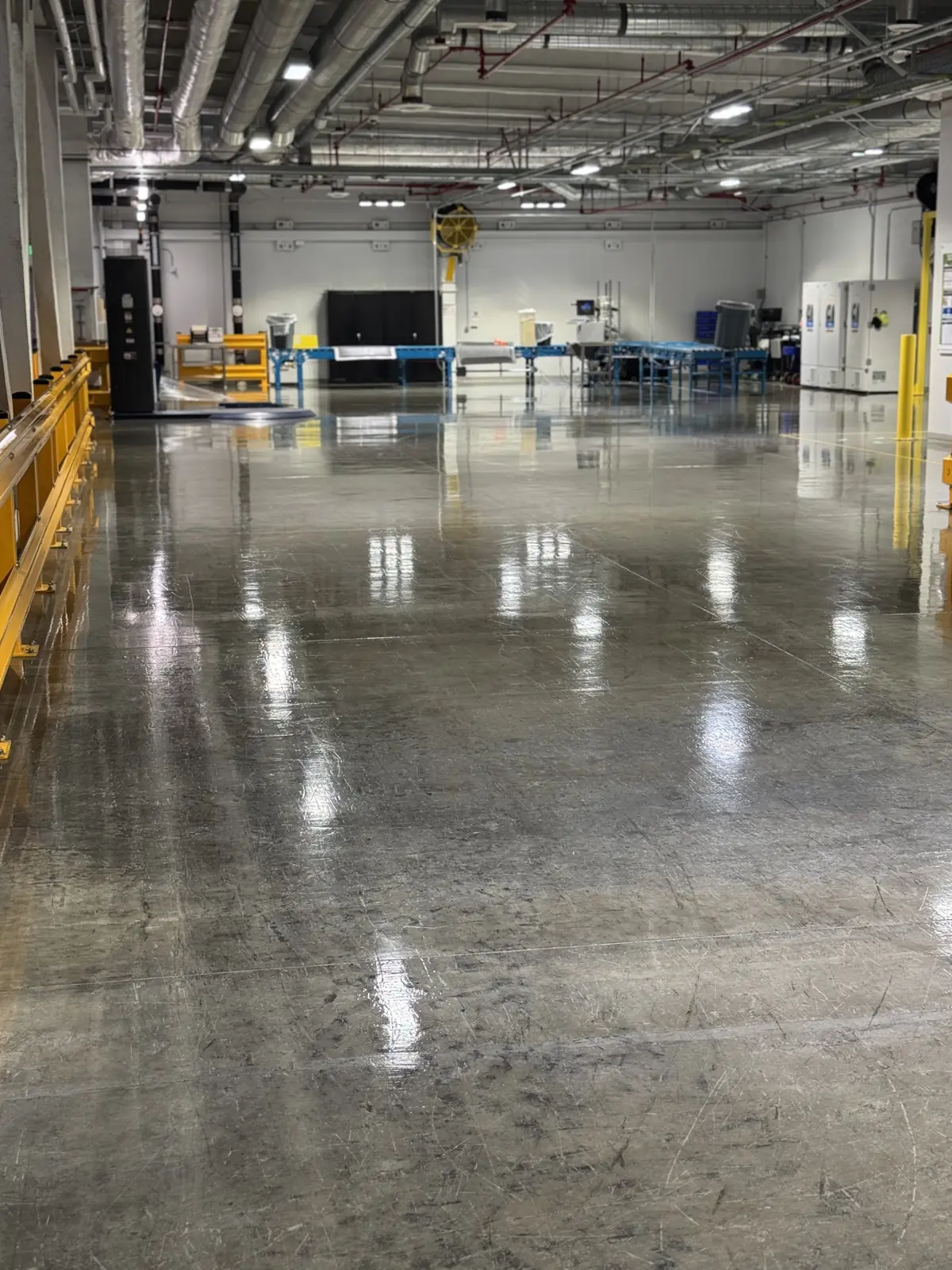
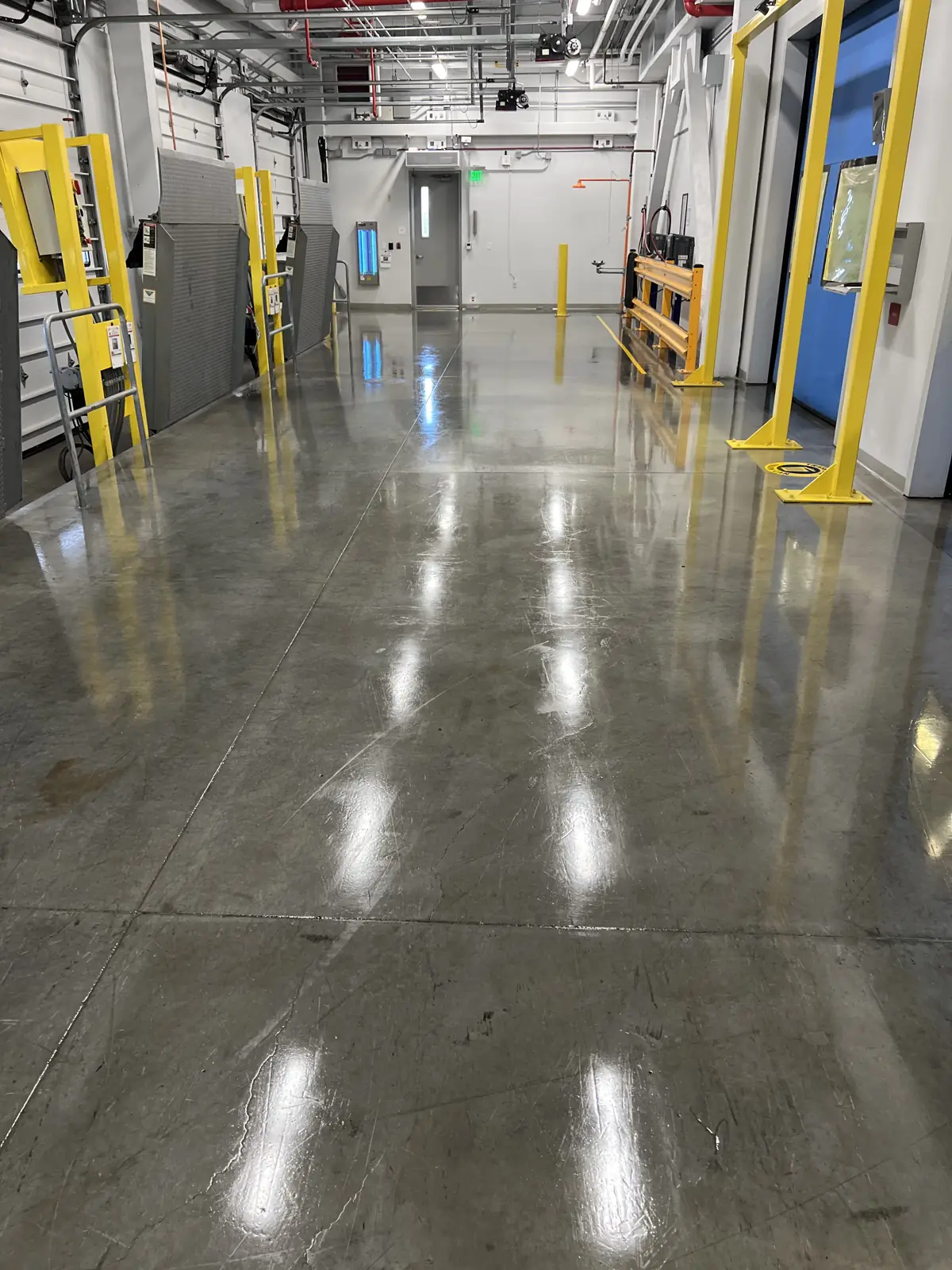
Our crews, on site.
Other services.
- Janitorial & Commercial CleaningJanitorial
- Floor Care & Hard Surface MaintenanceFloor Care
- Commercial Carpet CleaningCarpet Cleaning
- Commercial Window CleaningWindow Cleaning
- Pressure Washing & Exterior CleaningPressure Washing
- Day Porter ServicesDay Porter
- High DustingHigh Dusting
- Parking Lot SweepingLot Sweeping
- Post-Construction CleanupConstruction Cleanup

No proposal before a walkthrough
Let's walk your facility.
Every scope starts with a walkthrough. We look at the building, ask what is actually going wrong today, and come back with a written scope and a number — not a brochure.