
Published · 4 min read
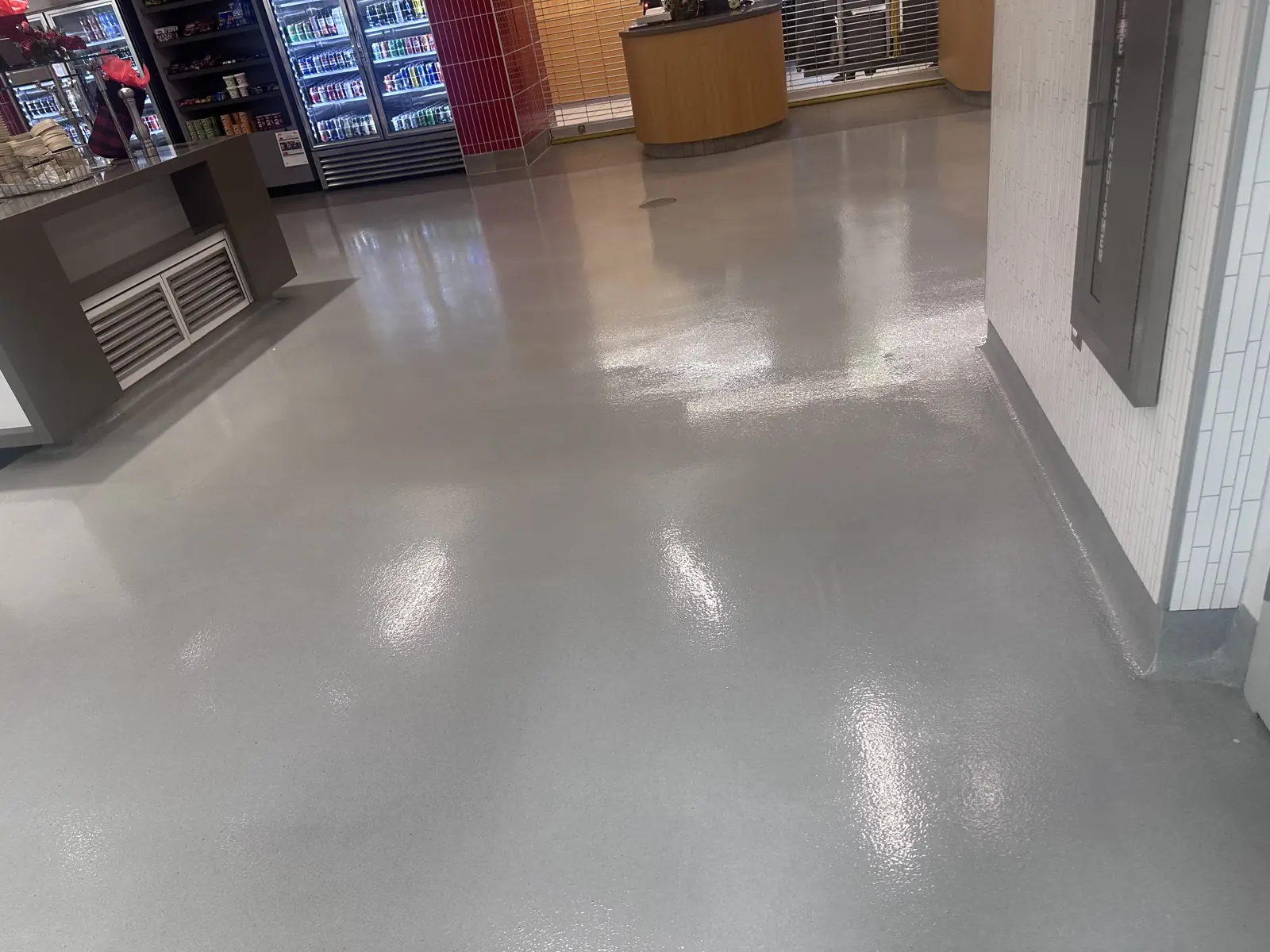
Break room and café floors go dull weeks after a strip-and-wax because of grease film, sugar spills, and grit ground in from traffic, not because the strip cycle was too long. The fix is a between-strip program: daily care with the right cleaner, fast spill response, a regular burnishing schedule, and entry matting that keeps grit out in the first place. Figuring out how often to fully strip and refinish is a separate question, covered in how often to strip and wax commercial floors. This post is about everything that happens in between.
Why do break room floors dull faster than corridors?
A hallway sees dirt and dust. A break room sees dirt, dust, coffee, grease from microwaved food, dropped sugar packets, and shoes that just walked through a kitchen. That combination breaks down floor finish faster than plain foot traffic does. Grease is the big one. It doesn't just sit on top of the finish, it softens it, and once the finish is soft it picks up grit and scratches easily. A floor that would look fine for months in a corridor can look tired in a café in a few weeks if nobody's managing the grease and sugar load day to day.
What should the daily routine look like?
The daily routine matters more in a break room than almost anywhere else in the building. At minimum:
- Dust mop or auto-scrub high-traffic lanes and spill zones daily, not just weekly
- Damp mop with a neutral cleaner made for finished floors — general-purpose degreasers and acidic cleaners eat floor finish over time
- Wipe up spills the same shift they happen, especially anything sugary or greasy, before it dries into the finish
- Check under vending machines and around trash cans, where grease and food residue tend to collect unseen
- Walk the floor visually at least once a day for early scuffing or dulling, not just when it looks obviously bad
That list is the whole game. Skip it for a week and the floor starts telling on you.
How often should a café floor be burnished?
Burnishing, running a high-speed buffer over the finish to restore gloss and smooth out light scratching, is typically done every one to two weeks in a break room or café, more often than a standard office corridor. Burnishing doesn't add finish, it just polishes what's there, so it can't fix grease damage or deep scratches. On a floor that's getting proper daily care, regular burnishing is what keeps the gloss looking fresh between the bigger jobs.
Do you need to scrub-and-recoat before a full strip?
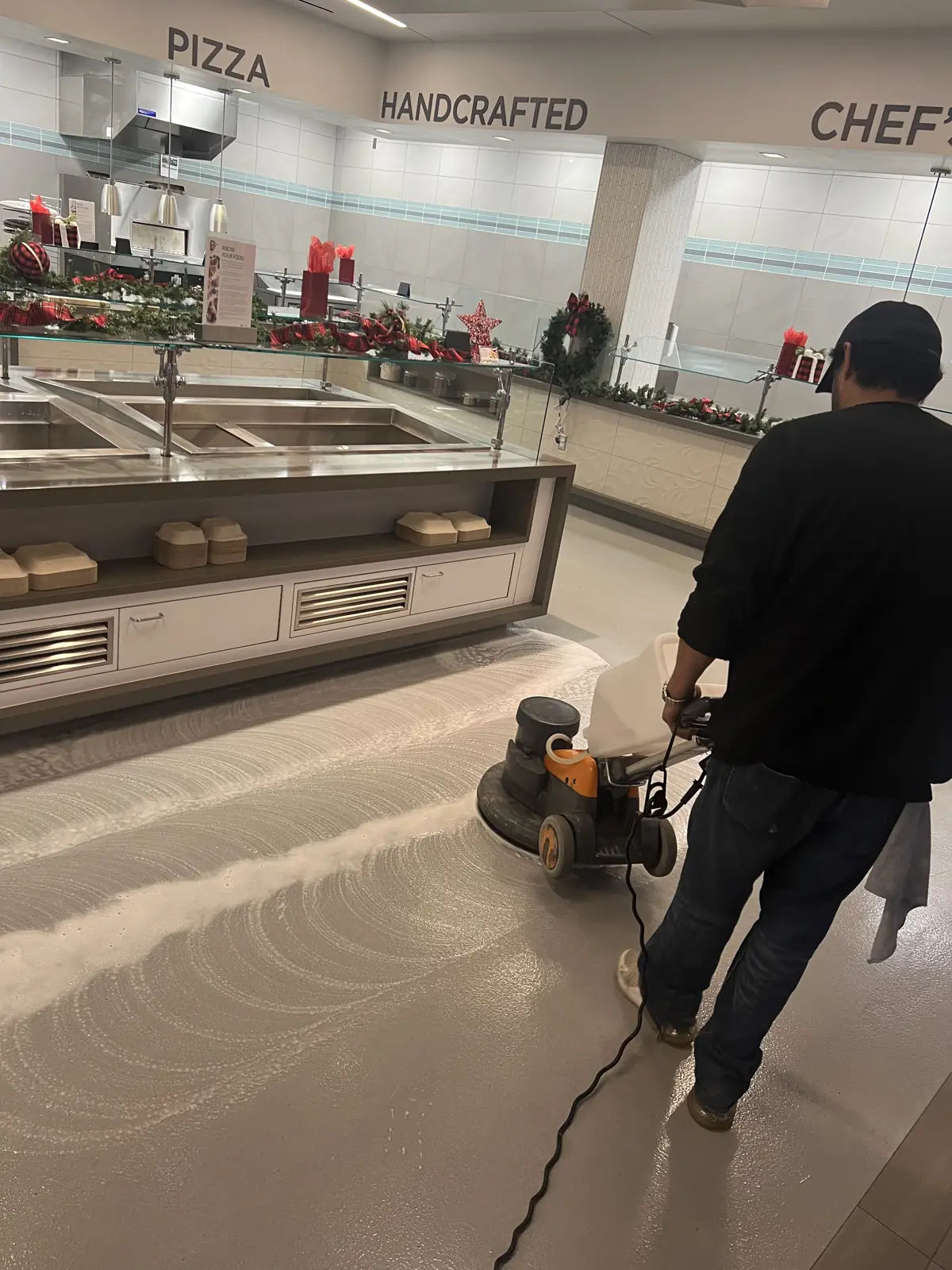
Often, yes. A scrub-and-recoat cleans the existing finish and lays down a fresh top coat without stripping everything back to bare floor. It's faster, cheaper, and less disruptive than a full strip, and for a break room floor that's dulling from grease and traffic rather than from damage, it can buy real time between full strips. It's not a substitute for stripping when the finish has actually broken down or yellowed at the base layer. At that point a scrub-and-recoat just seals in the problem. Whether a floor is a recoat candidate or a strip candidate is something we assess during a walkthrough, not something to guess from how it looks under break room lighting.
What do mats and spill response change?
Most of the grit that scratches a break room floor came in on someone's shoes. A good entry mat system, sized to catch several steps of walk-off distance, stops a lot of that before it ever reaches the finish. Inside the room, spill response changes the chemistry side of the problem: a coffee spill mopped up in ten minutes is a non-event, the same spill left to dry for a shift becomes a stain and a soft spot in the finish. Neither of these is complicated, but they're both easy to skip when a break room isn't anyone's clear responsibility, which is often how it ends up looking worse than the rest of the building.
How do you know when it's finally time to strip?
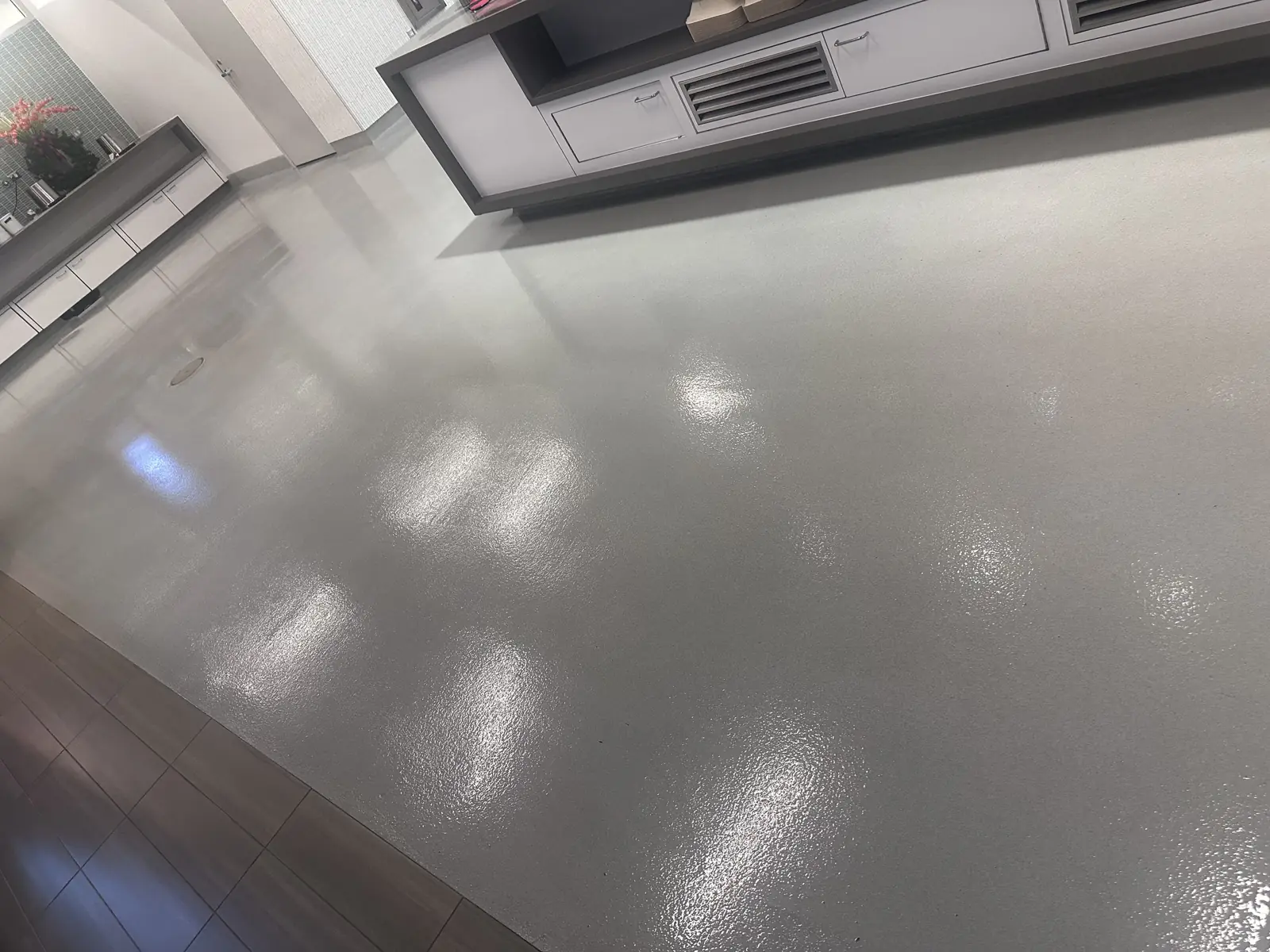
Full strip time is when burnishing stops bringing the gloss back, when there's visible yellowing or haze that cleaning doesn't remove, or when the finish has worn through to bare floor in traffic lanes. If a scrub-and-recoat used to fix the dullness and now it doesn't, that's usually the sign the finish layer itself is done, not just dirty. At that point you're back to the strip cycle question, which the strip and wax guide covers in more detail.
Where Nexara fits
We build the daily-care and burnishing schedule around what a break room or café floor actually takes, not a generic office plan, and we can tell you during a walkthrough whether a dull floor needs a scrub-and-recoat or a full strip. If your break room floor is looking rough between strip cycles, request a walkthrough and we'll look at what's actually going on with the finish. See the full breakdown of what we cover on the floor care services page or the commercial and office industries page.
Questions we get asked.
How often should a break room floor be burnished?
Most break room and café VCT floors hold up well with burnishing every one to two weeks, depending on traffic and how much grease and sugar hit the floor daily.
Can you restore a dull VCT floor without stripping it?
Often yes. A scrub-and-recoat, which cleans the floor and adds a fresh finish coat without removing the old finish, can restore gloss between full strip cycles if the base finish is still sound.
Why does floor finish turn yellow or cloudy in kitchens and cafés?
Grease film, sugary spills, and finish that's been mopped with the wrong chemical all build a haze on top of the finish layer. It's usually a coating problem, not a sign the floor itself is damaged.