Published · 4 min read
A K-12 summer checklist should sequence the work, not just list it. Floor stripping and refinishing goes first because it takes the longest to dry and can't be worked around once school furniture and staff start moving back in. Cafeteria and kitchen deep cleaning and high dusting fill the middle of the break. A documented walk-through inspection happens last, before staff and students return.
Summer break is the only stretch of the year a district gets uninterrupted access to every classroom, hallway, and cafeteria at once. Get the order wrong, and you either run out of dry time on the floors or end up doing high dusting over furniture that's already back in place.
What cleaning only fits in the summer window?
Most of what's on this list can't happen during the school year without shutting down a wing. Floor stripping and refinishing needs empty rooms and long dry windows. Deep-cleaning cafeteria equipment needs the kitchen fully down, not just closed for a weekend. High dusting above lockers, in gyms, and around HVAC returns needs ladders and lifts in corridors that are normally full of students.
None of that fits into a Tuesday night cleaning shift during the school year. Summer is the window, and it's a fixed one: the calendar doesn't move for a vendor running behind.
What should the floor care portion include?
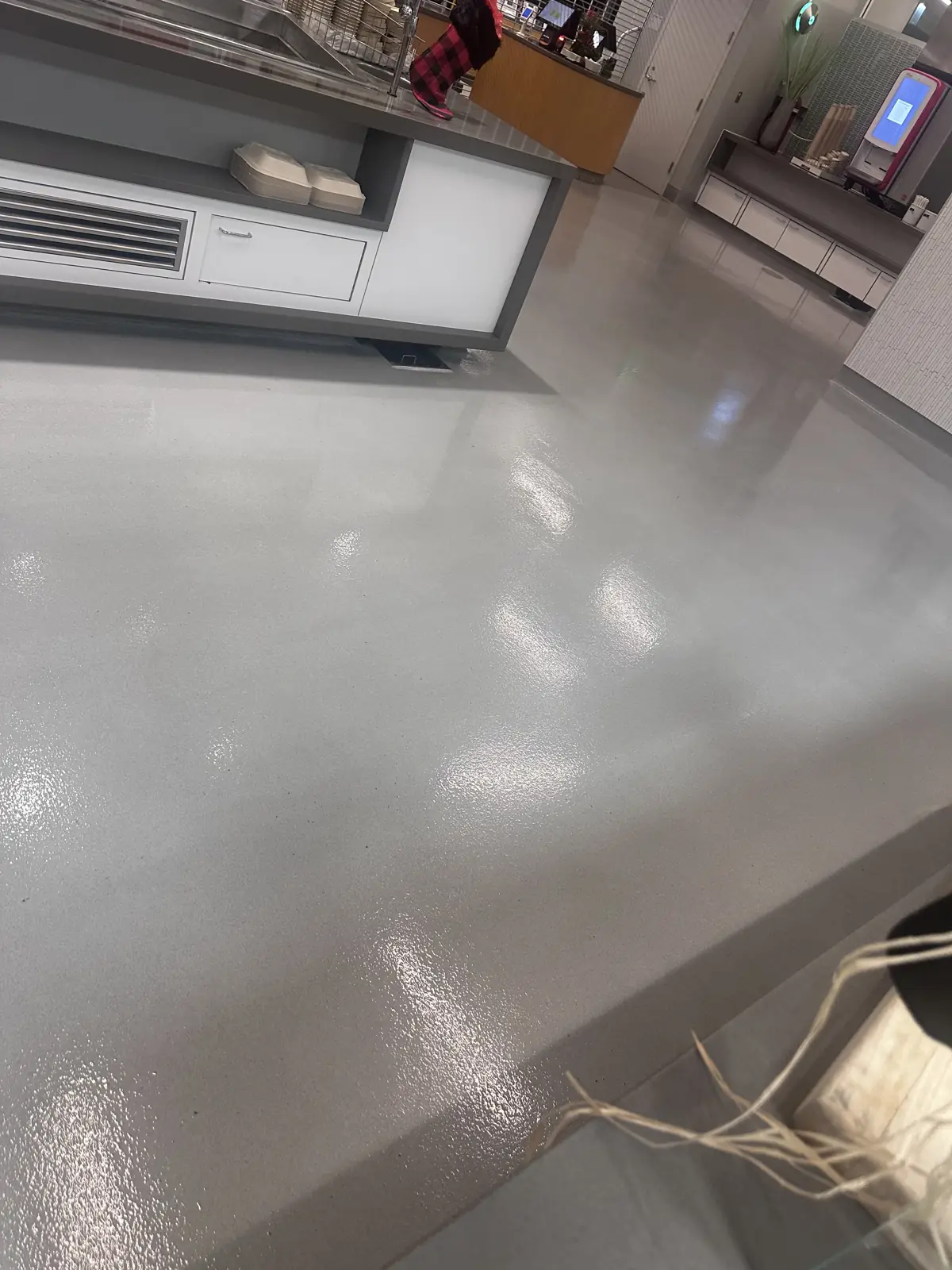
Floor work should be first on the calendar, not last. Stripping and refinishing VCT, terrazzo, and other hard floors takes the longest to dry and cure of anything on this list, and it's the task most likely to get compressed if it's scheduled at the end of the break.
A typical floor care sequence covers:
- Furniture and fixtures cleared from each room before work starts
- Old finish stripped down to bare floor, not just buffed over
- Multiple coats of finish applied with full cure time between coats
- Gym floors and specialty surfaces handled on their own separate schedule
- A walk-through of finished rooms before furniture goes back in
For a longer breakdown of how often this needs to happen and why, see our guide to how often you should strip and wax commercial floors, and the full scope of what's involved on our floor care services page.
How should cafeteria and kitchen deep cleaning be scheduled?
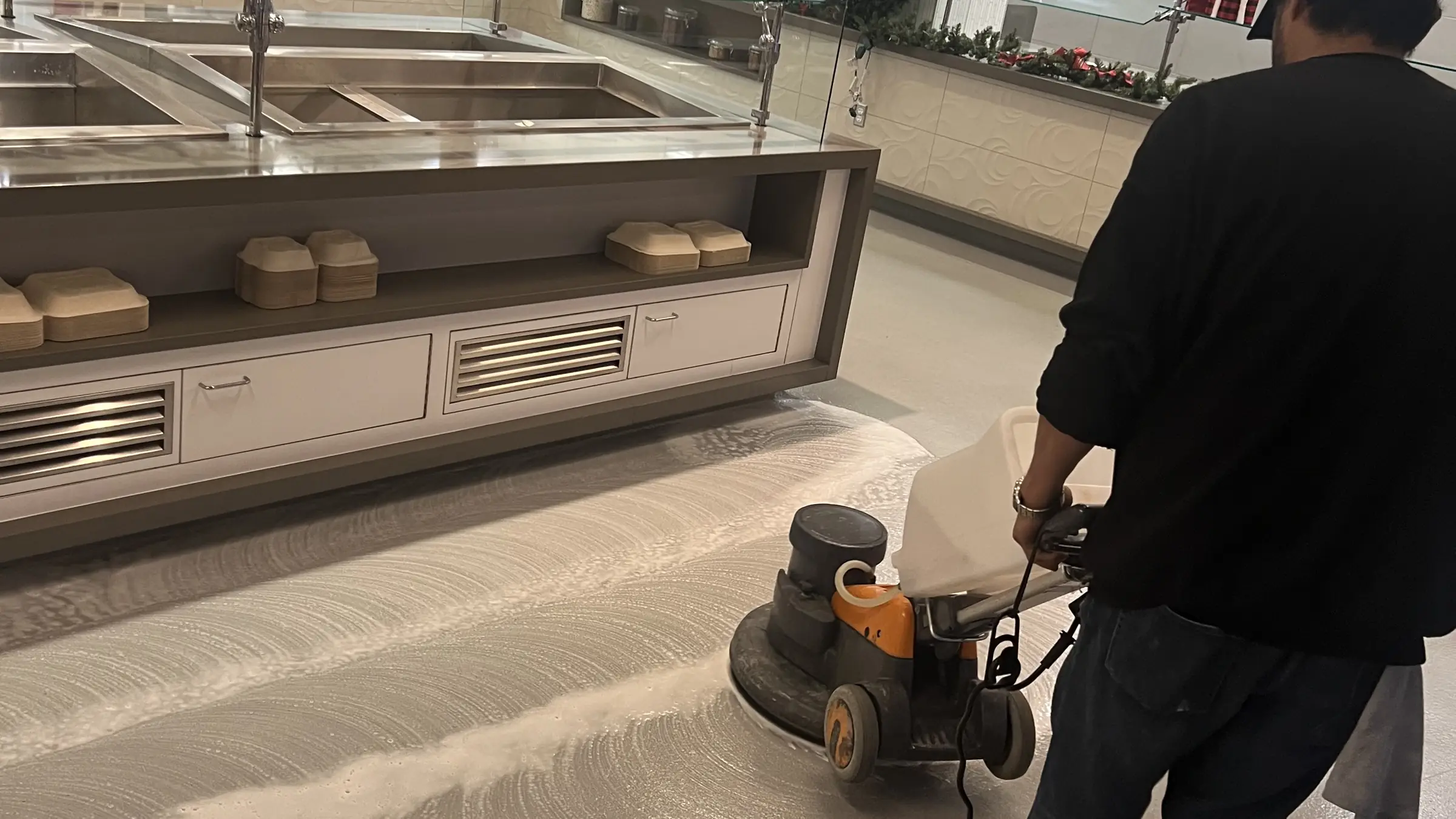
Cafeteria and kitchen deep cleaning typically happens once the kitchen is fully shut down for the summer, not on a night shift squeezed between service days. That's the only time equipment can come apart for cleaning behind and underneath it, not just around it.
This portion usually includes degreasing hood systems, pulling and cleaning behind cooking equipment, deep-scrubbing walk-in coolers and freezers, and stripping and refinishing the kitchen and serving line floors on the same schedule as the rest of the building's hard floors. Cafeteria seating areas get the same floor treatment as corridors, on the same sequence.
What high dusting and vent-area work fits the break?
High dusting is corridor ceilings, above lockers, gym rafters, light fixtures, and the areas around HVAC vent covers and returns — anything above normal reach that daily cleaning doesn't touch. It typically happens mid-break, after floor work is done in a given wing but before furniture and displays go back up.
Vent covers themselves are usually wiped down and vacuumed as part of this pass. Deeper HVAC system work, if it's needed, is a separate scope handled by a mechanical contractor, not a janitorial crew. It's worth confirming who owns that line item early so it doesn't fall through the cracks. Our high dusting service page covers what's typically included in this pass.
How do you sequence multiple buildings in one window?
A district with several campuses on one summer calendar needs a building-by-building sequence, not one crew trying to be everywhere at once. Most districts stagger buildings so floor work finishes and cures in one school while crews move to the next, then circle back for final inspections once everything's had time to dry.
Elementary, middle, and high schools often have different break lengths and different reopening dates for staff, which changes how tight each building's window actually is. That schedule should be built and confirmed before the first crew shows up, not adjusted on the fly in July.
What should be inspected before students return?
A few days before staff report back, every building on the list should get a documented walk-through against the written summer scope, not a quick look, an actual checklist:
- Floors in every room: finish cured, no tacky spots, no missed edges
- Cafeteria and kitchen equipment, floors, and coolers signed off
- Restrooms fully stocked and deep-cleaned, not just wiped down
- High-dust areas and vent covers clear
- Furniture and fixtures back in place and undamaged
- Any punch-list items from the walk-through closed out before day one
If something's not done, it needs to show up on that list before staff arrive, not get discovered on the first day of in-service.
Where Nexara fits
Nexara plans and staffs summer floor care, cafeteria and kitchen deep cleaning, and high dusting around the actual length of your break, then documents the pre-return inspection so nothing gets discovered on the first day back. If you're building this year's summer schedule, learn more on our K-12 and education page or request a walkthrough to get a written scope before the calendar fills up.
Questions we get asked.
How far in advance should summer school cleaning be scheduled?
Typically before the school year ends, so crews, materials, and building access are lined up for day one of break instead of getting arranged after the last bell rings.
What floor work needs the most dry and cure time?
Stripping and refinishing VCT and similar hard floors needs the longest dry time of anything on a summer list, which is why it should be scheduled first, not squeezed in at the end.
What should be inspected before students return?
Floors, cafeteria and kitchen surfaces, restrooms, high-dust areas, and HVAC vent covers, walked and documented against the written scope a few days before staff report back.