
Published · 4 min read
A lease-turnover clean isn't the same job as the nightly office service that ran while a tenant occupied the space. It typically adds carpet extraction, full interior window and glass cleaning, and touch-up detail work, scoped as a one-time project and scheduled for the window between move-out and the incoming tenant's walkthrough.
What's different about turnover cleaning vs routine service?
Routine office cleaning is maintenance: trash, vacuuming, restrooms, wipe-downs, on a recurring schedule that assumes the space is occupied and generally kept up. Turnover cleaning assumes the opposite: the space is empty, it's been through a move, and it needs to look ready for someone who has never seen it before. That means going deeper than a nightly crew normally would, into corners behind where furniture sat, baseboards, vents, and glass that hasn't been touched in months.
What should be on the carpet and floor checklist?
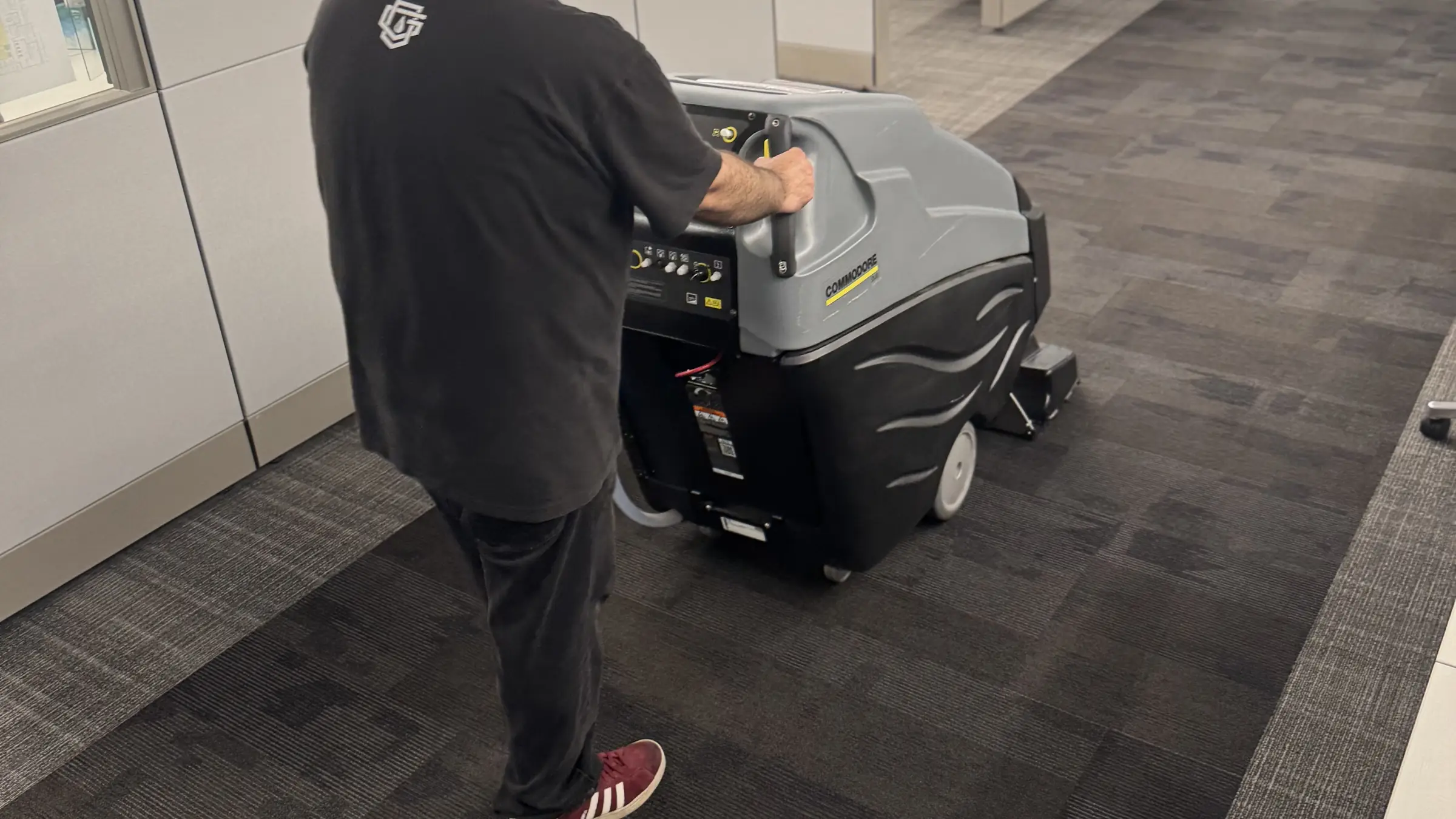
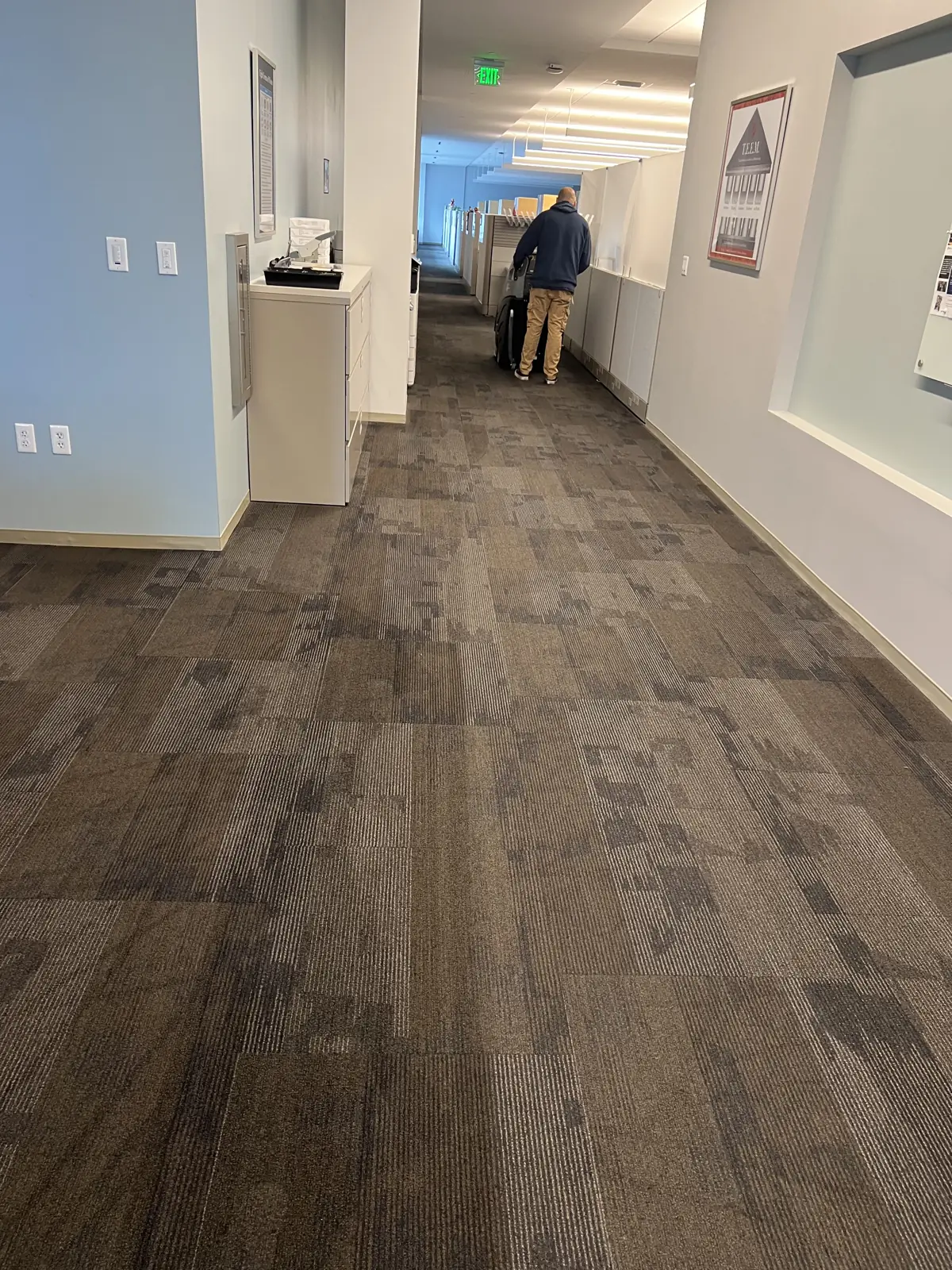
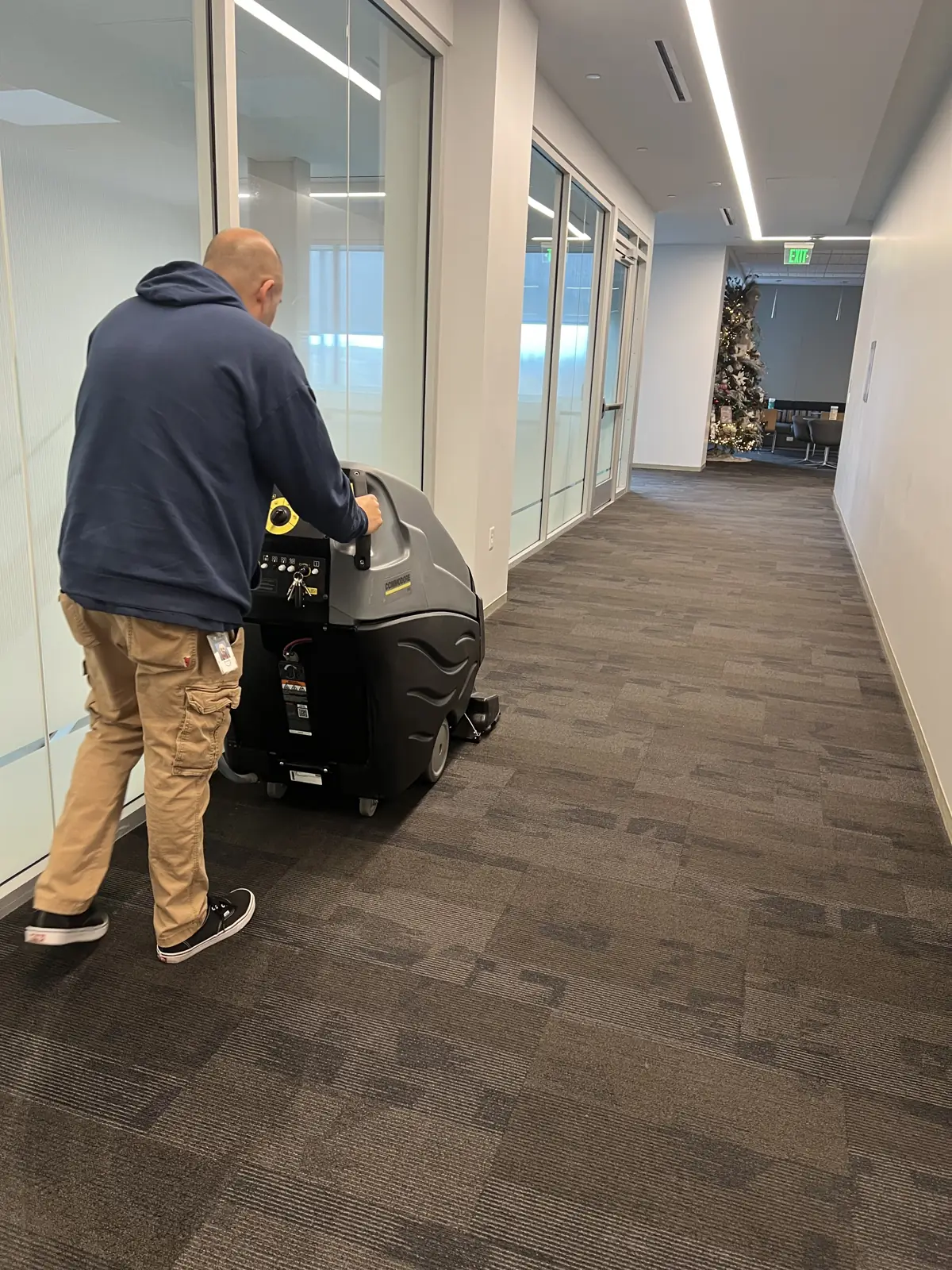
Carpet is usually the biggest visible difference between a routine clean and a turnover clean. Most of this work falls under carpet cleaning rather than day-to-day janitorial.
- Full carpet extraction, not just vacuuming, to pull out ground-in soil and traffic-lane staining
- Spot treatment on visible stains before extraction
- Hard floor stripping or scrubbing in break rooms, kitchens, and entries where routine mopping doesn't cut it
- Baseboards and corners wiped down, since furniture usually covered them for the length of the lease
- A walk of high-traffic paths, hallways, entries, the path to the break room, since those show wear fastest
Carpet condition also matters for the surrender clause conversation. A tenant who leaves carpet extracted and documented has an easier time pointing to condition-on-exit than one who doesn't.
How should windows, glass and partitions be handled before a walkthrough?
Interior glass gets ignored in routine service more than almost anything else: a quick swipe on a smudge, not a full clean. For turnover, interior windows, glass partitions, and any glass office fronts should get a full clean, not a touch-up. That includes frames and tracks, which collect dust over the life of a lease and are easy to miss if you're only looking at the glass itself. A property manager walking the space for the first time with an incoming tenant notices smudged glass fast. It reads as "not actually clean" even if the floors are perfect.
What gets missed in a standard office clean that turnover needs?
A nightly janitorial scope is built around what's visible day to day, not what a new tenant will inspect on day one. Turnover work usually needs to cover:
- Light fixtures and vents, which build up dust over a full lease term
- Interior door glass and hardware, including handprints and smudges around entries
- Kitchen and break room appliances inside and out, not just wiped counters
- Restroom fixtures and grout, since routine service usually maintains rather than deep-cleans
- Wall marks and scuffs near doorways and furniture footprints
- Window sills, blinds, and frames
How far ahead of move-in should turnover cleaning be scheduled?
Turnover cleaning typically gets scheduled once the outgoing tenant has fully moved out and before the incoming tenant's walkthrough. Most property managers build in a few days to a week for this, depending on the size of the space and how much detail work carpet and glass condition require. Scheduling it too close to move-in day leaves no room to fix anything the walkthrough turns up. Scheduling it too early risks dust and debris settling back in if there's ongoing construction or furniture delivery in between.
Who is responsible, landlord or outgoing tenant?
This depends entirely on the lease, and specifically on the surrender clause, which usually defines the condition the tenant has to leave the space in and who pays for getting it there. Some leases put the full cost on the outgoing tenant, some split it, and some leave it to the landlord as part of prepping for the next tenant. We're not attorneys and this isn't legal advice — if the lease language is unclear or disputed, that's a conversation for whoever is managing the lease, not something to guess at based on what's typical elsewhere.
Where Nexara fits
We do lease-turnover cleaning as a scoped, one-time project: carpet extraction, interior glass, and the detail work outlined above, separate from any ongoing office and commercial janitorial contract for the incoming tenant. We write the scope the same way we cover in our janitorial scope of work template. If you're managing a turnover and need it scheduled around a move-out and move-in date, request a walkthrough and we'll write up what the space actually needs.
Questions we get asked.
Is turnover cleaning usually the landlord's or tenant's responsibility?
It depends on the lease. Check the surrender clause — it usually spells out the condition the space has to be left in, and who's on the hook for getting it there. This isn't legal advice; when the lease language is unclear, that's a question for the attorney or property manager handling the lease, not a cleaning vendor.
How long before move-in should turnover cleaning happen?
Most turnover cleans are scheduled in the gap between the outgoing tenant's move-out and the incoming tenant's walkthrough, typically a few days to a week out, so floors and glass have time to be inspected and touched up before anyone moves furniture in.
Does turnover cleaning include carpet cleaning?
Usually yes. A full carpet extraction is one of the main things that separates a turnover clean from routine office janitorial, since routine service is maintenance-level and turnover needs a deeper reset.