Published · 4 min read
The Inland Empire's dry summer heat pushes more airborne dust and grit into warehouses through loading docks and HVAC intake. Most facilities should shorten dust-mop and high-dusting intervals in peak months instead of running one flat schedule all year.
How do heat and dust change warehouse cleaning needs?
Warehouses in Ontario, Fontana, Rialto, and the rest of the Inland Empire deal with a specific combination most coastal facilities don't: long dry stretches, heavy truck traffic, and dock doors that stay open for loading. Airborne particulate matter enters buildings through openings like doors, windows, and HVAC intake, and dry conditions mean there's simply more of it in the air to begin with (EPA). A cleaning schedule built for a mild, wetter season doesn't account for that.
The practical effect is more dust settling on racking, ductwork, light fixtures, and high wall surfaces, and more grit getting tracked or blown onto the floor near dock doors. None of that shows up as a dramatic problem overnight. It shows up as a slow buildup that a once-a-quarter cleaning plan doesn't keep up with.
Why do loading docks need more attention in summer?
Dock doors are the main entry point for outside dust, and in summer they tend to stay open longer for cross-docking, staging, and airflow. Every truck that pulls in tracks in whatever it picked up on the yard or the freeway.
That means the dock apron, the first 20 to 30 feet of floor inside the door, and the dock levelers themselves collect more grit than they would in cooler, wetter months. Facilities that already sweep or scrub that zone daily typically don't need to change much. Facilities running a lighter schedule near the docks are usually the ones that notice buildup first.
How often should high dusting and HVAC-area cleaning happen in peak season?
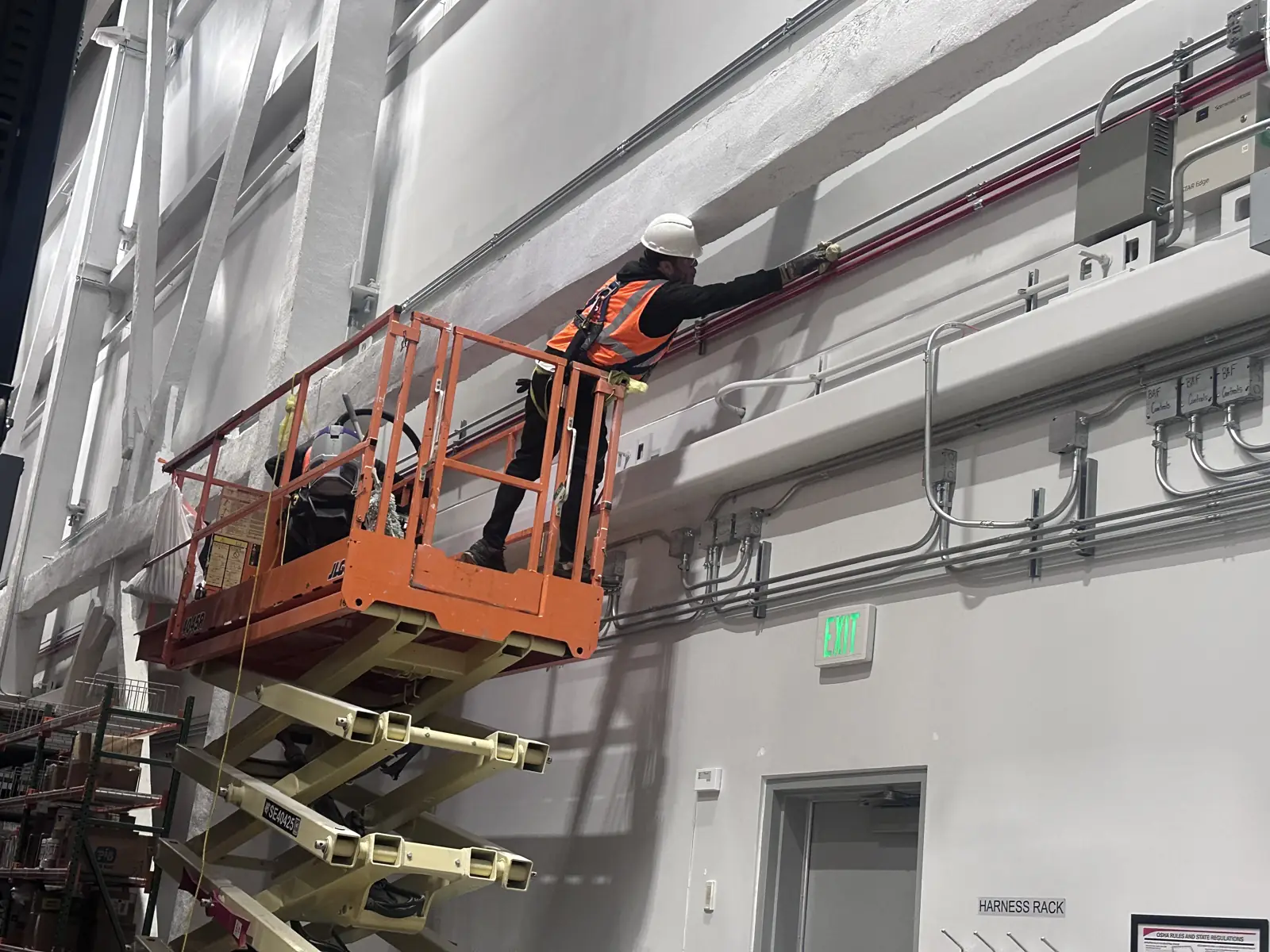
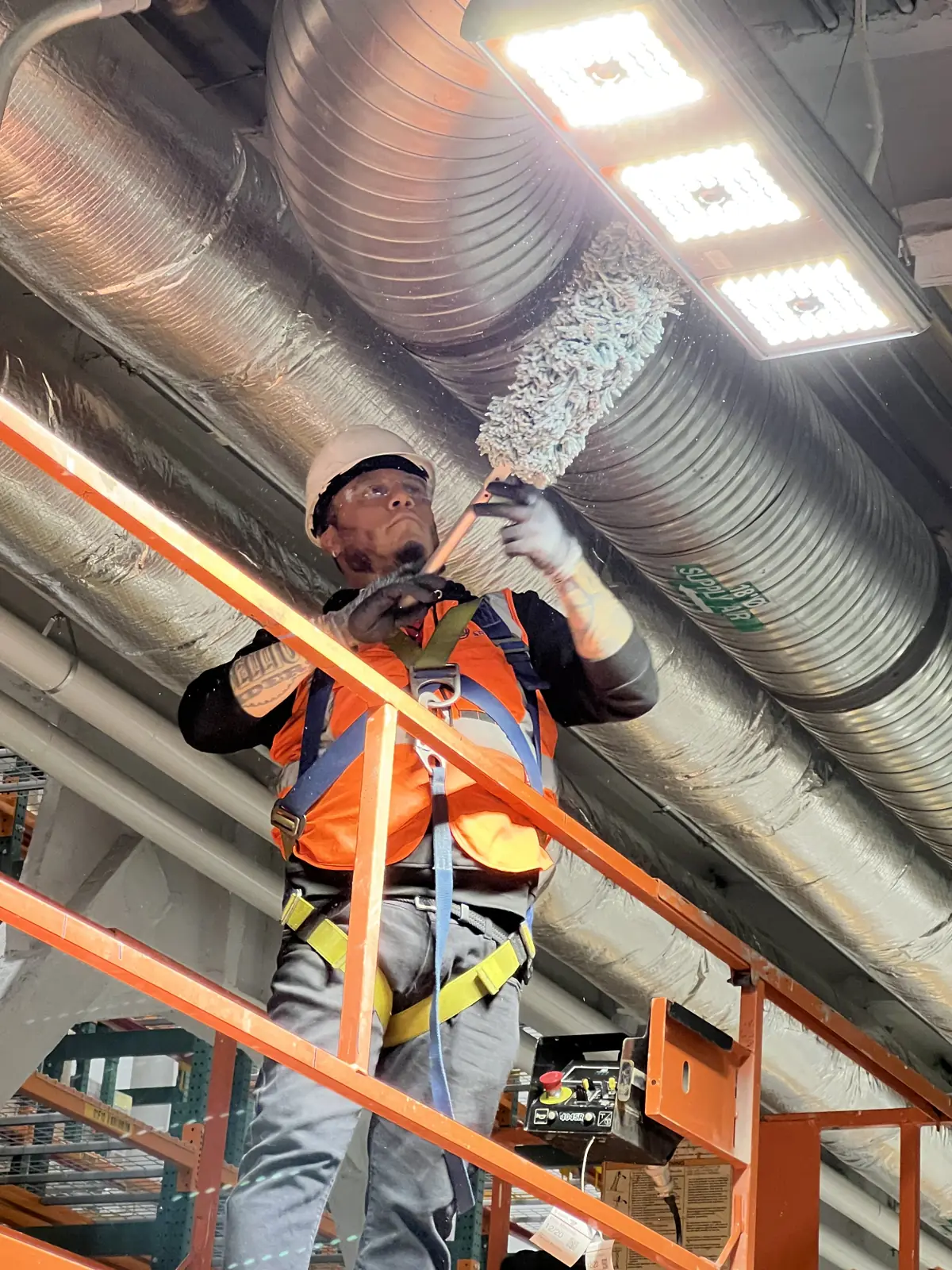
High dusting, meaning overhead ductwork, beams, light fixtures, and top-of-rack surfaces, is easy to ignore because it's out of sight. In peak dust season it's also where a lot of that extra airborne particulate ends up settling first.
Most facilities run high dusting on a quarterly or semiannual base schedule. Tightening that interval during the hottest, driest stretch of the year, rather than waiting for the regularly scheduled pass, catches buildup before it accumulates enough to fall or get disturbed by HVAC airflow and land back on product, equipment, or the floor below.
Does hot weather affect floor finish and coatings?
Heat changes dry and cure times for floor finishes and coatings, generally speeding them up. That's not automatically a problem, but it does mean a recoat scheduled during peak summer needs tighter coordination between prep, application, and cure windows than the same job in cooler weather.
The bigger practical issue is dust contamination during the work itself. A floor that's being stripped, prepped, or recoated is more vulnerable to airborne grit settling into a wet finish than a floor that's just being maintained day to day. If a recoat is planned for summer, it's worth talking with whoever's doing the work about how they're controlling dust in and around the work area during application, not just about the finish product itself. For the general maintenance cycle outside of a recoat, our guide to strip-and-wax timing covers how facilities typically set that schedule.
What changes for night crew coverage in summer?
A lot of Inland Empire warehouse cleaning happens overnight, which is already the right call for temperature reasons alone. Interior temperatures in a warehouse with limited climate control can stay high well after sunset, and crews working floor equipment, high-dusting lifts, or dock areas are doing physical work in that environment.
The main scheduling adjustment most facilities make in summer isn't the hours, it's the pacing: more frequent breaks, earlier start times to get ahead of the heat, and closer attention to how equipment-heavy tasks like burnishing or scrubbing are sequenced through the shift. That's a conversation to have directly with whoever staffs your account, since it depends on the building's own HVAC and dock conditions.
A summer adjustment checklist
- Shorten the high-dusting interval near dock doors and HVAC intake during peak dry months
- Increase sweep frequency on the dock apron and first section of interior floor past the doors
- Coordinate any planned floor recoat around dust control and the shorter cure window heat can create
- Keep parking lot and dock apron sweeping on a tighter cycle since dry weather means less rain to clear grit naturally
- Check filters and HVAC intake screens more often if dust load has visibly increased
- Confirm night crew start times and break pacing still match current heat conditions
Where Nexara fits
If your Ontario or Inland Empire facility hasn't adjusted its cleaning schedule for peak summer dust and heat, that's a conversation worth having before it shows up as a buildup problem in the fall. See our Ontario service area page for what we cover locally, or request a walkthrough and we'll look at your actual dock traffic, HVAC layout, and current schedule before recommending anything.
Questions we get asked.
Does summer heat affect floor coating durability?
Heat and dust both play a role. Hot, dry conditions can shorten dry and cure times for coatings, and more airborne grit tracked in during peak dust season means more contamination risk if floors are recoated without extra attention to prep and dust control.
How often should high dusting happen in peak dust season?
There's no single number that fits every building, but most facilities that run a quarterly or semiannual high-dusting schedule the rest of the year benefit from tightening that interval during peak summer months when dock traffic and dry wind push more dust onto overhead surfaces.
Should parking lot sweeping frequency change in summer?
Often yes. Dry conditions mean less rain to naturally clear grit and debris from lots and dock aprons, so that material sits and gets tracked indoors more than it would in wetter months, which is a reason to keep sweeping on a tighter cycle through summer.