
Published · 4 min read
Use encapsulation to keep office carpet looking clean between deep cleans, and hot water extraction to actually pull out the soil that builds up in the pile and backing. Most offices need both, on different schedules for different traffic zones. The mistake we see most is picking one method and running it building-wide.
We clean a lot of office carpet, and the question usually comes to us as "which one should we be doing?" The honest answer is that it's not a choice between them. It's a question of how much of each, and where.
What's the actual difference between the two?
Hot water extraction sprays a heated cleaning solution into the carpet and immediately vacuums it back out, along with the loosened soil. It's the restorative clean. It reaches grit and residue that settle below the surface, where vacuuming doesn't get them.
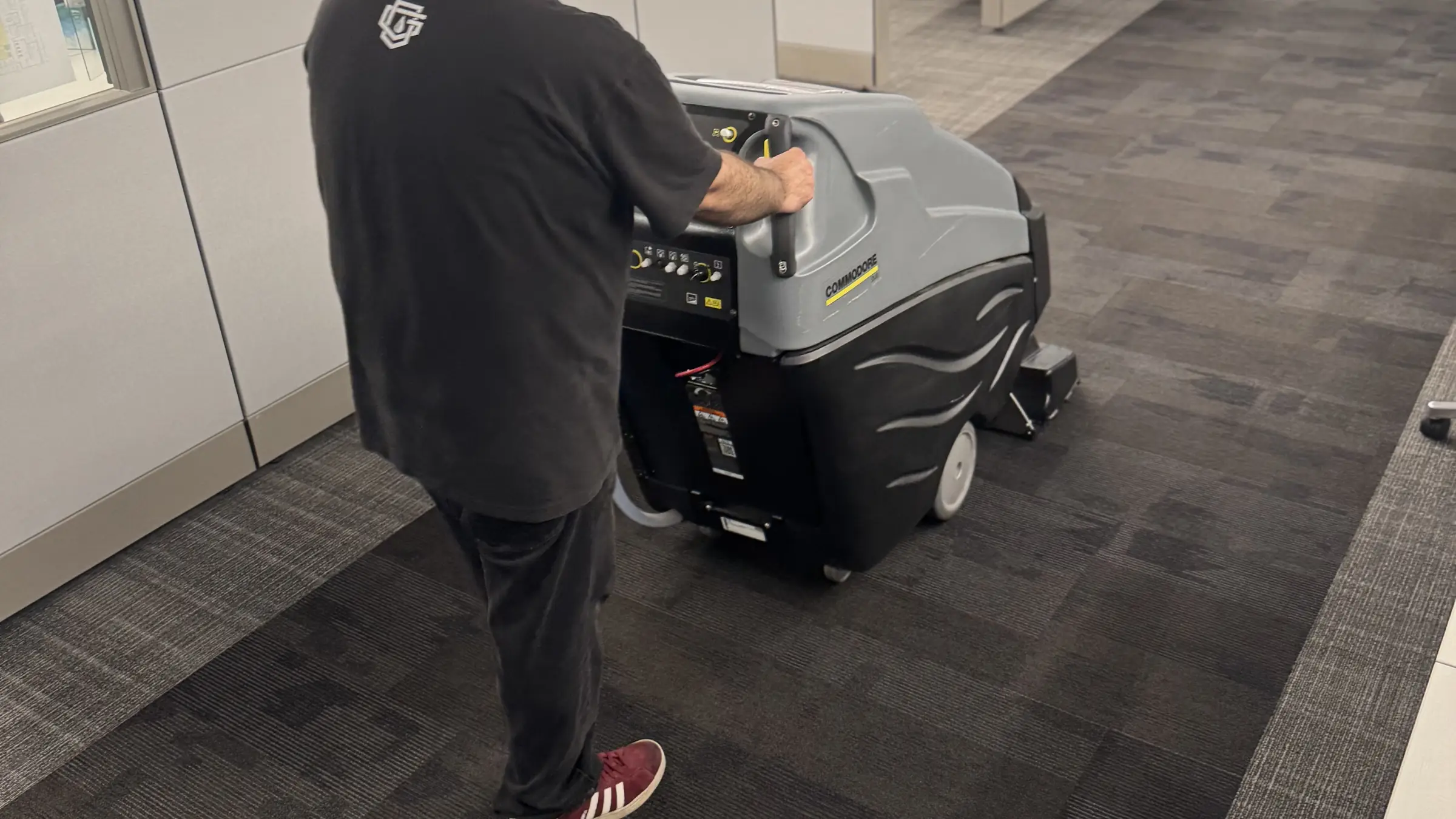
Encapsulation is a low-moisture method. A cleaning solution is worked into the fibers, usually with a cylindrical or rotary machine. As it dries, the chemistry surrounds soil particles so they release from the fiber and come up with routine vacuuming. It's an interim clean: fast, low disruption, good for appearance.
One flushes soil out. The other lifts it from the surface and lets the vacuum finish the job. That's why they complement each other instead of competing.
When does an office need extraction?
Extraction is the right call when the carpet has soil that encapsulation can't reach. Signs we look for:
- Traffic lanes that stay gray right after a vacuum
- Spots that keep coming back after they've been treated
- Carpet that feels stiff or slightly sticky underfoot
- Several rounds of encapsulation without a deep clean in between
- A move-in, move-out or lease turnover where the space needs to reset
Extraction puts more water into the carpet, so dry time is longer and depends on airflow and humidity. That's why we schedule it after hours or over a weekend in most offices.
When is encapsulation the better choice?
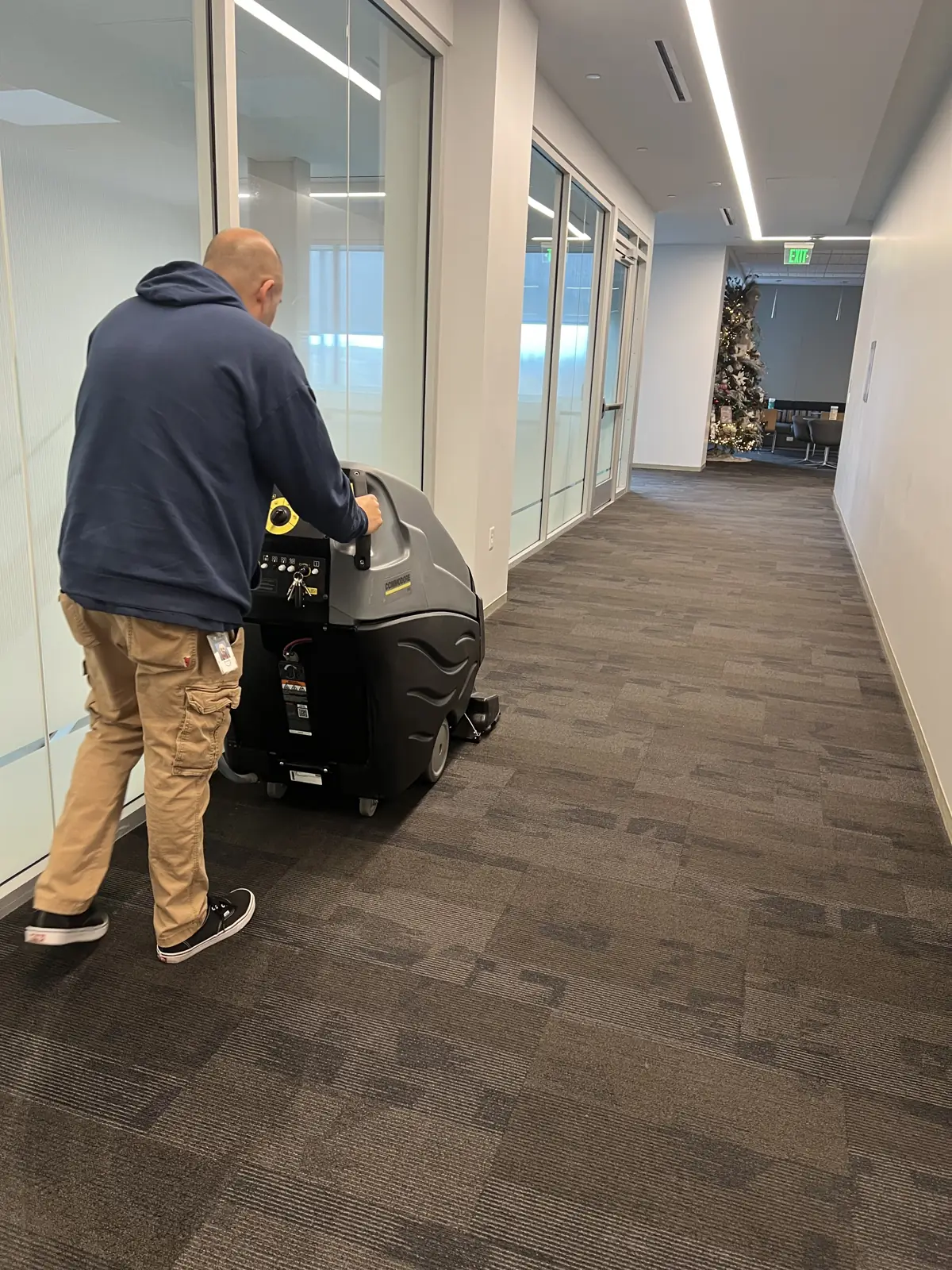
Encapsulation earns its place in the weeks and months between extractions. It brings traffic lanes back up to standard without taking a floor out of service for long, and it works well in areas that can't be closed for a night.
It's also the more forgiving method for the schedule. Because it dries quickly, a crew can often run it in a lobby or corridor and have the area back in use the same day. For a multi-tenant building where common areas are always occupied, that matters.
What encapsulation won't do is fix a carpet that's already heavily soiled. Running it over deep grit just cleans the top of the problem.
How often should each zone be cleaned?
Traffic sets the schedule, not the calendar. We zone an office before we write frequencies. A typical breakdown looks like this:
- Entries and lobbies: the heaviest soil load. Usually the most frequent encapsulation and the shortest extraction interval.
- Main corridors and elevator landings: close behind entries. Encapsulate traffic lanes regularly, extract on a shorter cycle than open office areas.
- Break rooms and areas near kitchens: spills and food soil. Spot treatment is constant; extraction comes around more often than you'd guess from foot traffic alone.
- Open office and cubicle aisles: moderate. Aisles get interim cleaning; areas under desks need it far less.
- Private offices and conference rooms: lightest traffic. Often extraction on a long cycle with little interim work.
Exact frequencies depend on headcount, how much outdoor soil walks in, and how good your entry matting is. A building with good walk-off mats and daily vacuuming of entries can stretch every interval.
What does a good carpet program look like on paper?
If carpet care is in your janitorial contract, the scope should say more than "carpet cleaning as needed." It should name the method, the zones and the frequency for each. Something like "encapsulate main corridors monthly, extract quarterly" is a line you can check. "Periodic carpet cleaning" isn't.
If you're writing or rewriting a scope, our janitorial scope of work template shows how to lay out periodic work like this alongside the nightly tasks.
Does vacuuming still matter if you do both?
More than anything else on this list. Encapsulation depends on vacuuming to remove the soil it releases, and dry grit is what wears carpet fibers down between cleanings. A program with good extraction and weak vacuuming will still look tired. Daily vacuuming of entries and traffic lanes is the foundation everything else sits on.
Where Nexara fits
We run commercial carpet cleaning as a zoned program, pairing interim encapsulation with scheduled extraction for offices and commercial buildings across the Inland Empire and Southern California. If your carpet looks clean for a week and then slides back, request a walkthrough and we'll map out which zones need what.
Questions we get asked.
Is carpet encapsulation as good as hot water extraction?
No, they do different jobs. Encapsulation is an interim clean that keeps appearance up between deep cleans, while hot water extraction flushes out the soil that settles deep in the pile and backing.
How often should office carpet be extracted?
It depends on traffic. Entries and main corridors typically need extraction more often than private offices, so most programs set a different frequency for each zone instead of one date for the whole building.
Can office carpet be cleaned during business hours?
Encapsulation often can, because it uses little moisture and dries quickly. Extraction is usually scheduled after hours or over a weekend so the carpet has time to dry before people walk on it.