

Published · 4 min read
Most commercial buildings clean storefront and entry glass monthly, office park exteriors quarterly, and interior touch glass every night as part of janitorial. The right frequency for your building depends on what the glass faces: foot traffic, landscaping, a dusty road or a loading yard. One schedule for every pane in the building almost always wastes money on one side and falls short on the other.
We get this question from property managers and facility leads all the time, usually right after a tenant or a visitor points out streaky glass at the front door. Here's how we think about it.
Why does one building need more than one window schedule?
Because glass gets dirty for different reasons depending on where it is. Entry doors collect handprints. Ground-floor storefront collects dust, pollen and splash from the sidewalk. Upper-floor office glass mostly collects airborne dust and weather. Glass near irrigated landscaping picks up sprinkler overspray, which leaves mineral spots.
If you set one frequency for all of it, you end up paying to clean upper-floor glass that still looks fine while the entry looks bad two weeks after every visit. Splitting glass into zones fixes that.
How often should storefront and entry glass be cleaned?
This is the most visible glass you have, so it runs on the tightest schedule. A typical setup:
- Entry door glass and push plates: spot-cleaned daily by the night crew or day porter
- Storefront exterior: monthly in most buildings, more often for retail or high-traffic lobbies
- Storefront interior: monthly, often on the same visit as the exterior
For a building with a lot of walk-in traffic, some managers move the exterior storefront to every two weeks. That's a judgment call based on how fast it visibly slides, not a rule.
What about office park and industrial exteriors?
Upper floors and buildings set back from foot traffic usually do fine on a quarterly cycle. Many office parks clean full exteriors two to four times a year and fill the gaps with monthly storefront visits at the main entry.
Industrial and warehouse buildings tend to have less glass, mostly office fronts and entry doors. Those are often the dustiest panes on any property, because they sit next to truck courts and unpaved edges. They benefit from the same monthly entry visit even if the rest of the building gets cleaned less often.
Exterior glass above the ground floor means work at height. Ladders, lifts and rope access all come with fall protection requirements, so ask any vendor how they reach upper glass and how their crew is protected. OSHA's fall protection page is a good starting point for what that involves.
How should interior glass be handled?
Interior glass is mostly a janitorial task, not a window-cleaning task. Glass office fronts, conference room walls, interior doors and sidelights pick up fingerprints and smudges daily. The night crew should be spot-cleaning them on a set schedule written into the scope, with a full wipe-down of partitions on a weekly or monthly cycle depending on how much they get touched.
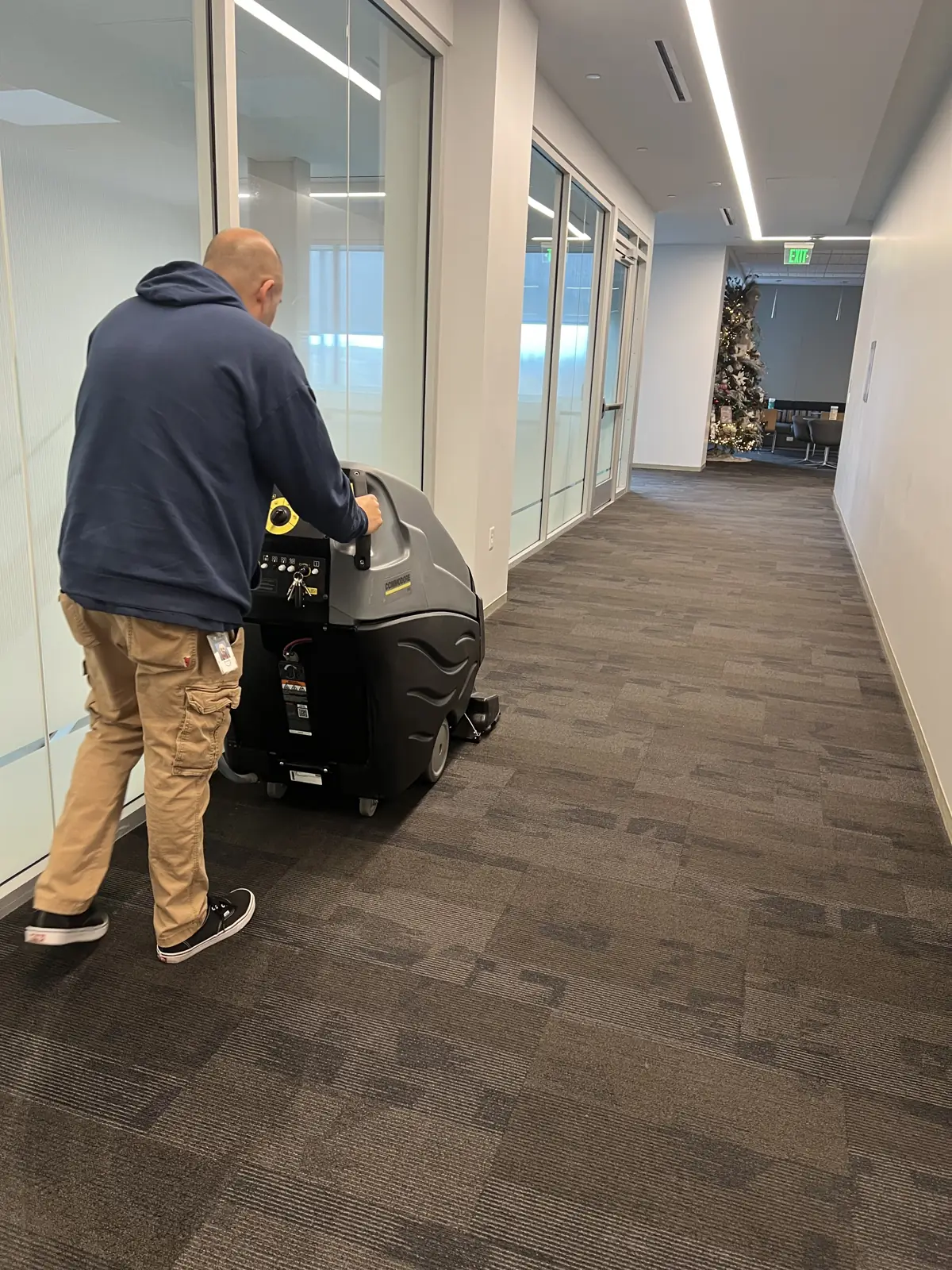
Glass-walled corridors like the one above show every handprint at eye level. If your scope just says "clean glass as needed," it will get done when someone notices, which is too late. Our janitorial scope of work template shows how to list interior glass as its own line with a frequency.
When should you clean more often than usual?
A few things justify bumping the schedule up, at least temporarily:
- Sprinkler overspray: hard-water spots that sit too long can etch the glass, and etching doesn't come out. Fix the sprinkler heads and clean the affected panes more often until they're under control.
- Construction nearby: dust from a neighboring site settles on glass fast.
- Windy, dry stretches: Inland Empire buildings see heavy dust in Santa Ana wind season.
- A tenant move-in, a sale or an audit: schedule a full interior and exterior clean in the weeks before.
What should a window cleaning line item say?
Whether it's in your janitorial contract or a separate agreement, the line should be specific enough to check. Use this as a checklist when you review it:
- Which glass is included: storefront, upper floors, interior partitions, skylights
- Inside, outside or both, listed separately
- Frequency for each zone
- Whether frames, tracks and sills are wiped
- How upper-floor glass is reached (ground pole, lift, rope access)
- How hard-water staining is handled, and whether it's priced separately
- What happens when a visit is rained out
"Windows quarterly" is not a scope. "Exterior storefront monthly, full exterior quarterly, entry door glass nightly" is.
Where Nexara fits
We run commercial window cleaning on zoned schedules for offices and commercial buildings and industrial properties across the Inland Empire and Southern California, alongside the nightly janitorial work that keeps interior glass clean. If your glass looks good for a week and then slides, request a walkthrough and we'll lay out a schedule by zone.
Questions we get asked.
How often should storefront windows be cleaned?
Most storefronts and main entry doors are cleaned at least monthly on the outside, and entry door glass is usually spot-cleaned daily by the janitorial or day porter crew because fingerprints show up within hours.
Do interior and exterior windows need the same schedule?
Usually not. Exterior glass collects dust, pollen and sprinkler overspray, while interior glass mostly collects fingerprints and smudges, so the two sides typically run on separate frequencies.
Should window cleaning be part of the janitorial contract?
Interior touch glass, like entry doors and partitions, belongs in the nightly janitorial scope. Full exterior window cleaning is usually a separate periodic line item with its own frequency and price.
Sources