Published · 4 min read
Most loading docks need pressure washing monthly to quarterly, and most dumpster pads monthly, with food service pads sometimes more often. The schedule depends on what crosses the surface: tire grease, product spills, leaking trash bags. The part people skip is where the wash water goes, and that matters as much as how clean the concrete gets.
These are the two dirtiest pieces of concrete on most commercial properties, and they're usually the last ones anyone looks at. Here's how we set them up.
Why do docks and dumpster pads get their own schedule?
Because they get dirty faster and in different ways than the rest of the site. A dock apron collects tire rubber, hydraulic drips, oil and crushed cardboard. A dumpster pad collects food waste, liquid from torn bags and grease from kitchens. Both turn slick, both smell in the heat, and both get tracked inside on boots and pallet jack wheels.
A sidewalk might look fine on a twice-a-year wash. A dock apron on the same property can be visibly slick within weeks. Putting them on the same cycle means one of them is always wrong.
How often should loading docks be pressure washed?
Start from traffic and what the trucks carry. A typical range:
- High-volume distribution docks: monthly
- Docks handling food, beverage or anything that leaks: monthly, with spot cleaning of spills as they happen
- Light-use docks at offices or small industrial buildings: quarterly
Dock aprons and drive lanes are dense concrete, so they usually take hot water and higher pressure. Heat is what breaks down grease and tire residue. Cold water at high pressure tends to move the dirt around and leave the film behind.
Watch the dock plates, the leveler pits and the first few feet inside the door. If grime shows up on the interior floor right past the threshold, the exterior schedule is too loose. Your warehouse cleaning program will fight that dirt every night until the dock gets cleaned more often.
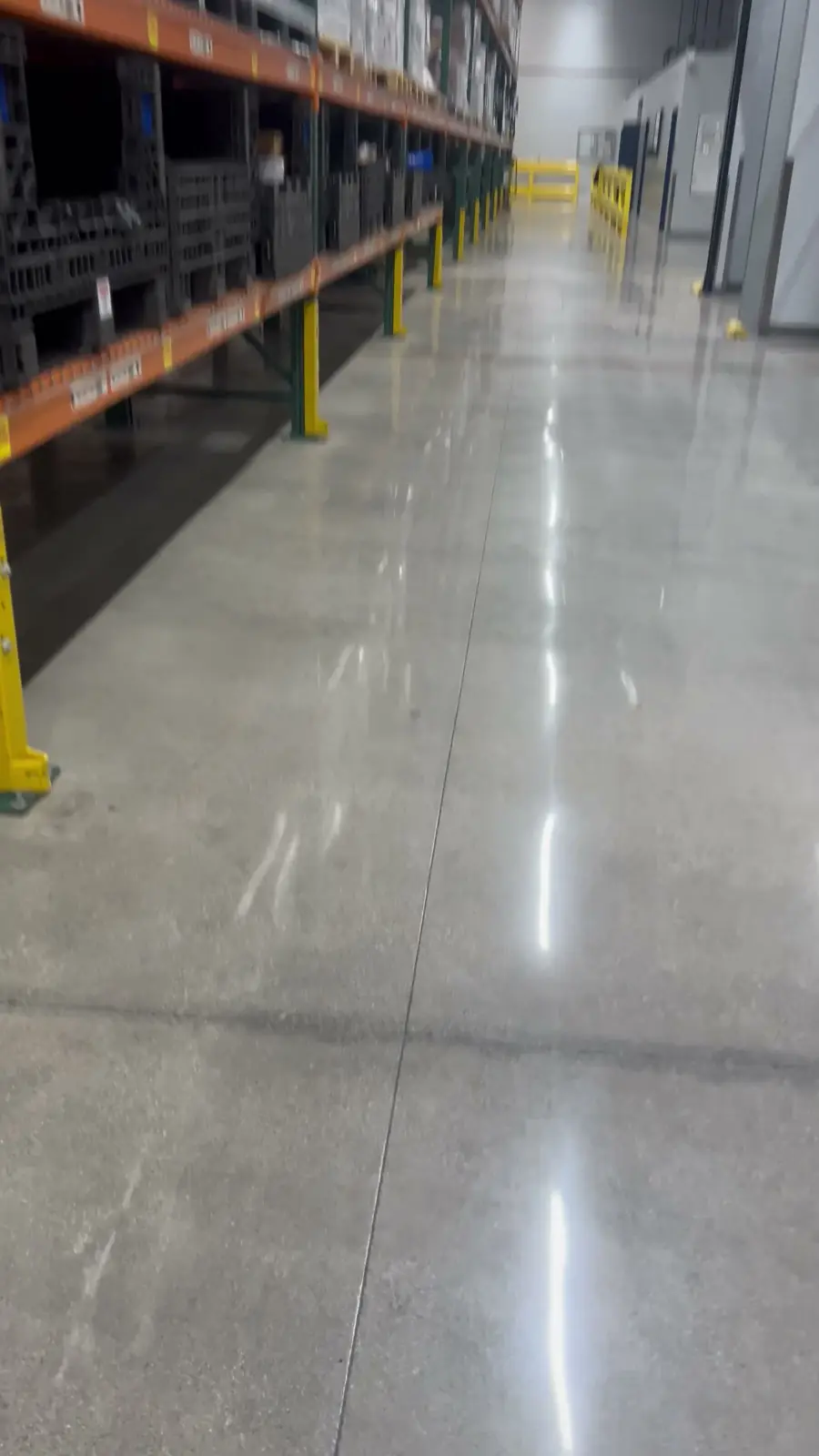
A finished interior floor like this one is part of why the dock matters. Every load that crosses a dirty apron brings some of it inside.
How often should dumpster pads be cleaned?
It depends almost entirely on what goes in the bins:
- Restaurant, cafeteria or food production waste: monthly at minimum, and more often in summer heat
- Mixed tenant trash in a retail or office center: monthly to every other month
- Dry waste only, like cardboard and paper: quarterly is often enough
Pads that smell, draw flies or have dark staining that spreads past the enclosure are behind schedule. So are pads with standing liquid after a dry week. Clean the enclosure walls and gates too, not just the slab, because that's where splatter collects.
Where does the wash water go?
This is the question to ask any vendor before they start. Storm drains on most commercial properties lead straight to local creeks and channels without treatment. Water that just washed a grease-covered dock or a food waste pad is exactly what stormwater programs are trying to keep out of them.
San Bernardino County's stormwater program asks businesses to reduce runoff from parking lots and loading docks and to keep wash water out of the storm drain (county guidance). Rules differ by city and county across Southern California, so check with your local agency. In practice, commercial crews typically:
- Block or cover nearby storm drain inlets before washing
- Recover wash water with a vacuum recovery unit or berm and pump it out
- Send collected water to the sanitary sewer where the local agency allows it, or haul it off
If a quote doesn't say how runoff is handled, ask. "We'll rinse it toward the drain" is not an answer you want.
What should the scope say?
A one-line "pressure wash dock quarterly" leaves too much open. A usable scope lists:
- Each area by name: dock aprons, dock plates, leveler pits, dumpster pads, enclosure walls and gates
- Frequency for each area
- Hot water or cold, and which areas get degreaser
- How storm drains are protected and where wash water goes
- Whether gum, oil stains or graffiti are included or priced separately
- What time of day the work happens, so trucks and trash pickups aren't blocked
- How you're notified the visit is done, with photos if you want them
Timing is easy to miss. Docks usually get washed during the lightest shift or on a weekend. Dumpster pads should be washed right after the hauler empties the bins, not right before.
When should you wash outside the schedule?
A few events justify an extra visit:
- A hydraulic leak, product spill or broken bag that leaves a slick area
- A pest or odor complaint from tenants or staff
- Before an audit, a customer visit or a property sale
- After a long dry stretch, before the first rain flushes everything toward the drains
Get spills cleaned up the same day if you can. The longer oil sits on concrete, the deeper it soaks in.
Where Nexara fits
We run commercial pressure washing for docks, dumpster pads, sidewalks and building exteriors across the Inland Empire and Southern California, scoped by area with runoff handling written in. If your dock or trash enclosure is the part of the property nobody wants to look at, request a walkthrough and we'll set a schedule for each surface.
Questions we get asked.
How often should a loading dock be pressure washed?
Most busy dock aprons run on a monthly to quarterly cycle. Docks with constant truck traffic, food product or visible grease usually sit at the monthly end of that range.
How often should a dumpster pad be cleaned?
Pads serving food service or wet waste often need monthly washing, and some need it more often in hot weather. Pads that only take dry cardboard and office trash can usually stretch to quarterly.
Can pressure washing water go into the parking lot storm drain?
Generally no. Storm drains in most Southern California cities flow untreated to local waterways, so commercial wash water is typically contained and recovered or sent to the sanitary sewer where the local agency allows it.
Sources