
Published · 4 min read
In most plants, the janitorial vendor cleans the building and the plant cleans its process. The vendor owns offices, restrooms, break rooms, floors outside the work cells, docks and overhead surfaces. Operators or a sanitation team own the machines, the lines and anything that needs lockout to reach.
That sounds simple. In practice, the gaps show up at the edges: the floor under a conveyor, the scrap bins beside a press, the top of a control cabinet. Those are the places nobody thinks is theirs. Here is how we help plants draw the line so both crews know exactly where their work stops.
Why does the split matter so much?
Because shared areas with no named owner get cleaned by whoever notices first, which usually means nobody. A buildup under a line that no one owns turns into a slip hazard, a dust problem or a finding on a customer visit.
It also matters for safety. Cleaning near running equipment is different work from cleaning a hallway. OSHA's lockout/tagout standard covers servicing and maintenance where unexpected startup could injure someone, and some equipment cleaning falls under it (29 CFR 1910.147). Your plant already has procedures for that. A cleaning vendor should work inside them, never around them.
What does a janitorial vendor typically own?
The vendor's side is the building and the shared spaces. In most plants that list looks like this:
- Offices, conference rooms and front-of-house areas
- Restrooms, locker rooms and consumables
- Break rooms and cafeterias, including floors and tables
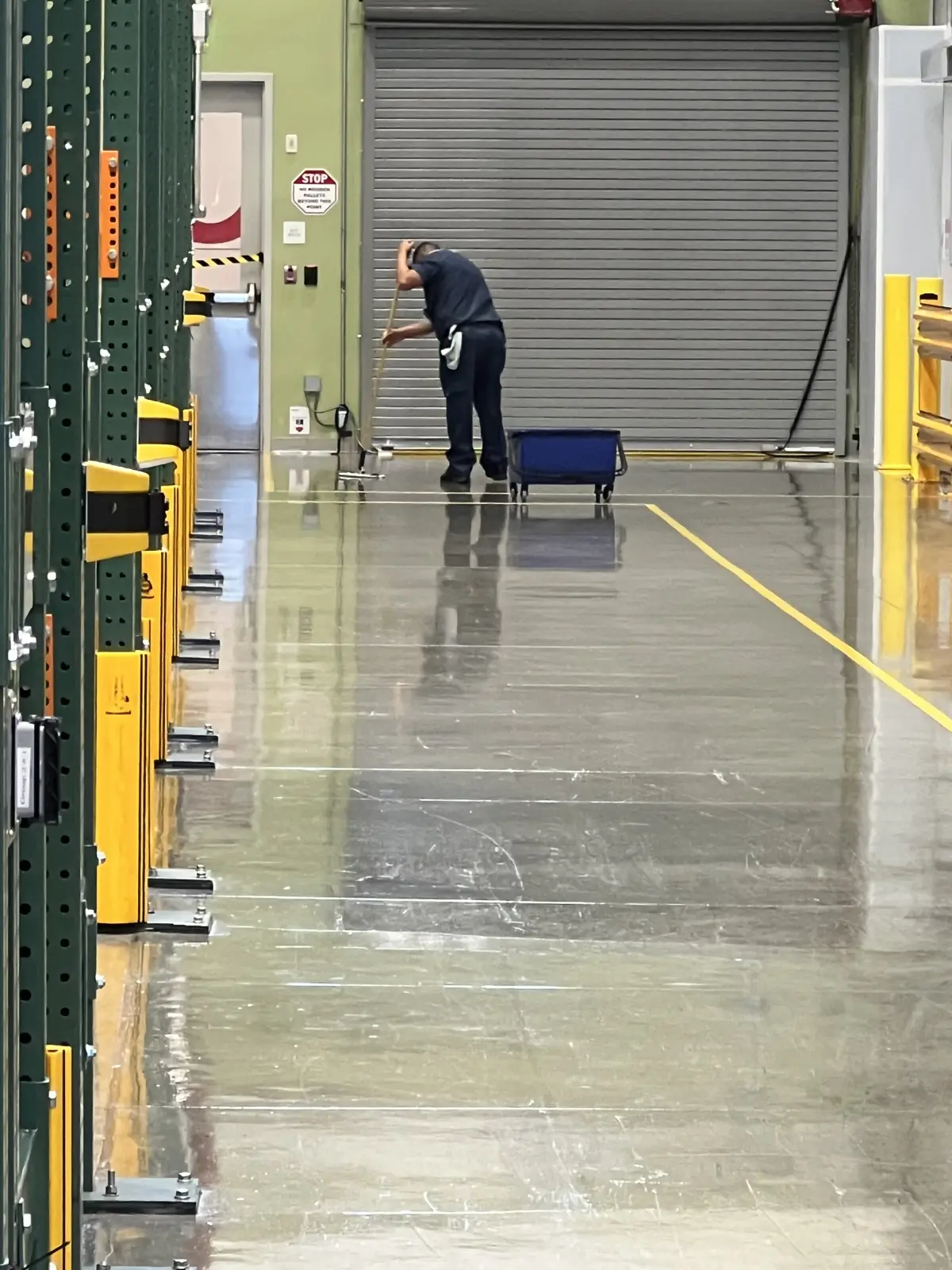
- Floors outside the agreed clearance line: aisles, corridors, staging areas
- Trash and recycling from offices and common areas to the outside containers
- Docks, entrances and walk-off matting
- Overhead surfaces like ductwork, beams and lights on a scheduled high dusting cycle
- Periodic floor work such as auto-scrubbing, sealing or polishing
What should plant staff keep?
The process side stays with the people who run it. That typically means production equipment, conveyors, tooling, work benches inside the cell, machine guarding, and anything that needs a lockout or a trained operator to reach.
Scrap and process waste usually stay with production too, at least up to the point where it leaves the cell. The vendor may haul general trash, but chips, offcuts, rejected product and anything with a hazardous or regulated waste stream belong to the plant's own handling procedures.
In regulated sites the split is even firmer. If you run a GMP area, the facility writes and approves the cleaning procedures and the contractor executes them exactly. We cover that division in more detail on our GMP and regulated facilities page.
Where do the gray areas usually show up?
These are the spots we ask about on every plant walkthrough, because they are where complaints start:
- The floor directly under and between machines
- Tops of control cabinets, panels and electrical enclosures
- Scrap bins and tote areas beside a line
- Spill response on the production floor, especially oil and coolant
- Forklift charging areas and battery rooms
- Mezzanines and storage above work cells
- Exterior pads around compactors and dumpsters
None of these has a single right answer. What matters is that each one is written down with a name next to it.
How do you draw the line on the floor?
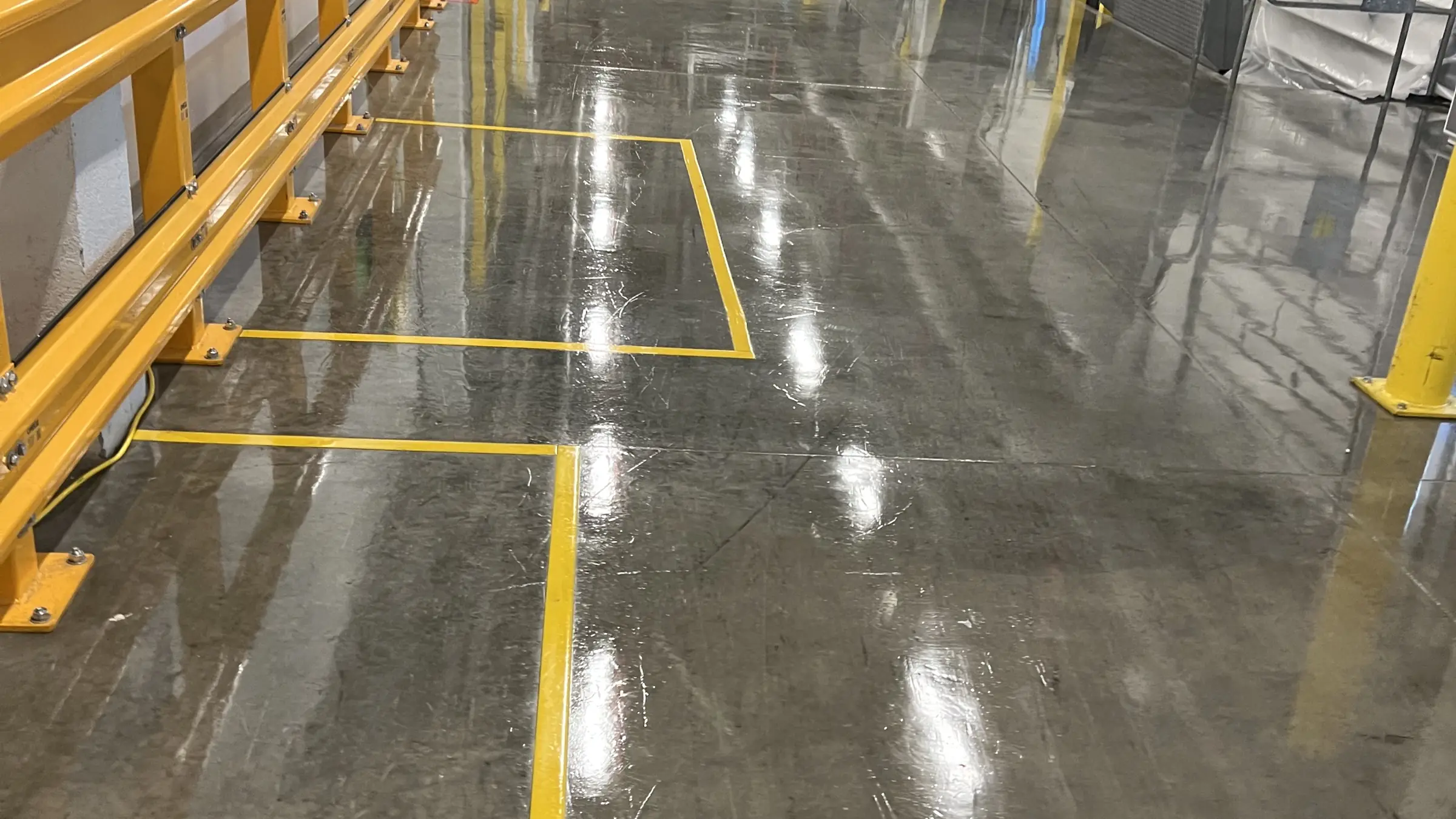
The cleanest method is a physical boundary everyone can see. Many plants use the edge of the machine guarding, a painted safety line or a fixed distance from the equipment. Inside the line belongs to production. Outside belongs to the vendor.
Then pair it with timing. If operators clean their cells at the end of each shift, the vendor's floor crew should come through after, not before. Otherwise debris swept out of the cell lands on a floor that was just cleaned.
How should the split be written down?
Put it in the same document as the rest of the scope. Our janitorial scope of work template is organized room by room. For a plant, we add a column that names the owner of each task: vendor, production or maintenance. Your own staff's tasks belong on that list too, even though you are not paying us for them.
Review it whenever something changes. A new line, a moved wall, an added shift or a new product can shift work from one side to the other overnight. A short review at those moments prevents the slow drift where a task quietly stops getting done.
Where Nexara fits
We work in manufacturing and warehouse facilities across the Inland Empire and Southern California, and we walk the floor with your team to set the boundary before we price the work. If your plant has areas nobody is sure they own, request a walkthrough and we will help you map them.
Questions we get asked.
Should a janitorial vendor clean production equipment?
Usually not. Most plants keep machine and line cleaning with operators or a sanitation team who know the lockout steps and the equipment, while the vendor handles the building around it.
Who should clean around machines on the production floor?
Agree on a clearance line, such as the edge of the machine guarding or a painted floor line. Plant staff clean inside it and the vendor cleans the floor outside it on a set schedule.
How do you keep cleaning tasks from falling through the cracks between crews?
Put every recurring task in one written list with an owner and a frequency, including the tasks your own staff do. Review it with the vendor whenever a line, shift or layout changes.