
Published · 4 min read
A working janitor's closet needs five things: a mop sink, organized chemical storage with labels and safety data sheets, a place to park and charge equipment, shelving for consumables, and a restock system someone actually uses. Get those right and the nightly crew spends its time cleaning instead of hunting for supplies.
We walk a lot of buildings before we start service, and the closet tells us more about a cleaning program than almost any other room. Here is what we look for and what we'd fix first.
Why does the closet matter so much?
Because every task in the building starts there. If the crew has to cross the building for a mop head, wait for a single outlet to charge a scrubber, or guess which unlabeled spray bottle is the glass cleaner, the minutes add up every night.
A messy closet also hides problems. Expired product, leaking jugs, and a mop bucket left full of dirty water over a weekend all show up as odor, stains, or wasted product later.
What should the physical space include?
Most of this is set when the building is designed, but plenty can be improved after the fact. The basics we look for:
- A floor-level mop sink with hot and cold water and a hose or faucet that can fill a bucket
- A floor drain or sealed floor that tolerates spills
- Bright overhead lighting so labels are readable
- Ventilation, since closed rooms full of chemicals and wet mops get stale fast
- At least one dedicated outlet for charging equipment, ideally two
- Wall hooks or a rack so mops and brooms hang to dry instead of sitting in a bucket
- A door that locks, with keys or codes controlled by the building and the vendor lead
If a building only has one closet for a large footprint, ask whether a second location makes sense. In a big plant or warehouse, a satellite closet near restrooms and break areas saves real walking time.
How should cleaning chemicals be stored?
Keep it simple and consistent. Chemicals go on their own shelves, off the floor, with heavier jugs low and smaller bottles at eye level. Keep acids and chlorine products apart from each other and from anything they should never be mixed with, following what each product label says.
OSHA's Hazard Communication Standard requires that containers of hazardous chemicals in the workplace be labeled and that safety data sheets be readily accessible to employees during their shift (29 CFR 1910.1200). In practice that means two things in the closet. Every spray bottle filled from a concentrate gets a label for what is in it, and a binder or posted QR code for the safety data sheets sits where the crew can reach it.
Fewer products help too. Most buildings can run on a short list: a neutral floor cleaner, a restroom cleaner, a disinfectant, glass cleaner, and a few specialty items. A shelf of 20 half-used products usually means nobody is sure which one to use.
If any product in the closet is corrosive, check whether you need an eyewash station. OSHA requires suitable facilities for quick drenching or flushing of the eyes and body where employees may be exposed to injurious corrosive materials (29 CFR 1910.151). Your safety lead should make that call based on the actual products.
Where should equipment live?
Give every machine a parking spot. Auto-scrubbers, wet vacuums, backpack vacuums and floor machines each need floor space, access to an outlet if they charge, and room to drain and rinse tanks.
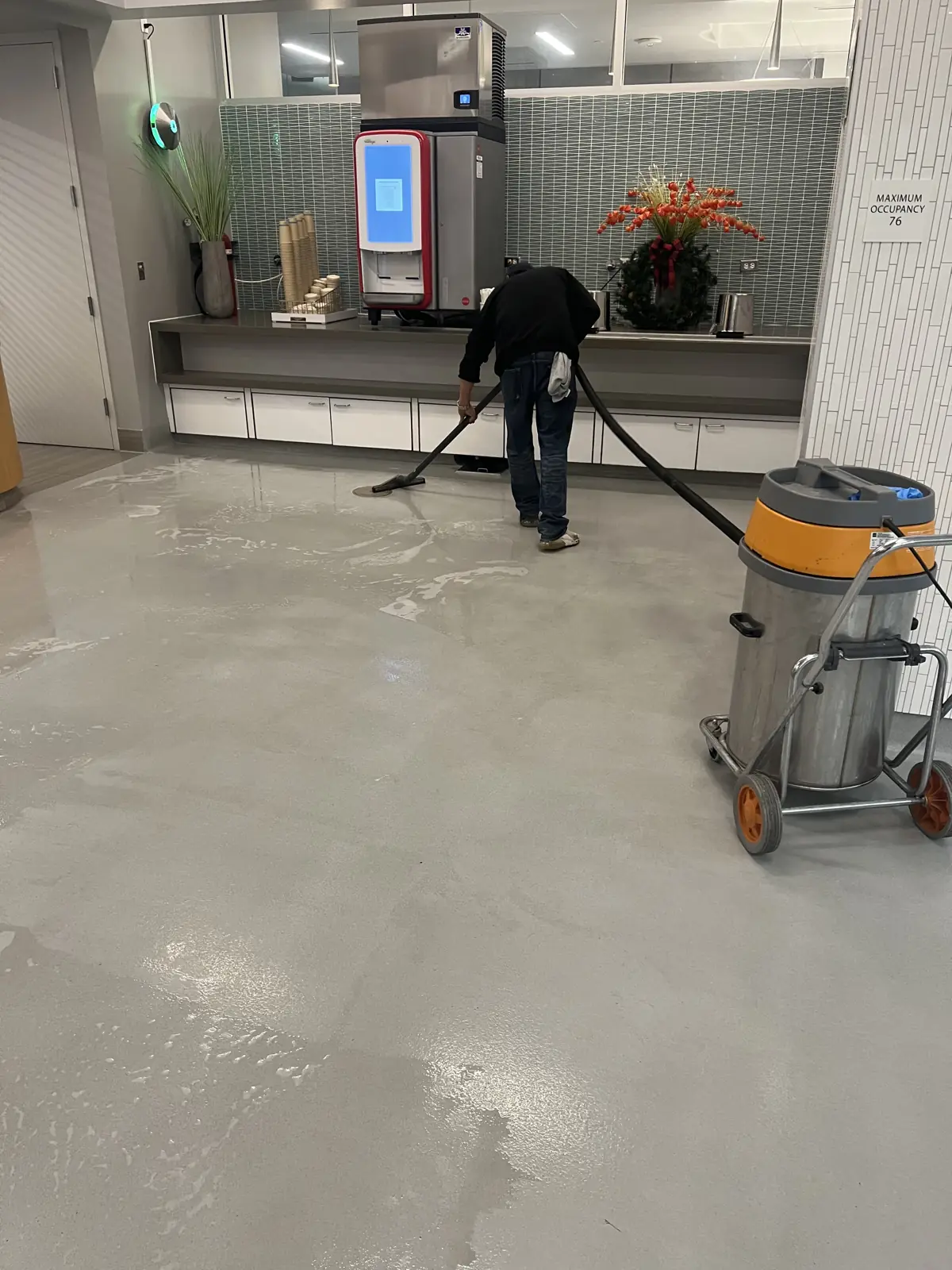
Tanks should be emptied and rinsed at the end of each shift, and pads and mop heads should be washed or swapped, not left wet in a pile. Equipment that goes back dirty comes out dirty the next night.
How do you keep consumables from running out?
Set a par level for each item the closet holds: towels, tissue, liners, hand soap. When stock drops below a reorder point, an order goes in. A sheet taped inside the door works if the crew fills it in every night.
Decide up front who buys what. In some buildings the owner supplies paper and soap and the vendor supplies chemicals and equipment. In others, the vendor supplies everything. Either can work, as long as it is written into the janitorial scope of work and not left to assumption.
What does a well-run closet look like day to day?
It looks the same every night. The crew restocks carts at the start of the shift, returns everything at the end, and leaves the sink rinsed and the floor dry. A day porter can use the same closet during business hours, so it has to stay in shape for both shifts.
We include the closet on routine inspections. A quick look at labels, stock levels, equipment condition and cleanliness of the room itself catches small problems before they turn into missed restrooms or a dead scrubber battery.
Where Nexara fits
When we take over a building's janitorial services, we set up the closet with the crew before the first full shift: labels, safety data sheets, equipment spots and a restock sheet. If your closets need a reset or you want a second set of eyes on the whole program, request a walkthrough.
Questions we get asked.
What should be in a commercial janitor's closet?
A mop sink with hot and cold water, shelving for chemicals and consumables, a place to park and charge equipment, safety data sheets for every product, and a simple restock sheet. Most closets also need good lighting and a lock.
Who is responsible for the janitor's closet, the building or the cleaning vendor?
The building usually provides the room, plumbing and shelving. The vendor typically keeps it organized, keeps its own chemicals labeled with safety data sheets on hand, and reports anything that needs repair.
How many janitor's closets does a building need?
It depends on the floor plan. Most multi-story buildings have at least one per floor, and large single-story plants or warehouses often need more than one so crews are not walking supplies across the whole building.
Sources