Published · 4 min read
A distribution center floor schedule layers three things: daily dust control, a weekly auto-scrub of aisles and dock areas, and a quarterly-to-annual deep-cycle step like burnishing or scrub-and-recoat. The frequency of each layer is set more by forklift traffic density than by raw square footage: a 200,000-square-foot building running three shifts of reach trucks needs a tighter schedule than the same footprint with light foot traffic.
This post is about that operational rhythm, not the strip-and-wax decision itself. If you're trying to figure out how often to strip and recoat a resilient or VCT floor, that frequency question is covered in our strip and wax frequency guide. Here we're focused on what a DC's day-to-day and week-to-week floor program should actually contain.
What should be on a daily floor care checklist?
Daily tasks are about keeping grit and debris from grinding into the floor surface under forklift wheels, since loose grit is what actually wears a floor down and creates a slip hazard. A basic daily list for a DC:
- Sweep or dust mop main travel aisles and dock apron areas
- Spot-mop spills immediately, not at end of shift
- Check and clear floor drains and dock leveler pits of debris
- Walk high-traffic zones (dock doors, staging lanes, pick module aisles) for cracks, standing liquid, or damaged expansion joints
- Log any damage or hazard so it gets addressed before the next shift, not after an incident
OSHA's walking-working surfaces rule requires floors be kept clean and, to the extent possible, dry, which is the regulatory backbone behind daily housekeeping in a facility like this.
How often should aisles be auto-scrubbed vs dust mopped?
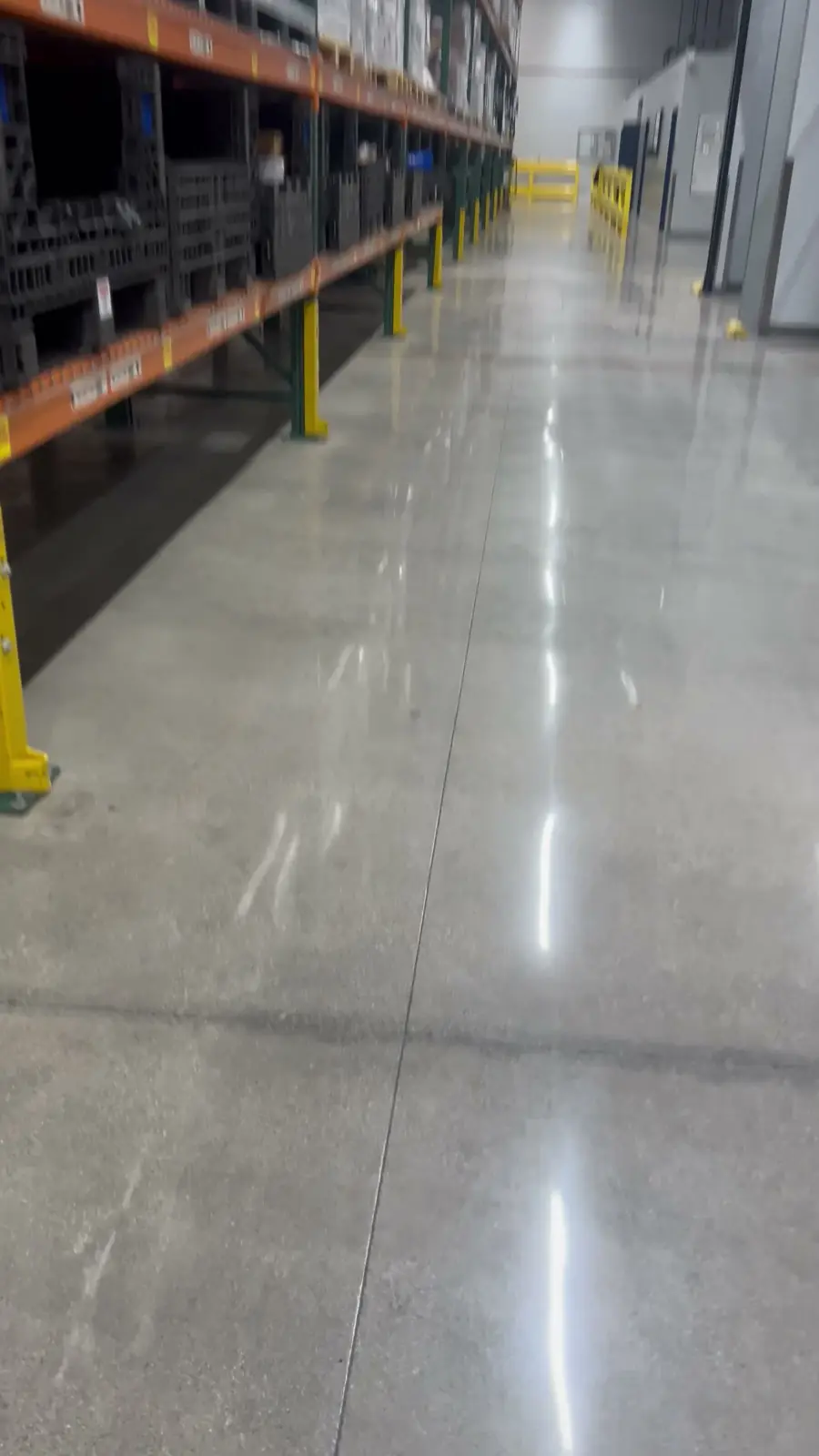
Dust mopping is a daily task in most DCs. It's fast, doesn't require equipment downtime, and handles loose debris. Auto-scrubbing is a deeper clean that lifts embedded grime and tire marking, and it typically runs weekly for main aisles and dock zones in a moderate-traffic building.
Facilities with heavy, continuous forklift and pallet jack traffic often scrub daily or every other day, because dust mopping alone can't keep up with what's being tracked in and ground into the surface. Lower-traffic storage zones in the same building can often stay on a monthly or even less frequent scrub cycle. The schedule doesn't need to be uniform across the whole building; it should match what each zone actually sees.
How does forklift traffic change the schedule?
Traffic density, not square footage, is the real driver here. Two buildings the same size can need very different schedules depending on how many trucks are moving and how often.
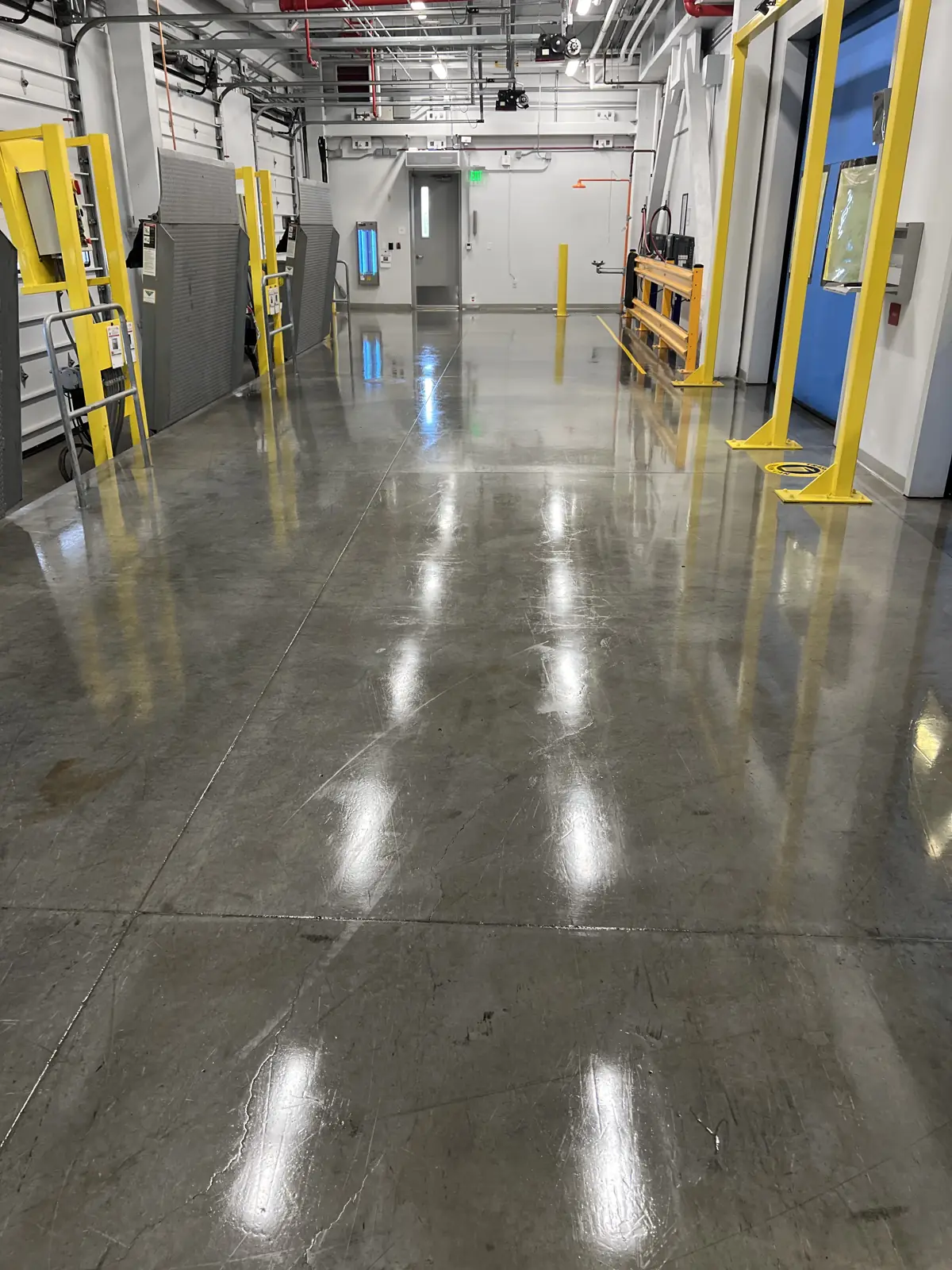
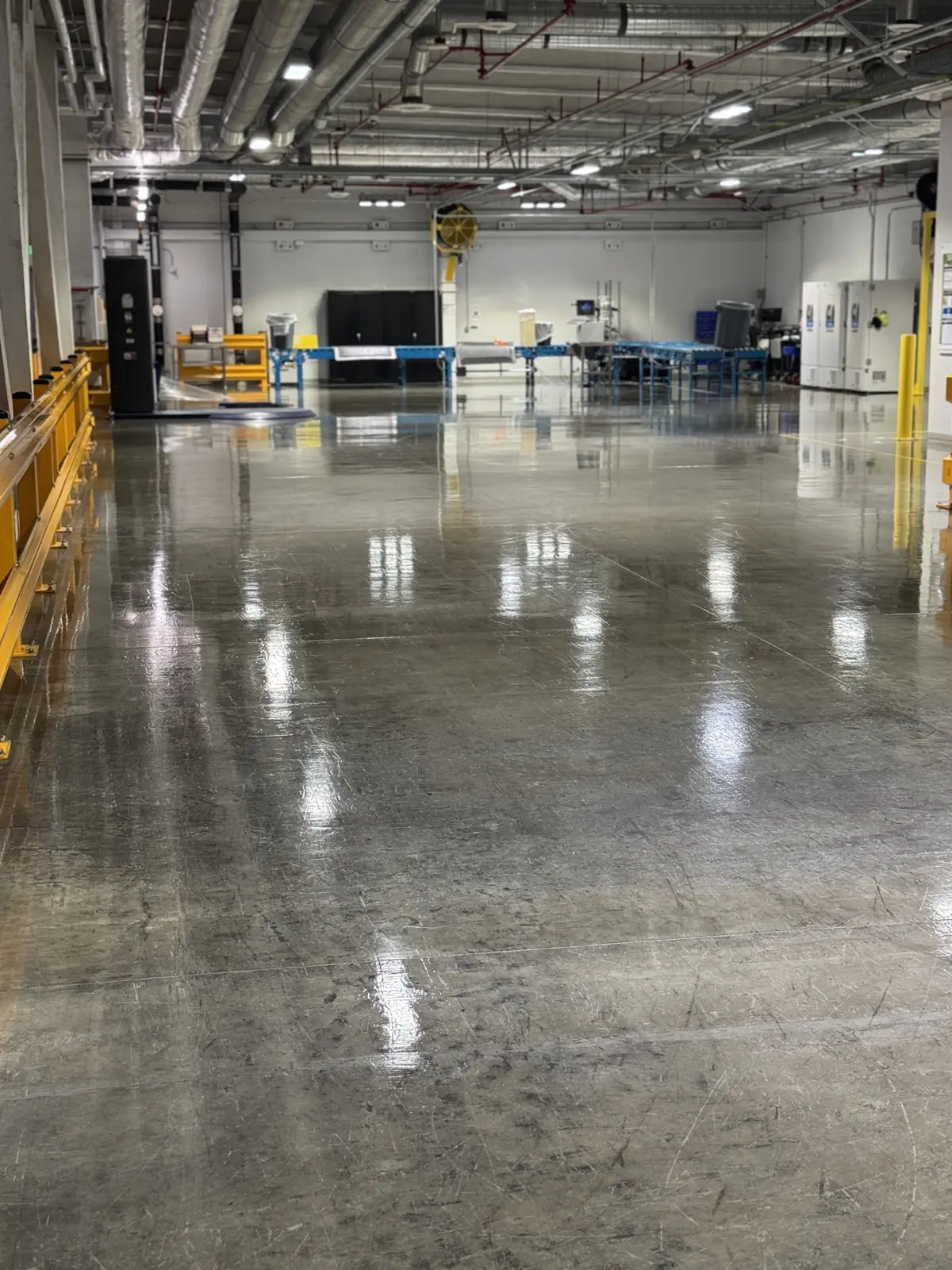
A single-shift operation with a handful of reach trucks working a defined pick zone puts far less wear on a floor than a three-shift cross-dock running dozens of forklifts and pallet jacks through the same aisles around the clock. The second facility needs more frequent scrubbing, closer inspection of joints and transitions, and a shorter interval between burnishing or recoat cycles, because tire wear and grit abrasion are cumulative and traffic-driven, not time-driven.
When should burnishing or scrub-and-recoat happen?
Burnishing (for polished concrete or coated floors with a topcoat) and scrub-and-recoat cycles are the deep-maintenance layer, and they're generally scheduled quarterly to annually depending on traffic. High-traffic aisles and dock approaches often need burnishing more often than back-of-house storage zones in the same building.
The goal is to catch wear before it goes through the finish or the polished layer, not after. Waiting until traffic patterns are visibly worn into the floor usually means a more expensive restoration instead of routine maintenance.
How does Inland Empire dust affect frequency?
Dock doors in this region cycle constantly, and the dry regional dust and dirt outside gets tracked in on tires and pallets all day, not just at the start of a shift. That's different from a climate where dust load is lighter and more predictable.
Most Inland Empire distribution centers end up on a daily dust-control routine rather than a single end-of-day clean, specifically because of how much grit accumulates between shift changes. Dock aprons and the first 50 feet of aisle past each dock door tend to need the most frequent attention.
What's different for polished concrete vs epoxy?
Polished concrete doesn't have a topcoat to wear through: it's maintained through routine burnishing and periodic reapplication of a densifier or guard, and it holds up well to constant forklift traffic when kept on that cycle. Epoxy and other coated floors are maintained by keeping the coating clean and free of grit, and by scheduling a recoat before the coating wears down to bare concrete underneath.
The two systems also fail differently. Polished concrete dulls and loses gloss gradually, while a coating can wear through in a defined traffic lane and expose concrete in a visible patch. For a fuller side-by-side, see our polished concrete vs epoxy guide.
Where Nexara fits
We build the daily, weekly, and quarterly schedule around your actual traffic patterns and dock activity, not a generic template based on square footage. If you want us to walk your facility and put together a schedule specific to how your floor actually gets used, request a walkthrough. You can also see the full scope of what we handle on our floor care services page or our manufacturing and warehouse page.
Questions we get asked.
How often should warehouse floors be scrubbed?
Most distribution centers auto-scrub main aisles and dock areas weekly, with daily dust mopping or sweeping in the highest-traffic lanes. Facilities running heavy multi-shift forklift traffic often move to a daily or every-other-day scrub.
Does polished concrete need a different schedule than epoxy?
Yes. Polished concrete relies on periodic burnishing and a densifier/guard reapplication cycle instead of a topcoat, while coated or epoxy floors are maintained by keeping the coating clean and scheduling recoats before it wears through to bare concrete.
How does Inland Empire dust affect floor maintenance frequency?
Dock doors that cycle constantly and dry regional dust and dirt mean grit gets tracked onto the floor throughout the day, not just at shift start. That pushes most Inland Empire DCs toward daily dust control rather than a once-a-day end-of-shift clean.