
Published · 4 min read
A day porter in a multi-tenant building should work a timed round, not a to-do list: entries and lobby first, then restrooms, elevators, corridors and shared break areas, repeated on a set cycle with trash and spill response in between. The checklist below is the one we build porter rounds from, and it's written for common areas only.
Most complaints we hear about porters aren't about effort. They're about a porter who got pulled into one tenant's suite for an hour while the lobby restroom ran out of towels. A written round fixes that.
What should a day porter's morning look like?
The first hour sets the day. Tenants arrive, the lobby takes its heaviest foot traffic, and any gap the night crew left is about to be noticed.
- Walk the entry, vestibule and lobby: spot-clean glass doors and push plates, straighten or vacuum walk-off mats, dust mop the lobby floor.
- Check every common restroom once: restock paper and soap, wipe counters, check for leaks or clogs.
- Wipe elevator call buttons, cab panels and handrails; spot-clean cab doors.
- Empty lobby and common-area trash that filled overnight.
- Note anything that needs the building engineer before tenants find it.
How should the round be timed through the day?
Build the round so every shared space gets seen on a predictable cycle. In most buildings that's every two to three hours for restrooms and the lobby, and once or twice a day for stairwells, corridors and back-of-house areas.
Lunch deserves its own pass. Shared break rooms, kitchens and the restrooms nearest them take a spike between roughly 11:30 and 1:30. We schedule an extra restroom and break room check right after that window, not during it, so the porter isn't working around a crowd.
The afternoon round is lighter on cleaning and heavier on restocking. That's when dispensers tend to run low, and a restroom that's out of towels at 3pm is the one that generates an email.
What goes on the daily checklist?
Here's the list, grouped by area. It's a starting point; your building's layout decides the order.
- Entries and lobby: glass doors and sidelights, push bars, mats, lobby floor, directory and reception surfaces, trash and ash receptacles
- Restrooms: dispensers restocked, counters and sinks wiped, mirrors spot-cleaned, floors spot-mopped, trash and sanitary bins checked, leaks or clogs reported
- Elevators: call buttons, cab panels, handrails, cab floor, door tracks swept
- Corridors and stairwells: trash pickup, spot vacuum, handrails wiped, spills cleared
- Shared break rooms and kitchens: counters, sink, microwave exterior, appliance handles, tables, trash and recycling
- Conference and amenity spaces: reset after meetings, wipe tables, empty trash
- Exterior entry: sidewalk litter, planter debris, cigarette butts near doors
- End of shift: log of what was done, what ran low, and what was reported
How should a porter handle spills and tenant requests?
Spills come first, every time. A wet floor in a lobby or elevator landing is a slip risk, and OSHA's walking-working surfaces standard expects floors to be kept clean and, as far as possible, dry. The porter should drop what they're doing, sign the area, and clean it.
Tenant requests are different. If every tenant can flag down the porter directly, the round falls apart by 10am. We recommend requests go through property management or a shared log, and the porter works them in at a natural break in the round unless it's a spill or a safety issue.
What shouldn't be in a day porter's scope?
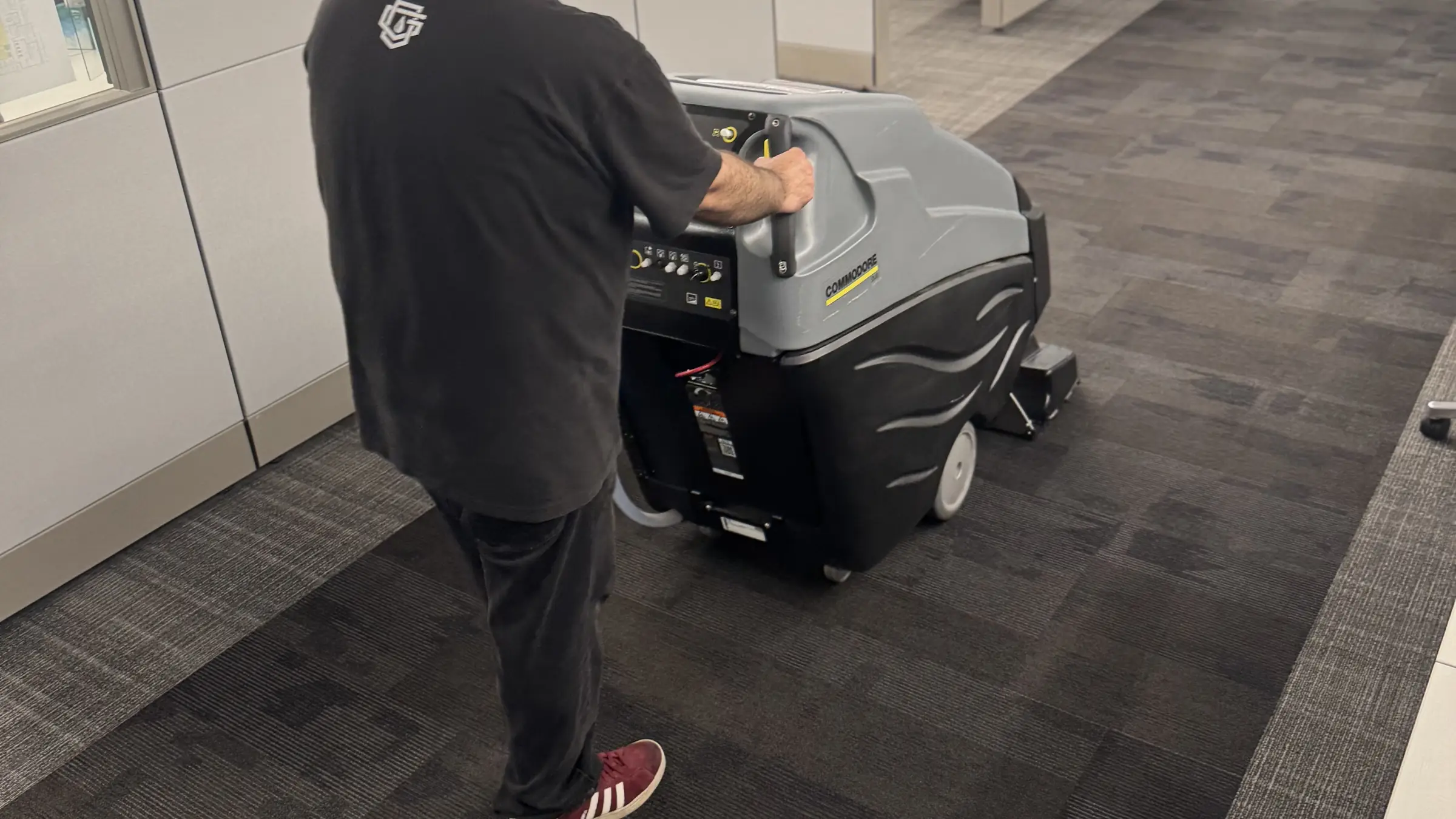
Keep deep work off the porter's list. Floor scrubbing, carpet extraction, full restroom disinfection and high dusting belong to the night crew or a scheduled project, because they need equipment and time the porter doesn't have mid-day. If you're still deciding how to split work between the two, our guide on day porter vs. night janitorial walks through it.
Also leave out anything inside tenant suites unless it's written into a separate agreement. Otherwise the tenant who asks loudest gets the most service.
How do you know the round is working?
Put a simple sign-off on it. Restroom check sheets on the back of the door, or a digital log, show when each space was last seen. When a complaint comes in, you can check the log first and see whether the timing is wrong or a check was missed.
Walk the building yourself at 3pm once in a while. If the lobby and restrooms look the same as they did at 8am, the round is doing its job. If they don't, the frequency usually needs adjusting before the porter does.
Where Nexara fits
We run day porter services for commercial and multi-tenant buildings, with the round written down before the first shift and a log you can check. If your porter's day is running on memory, request a walkthrough and we'll map the round with you on site.
Questions we get asked.
What does a day porter do in a multi-tenant building?
A day porter keeps shared spaces in shape while the building is occupied: restroom checks and restocking, lobby and entry upkeep, elevator touch-ups, trash runs and spill response. The night crew does the deep work; the porter holds the standard during business hours.
Should a day porter clean inside tenant suites?
Usually not, unless the lease or a separate agreement says so. Most porter scopes cover common areas only, with tenant requests routed through property management so the porter's round doesn't get pulled apart.
How many rounds should a day porter make per day?
It depends on headcount, number of floors and restroom count. Most multi-tenant buildings plan a full round every two to three hours, with extra passes at the lobby and restrooms around lunch.