
Published · 4 min read
Most warehouses need high dusting quarterly to semi-annually, and most production plants quarterly or tighter. The better answer is that frequency should be set zone by zone. The racking above a packaging line and the ductwork over dead storage collect dust at different rates and carry different consequences when it falls.
Here is how we set and adjust a high dusting schedule for an industrial building.
What counts as high dusting in a warehouse or plant?
High dusting is everything above the reach of the nightly crew. In a typical industrial building that means:
- Tops of pallet racking and upper beam levels
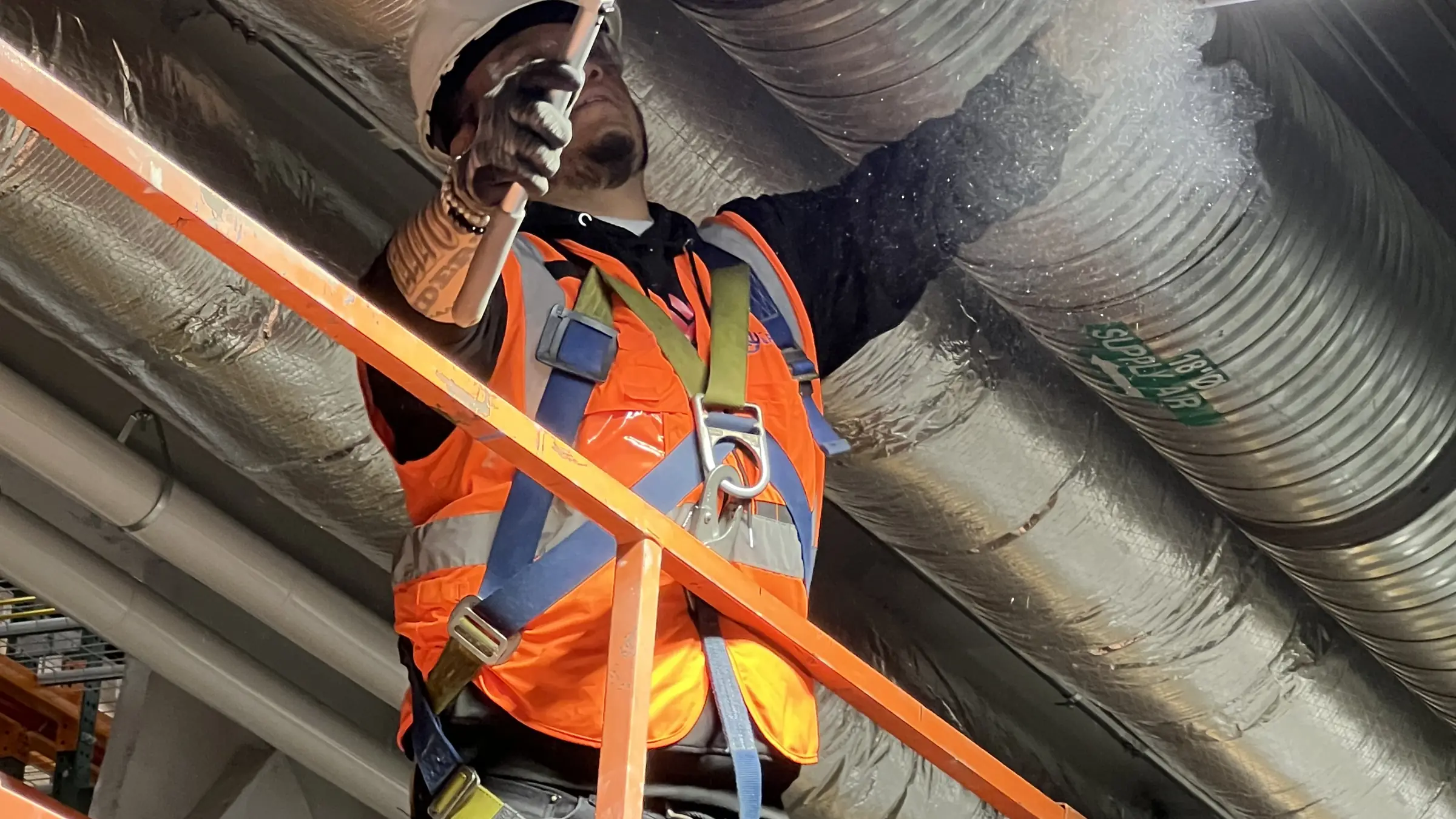
- Exterior of overhead ductwork, diffusers and returns
- Light fixtures, cable trays and conduit runs
- Roof joists, trusses and structural beams
- Tops of walls, ledges, door headers and high windows
- Overhead signage and sprinkler piping (cleaned with care, never hung on or bumped)
Inside the duct system is HVAC contractor work. A high dusting scope covers the outside of the ducts and the fixtures they feed.
Why doesn't one frequency fit the whole building?
Because dust doesn't settle evenly. It builds faster near dock doors, where outside air and truck traffic bring it in. It builds faster over production lines that generate particulate from cutting, sanding, packaging or bagging. And it matters more over anything that is open: product, packaging materials, food-contact equipment, or a clean floor that just got scrubbed.
A building on one schedule ends up overcleaning the quiet areas and undercleaning the ones that drive complaints.
How do you set frequency by zone?
Walk the building with a site plan and mark zones by what sits below them and how fast dust comes back. Typical starting points:
- Over open product, packaging or production lines: quarterly, tighter if the process throws dust
- Dock doors and shipping lanes: quarterly, since outside air and grit come in here first
- General pallet storage: semi-annually at most sites
- Dead storage, mezzanine edges and low-traffic corners: semi-annually to annually
- Office and break areas inside the plant: usually on the same cycle as the nearest zone
These are starting points, not rules. If the facility has its own documented cleaning program, as GMP and food-adjacent sites usually do, that program sets the frequency and the scope follows it.
What signs tell you to tighten the schedule?
Look at each zone just before its next scheduled pass. If the dust layer is already heavy, the interval is too long. Other signs:
- Dust falling on floors the night crew just cleaned
- Visible film on product, stretch wrap or packaging staged under the racking
- Light fixtures noticeably dimmer than when they were last cleaned
- A finding from an audit, a customer visit or the facility's safety walk
- A new process, a new line or added shifts in that part of the building
In some processes, accumulated dust is a safety concern and not just an appearance issue. OSHA's guidance on combustible dust says dust should not be allowed to build up on surfaces and calls for routine housekeeping to prevent it (OSHA 3371-08). Whether that applies to your building is part of the facility's own hazard assessment. Your safety program sets the standard, and the cleaning schedule should meet it.
When should high dusting happen?
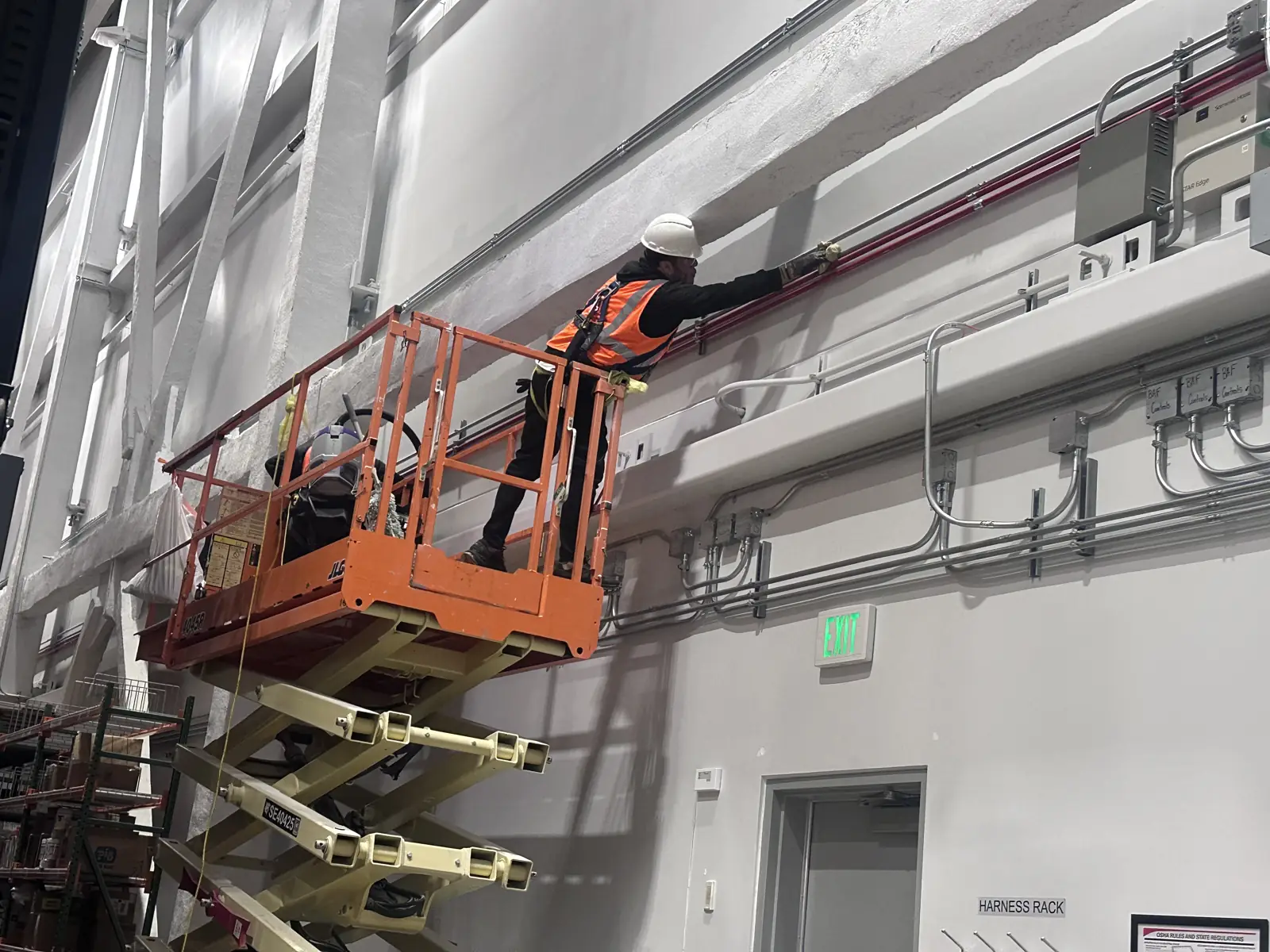
Overhead work drops dust, so sequence it before floor work, not after. Most sites schedule it during a shutdown, a weekend or the lightest shift, with the zone below cleared or covered. Lifts need open aisles, and racking aisles near active forklift traffic need to be closed off while the crew is up.
Then the floor crew follows. A high dusting pass that ends with dust on the floor is only half done. Coordinate it with your floor care schedule so the scrubber runs right behind the lift.
How should the first pass be handled?
If the building has never had an overhead program, the first cleaning is the heavy one. Years of buildup take longer to remove, and it is normal for that pass to be scoped and priced on its own. After that, the recurring schedule is about keeping the backlog from returning, which is lighter work.
Use the first pass to set the baseline. Note which zones were worst, photograph them, and check them again at 90 days. That tells you where the real frequency should land.
Where Nexara fits
We run high dusting for warehouses and plants across the Inland Empire and Southern California, scoped zone by zone with HEPA vacuum methods and coordinated with the floor crew. If your overhead hasn't had a schedule, or every zone is on the same one, request a walkthrough and we'll map it with you. More on how we work in manufacturing and warehouse facilities.
Questions we get asked.
How often should a warehouse be high dusted?
Most warehouses and distribution centers start at quarterly to semi-annually. Plants that generate particulate, or have exposed product below the overhead, typically start at quarterly or tighter.
Does every overhead surface need the same frequency?
No. Surfaces directly above open product, packaging lines or dock doors usually need more frequent passes than ductwork over a dead storage zone. Most schedules split the building into zones with their own frequency.
How do you know the schedule is too loose?
Dust falling onto freshly cleaned floors or product, visible buildup on racking tops at the next pass, or a finding from an audit or customer visit. Any of those is a reason to move that zone up a frequency.