
Published · 4 min read
A spring deep clean in a manufacturing plant should cover the work your nightly crew never reaches: overhead dust, floor finish and slab condition, docks and exterior pads, and the corners of restrooms and break rooms that slowly fall behind. Do it top to bottom, zone by zone, during a planned slowdown, and finish with a walkthrough that sets next year's baseline.
Here is the checklist we work from, and how to plan it so production barely notices.
Why does a plant need a seasonal deep clean at all?
Because routine janitorial is built to hold a line, not to recover lost ground. A nightly crew empties trash, cleans restrooms and keeps traffic lanes swept. It typically does not get on a lift, move staged material, or scrub behind equipment. Over a year, those gaps add up.
There is also a baseline reason. OSHA's walking-working surfaces rule requires workplaces, passageways and storerooms to be kept clean, orderly and sanitary (29 CFR 1910.22). A seasonal reset makes that easier to hold the rest of the year.
What belongs on a spring cleaning checklist for a plant?
Work top to bottom so dust from overhead lands on floors that have not been cleaned yet.
- Overhead: ductwork exteriors, light fixtures, cable trays, beams, racking tops and high ledges
- Walls and doors: wipe-down of wall surfaces within reach, door frames, push plates, roll-up door tracks and kick plates
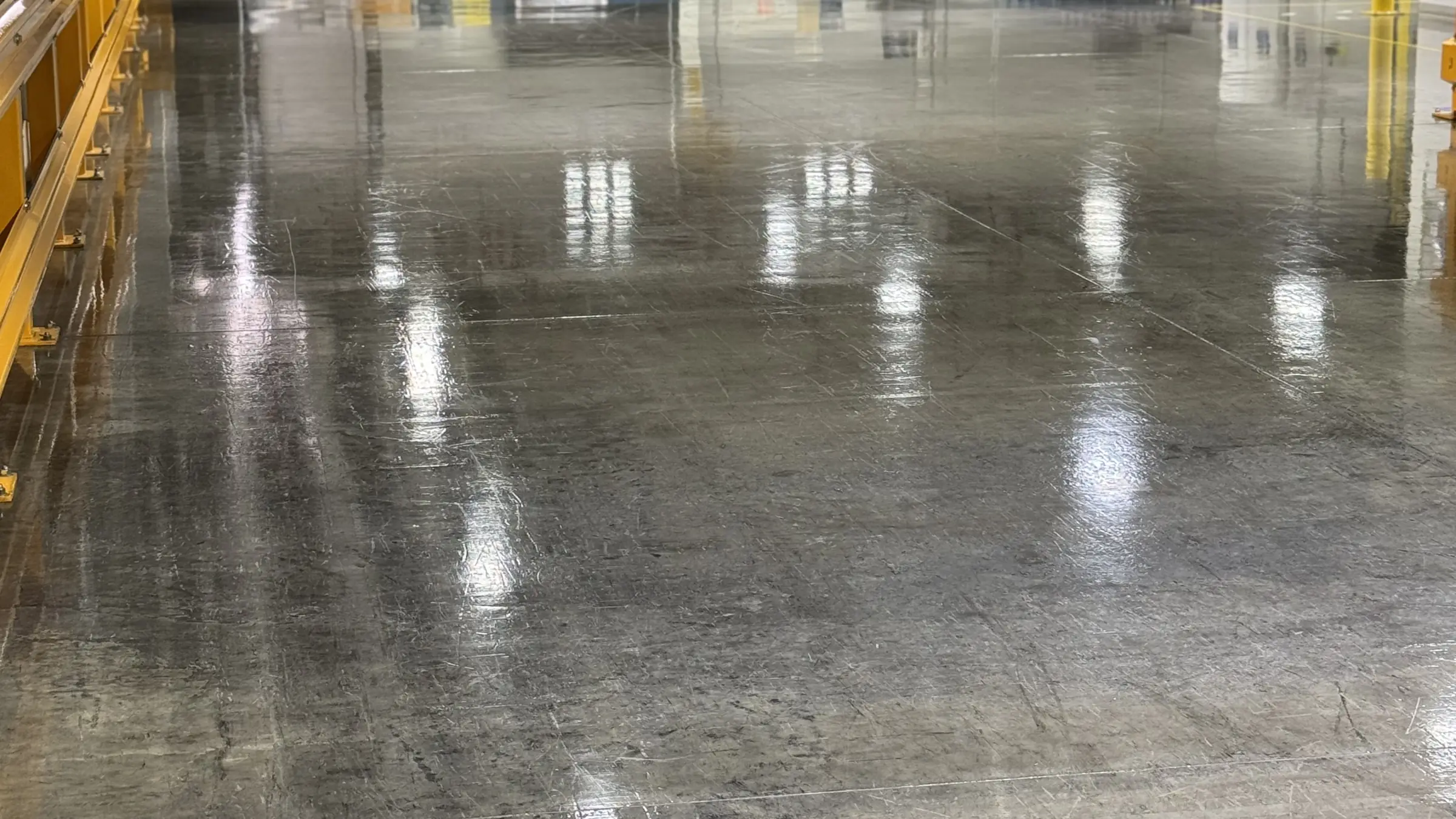
- Production floor: machine scrub of the full slab including areas under moved material, edge and corner detailing, spill stain treatment
- Floor markings: clean aisle lines and safety striping so they read clearly, and flag any that need repainting
- Docks: dock plates, levelers, bumpers and the floor inside each door, where outside grit collects
- Exterior: pressure wash dock aprons, dumpster pads and entry walkways
- Restrooms and locker rooms: descale fixtures, scrub grout lines, clean partitions top to bottom, check exhaust grilles
- Break rooms: clean inside and behind appliances, degrease counters and walls, deep clean the floor
- Offices inside the plant: carpet extraction or hard floor scrub, vent covers, window sills
- Final walk: photos of each zone and a short punch list
That is a starting point. Your EHS program, customer requirements or any documented cleaning procedures come first, and the checklist should follow them.
How do you schedule it around production?
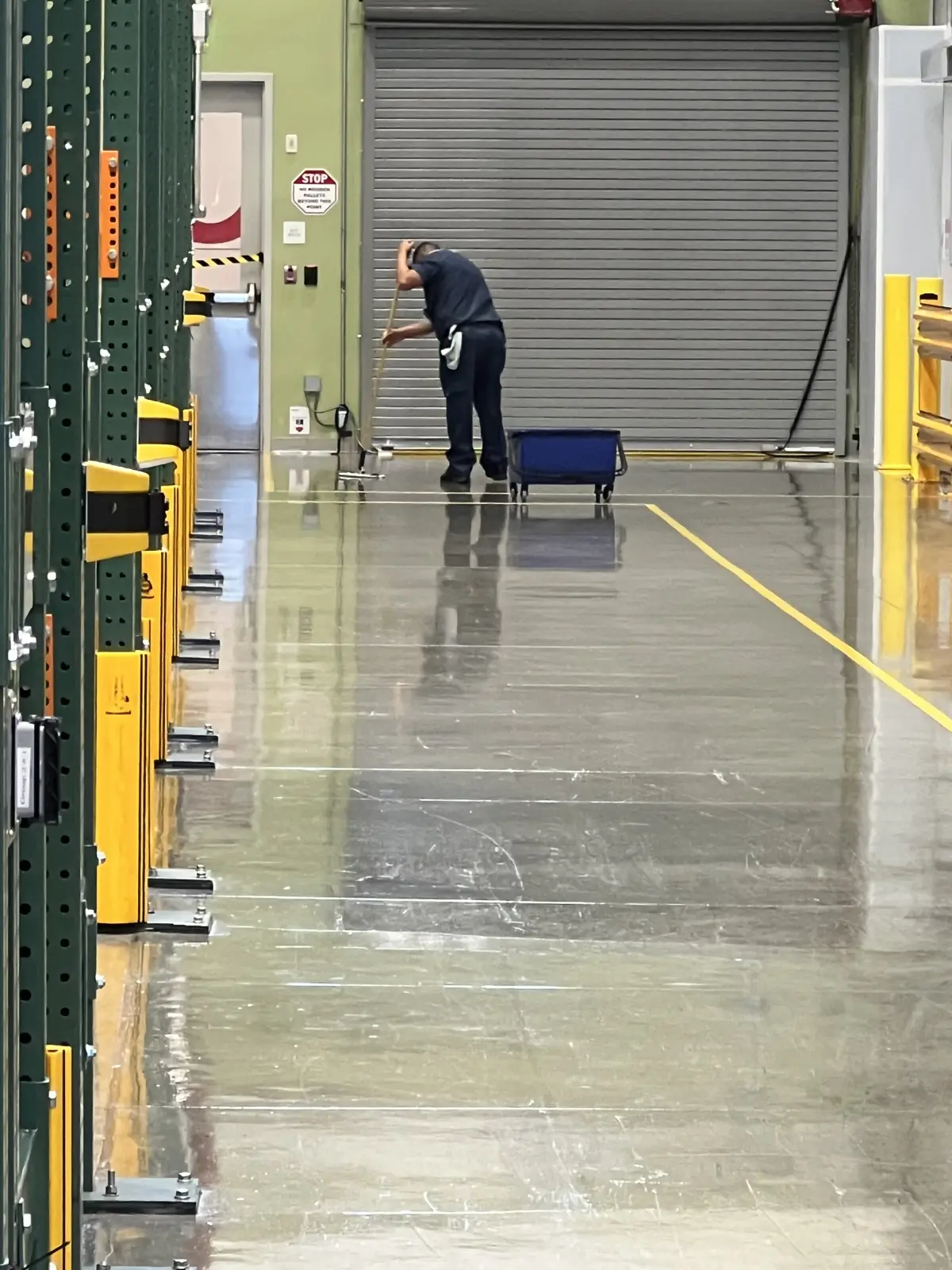
Most plants pick one of three windows: a planned maintenance shutdown, a long holiday weekend, or a run of reduced shifts. A shutdown is the cleanest option because lifts can move freely and nobody has to work around open product.
If you cannot stop the floor, split the building into zones and clean one or two per weekend. Overhead work in a zone has to happen with the area below cleared or covered, so coordinate with production planning on what gets staged where. Our high dusting page covers how we handle the overhead.
Which areas get skipped most often?
In our experience, the same few spots come up on almost every first walkthrough:
- Behind and under stationary equipment, where the nightly crew cannot reach
- Tops of lockers, cabinets and electrical panels in the break and locker areas
- The first few feet inside each dock door
- Exhaust fan grilles in restrooms
- Mezzanine edges and stair treads
Put them on the list by name. A line that says "detail clean production area" leaves too much room for interpretation.
What should happen to the floors?
The deep clean is a good time to look honestly at the slab. If the floor is sealed or coated, a machine scrub and recoat of worn traffic lanes may be enough. If it is bare or polished concrete, a full scrub and a burnish pass usually brings it back.
If the scrub shows the finish is worn through, or the slab is dusting, that is a separate project. Note it, photograph it, and scope it on its own rather than folding it into the spring clean.
How do you close it out?
End with a joint walkthrough: your facility lead, a production supervisor and the cleaning crew lead. Go zone by zone against the checklist, sign off what is done and write up what is not. Keep the photos.
Those photos are next spring's baseline. They also tell you whether something on the routine scope should move up a frequency. If the overhead was heavy again after a year, it probably needs a mid-year pass too.
Where Nexara fits
We run seasonal deep cleans for manufacturing and warehouse facilities across the Inland Empire and Southern California, from overhead dusting through pressure washing the docks, scheduled around your shutdown or weekend windows. If you want this checklist built for your building before next spring, request a walkthrough.
Questions we get asked.
When should a manufacturing plant schedule its spring deep clean?
Most plants tie it to a planned shutdown, a holiday weekend or the lightest production week of the quarter. Booking two to three months ahead gives the cleaning crew time to walk the site and plan lift access.
Is a spring deep clean the same as routine janitorial?
No. Routine janitorial keeps up with daily soil on a fixed schedule. The spring clean catches the work that builds up slowly, like overhead dust, floor finish wear, dock grime and the backs of break rooms.
Who should own the spring cleaning checklist?
The facility or operations manager typically owns it, with input from EHS and production supervisors. The cleaning vendor works from that list and signs off each zone when it is done.