
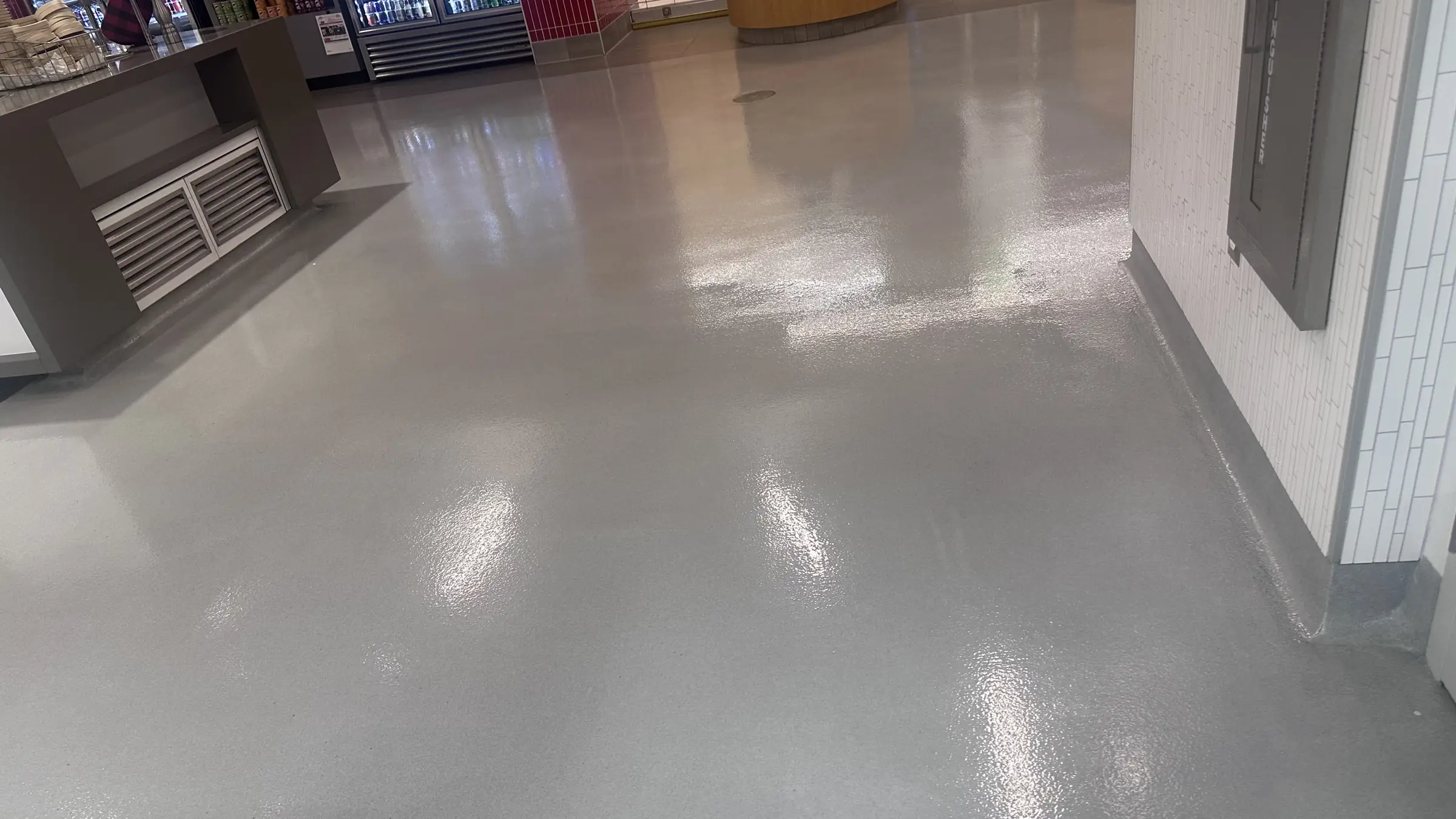
Published · 4 min read
Rainy season floor care comes down to three things: stop the water and grit at the door with enough matting, add wet-weather rounds so entrances get dried and mats get cleaned during the day, and plan a finish touch-up once the season is over. Most of the damage we see after a wet winter starts in the first twenty feet inside the door.
Southern California does not get many rain days, which is exactly why buildings get caught out. The mats are rolled up in a closet, nobody has adjusted the porter schedule, and the first storm puts a slick film across the lobby.
Why do entrances take the most damage in wet weather?
Because water is only half the problem. Rain picks up sand, oil and road film from parking lots and walkways, and shoes carry all of it inside. On a dry day most of that soil stays outside. On a wet day it comes in as a slurry.
Foot traffic then grinds that grit into the floor finish. On VCT and other resilient floors that means scratching and dull traffic lanes. On polished concrete or stone it means a loss of clarity near the door. On carpet just past the entry, it means dark tracking that daily vacuuming will not lift.
There is also the safety side. OSHA's walking-working surfaces rule requires floors to be kept clean and, as far as feasible, dry (29 CFR 1910.22). A wet entrance is the most common place that standard gets tested.
How much matting do you actually need?
More than most buildings have. A typical setup that works:
- A coarse scraper mat outside the door to knock off grit
- A combination or wiper mat in the vestibule or just inside
- A wiper mat long enough that people take several steps on it before they reach hard flooring
Short mats fill up fast. Once a mat is saturated it stops absorbing and starts handing water to the floor. If your rental or owned mats are sized for summer, it is worth adding length for the wet months. Make sure edges lie flat and do not curl, since a curled mat edge is its own trip hazard.
What should change in the cleaning schedule on rain days?
Most janitorial scopes are written for average conditions, so they do not flex when the weather does. We suggest adding a short wet-weather clause that kicks in on rain days. Typical items:
- Wet floor signs placed at every entrance before the morning arrival rush
- Dry mopping or wet-vacuuming the entry hard floor several times during the day
- Vacuuming or extracting saturated inside mats, or swapping them for dry spares
- Checking elevator lobbies, stair landings and restroom approaches, where water travels next
- Wiping down door glass and push plates once the rush is over
If you already have day porter services, this is mostly a matter of moving the porter's route on rain days. If you only have night cleaning, it is worth deciding in advance who owns the entrance between 7 and 10 a.m. Our guide on day porter vs. night janitorial covers how to think about that coverage gap.
How should the night crew handle the floors after a storm?
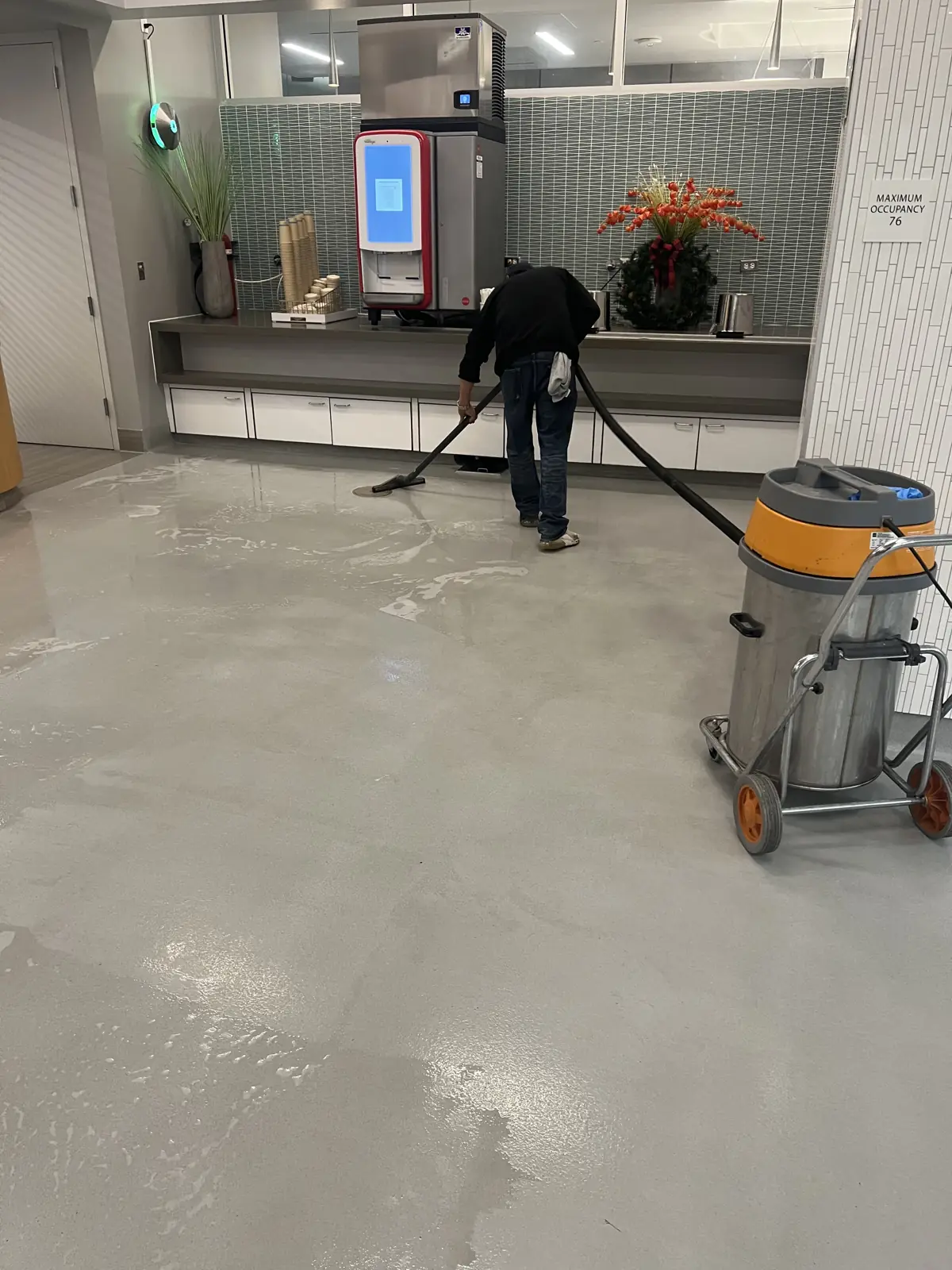
The night after heavy rain is not a normal night. Mopping alone tends to spread the grit around. A machine scrub of the entrance zone with a neutral cleaner, followed by a clean rinse, picks up the soil instead of moving it.
On finished resilient floors, check the traffic lanes for dulling. A burnish pass can bring them back if there is enough finish left. On carpet near the entrance, spot treat the tracking and schedule extraction rather than waiting for the next routine cycle.
Should you do anything to the floors before the rain starts?
Yes, if the timing works. A floor that goes into the season with a healthy finish holds up much better than one that is already worn thin. If your entrances or lobbies are due for a scrub and recoat, doing it in the fall puts fresh finish down before the grit arrives.
Exterior work matters too. Pressure washing walkways and entry pads before the first storm removes built-up oil and grime that rain would otherwise loosen and carry inside.
What should you check when the season ends?
Walk the entrances in spring and look closely at the first stretch of floor inside each door. Compare it with an area farther in that sees the same traffic but less water. If the difference is obvious, the entrance zone probably needs its own floor care cycle rather than following the rest of the building.
Also check the mats. Worn backing, flattened pile and curled edges mean they are done. Note what you would change about matting length or porter coverage while the winter is still fresh in everyone's mind.
Where Nexara fits
We handle entrance and hard floor care for offices, plants and multi-tenant buildings across the Inland Empire and Southern California, including wet-weather porter coverage and pre-season scrub and recoat work. If you want your entrances set up before the next storm, request a walkthrough.
Questions we get asked.
How much entrance matting does a commercial building need for the rainy season?
Most buildings do better with a longer run than they have. Plan for a scraper mat outside, a wiper mat inside the door, and enough length that people take several steps on matting before they reach the hard floor.
How often should entrance mats be cleaned when it rains?
On wet days the inside wiper mats typically need vacuuming or extracting more than once a day. Once a mat is saturated it stops holding water and starts passing it to the floor.
Does rain damage floor finish?
Water by itself rarely does, but the grit it carries in does. Wet sand and road film get ground into the finish under foot traffic, which dulls it and shortens the time until a scrub and recoat.