
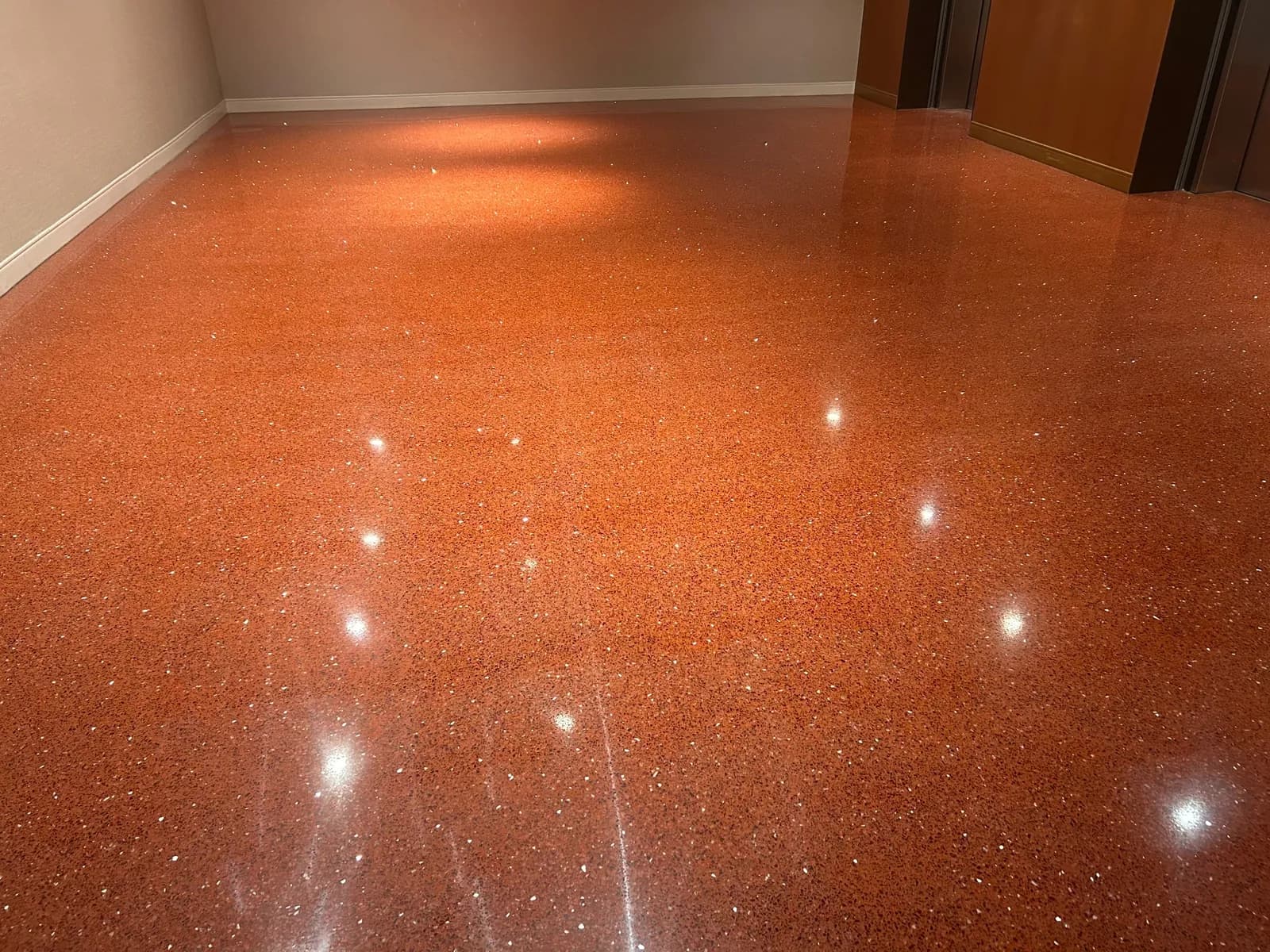
Published · 4 min read
A terrazzo lobby floor stays in good shape with three habits: keep grit off it every day, clean it only with a pH-neutral stone cleaner, and polish the traffic lanes on a schedule before they go dull. Do those well and full restoration becomes a rare event instead of a recurring cost.
Terrazzo is one of the toughest floors a building can have. It is also one of the easiest to slowly wear down with the wrong routine. Most of the worn, stained terrazzo we are asked to restore did not fail from age. It failed from years of the wrong chemicals and too little dust mopping.
What makes terrazzo different from other hard floors?
Terrazzo is chips of marble, glass or other aggregate set in a cement or resin binder, then ground flat and polished. The shine comes from the surface of the floor itself. That is the key difference from VCT, which gets its gloss from layers of finish that are stripped and rebuilt.
It also means terrazzo responds to mechanical care: dust mopping, neutral cleaning, and diamond polishing or burnishing. It does not respond well to being treated like a vinyl floor. Our guide on how often to strip and wax commercial floors covers the coated-floor side, and it is a different path from this one.
What does daily terrazzo care look like?
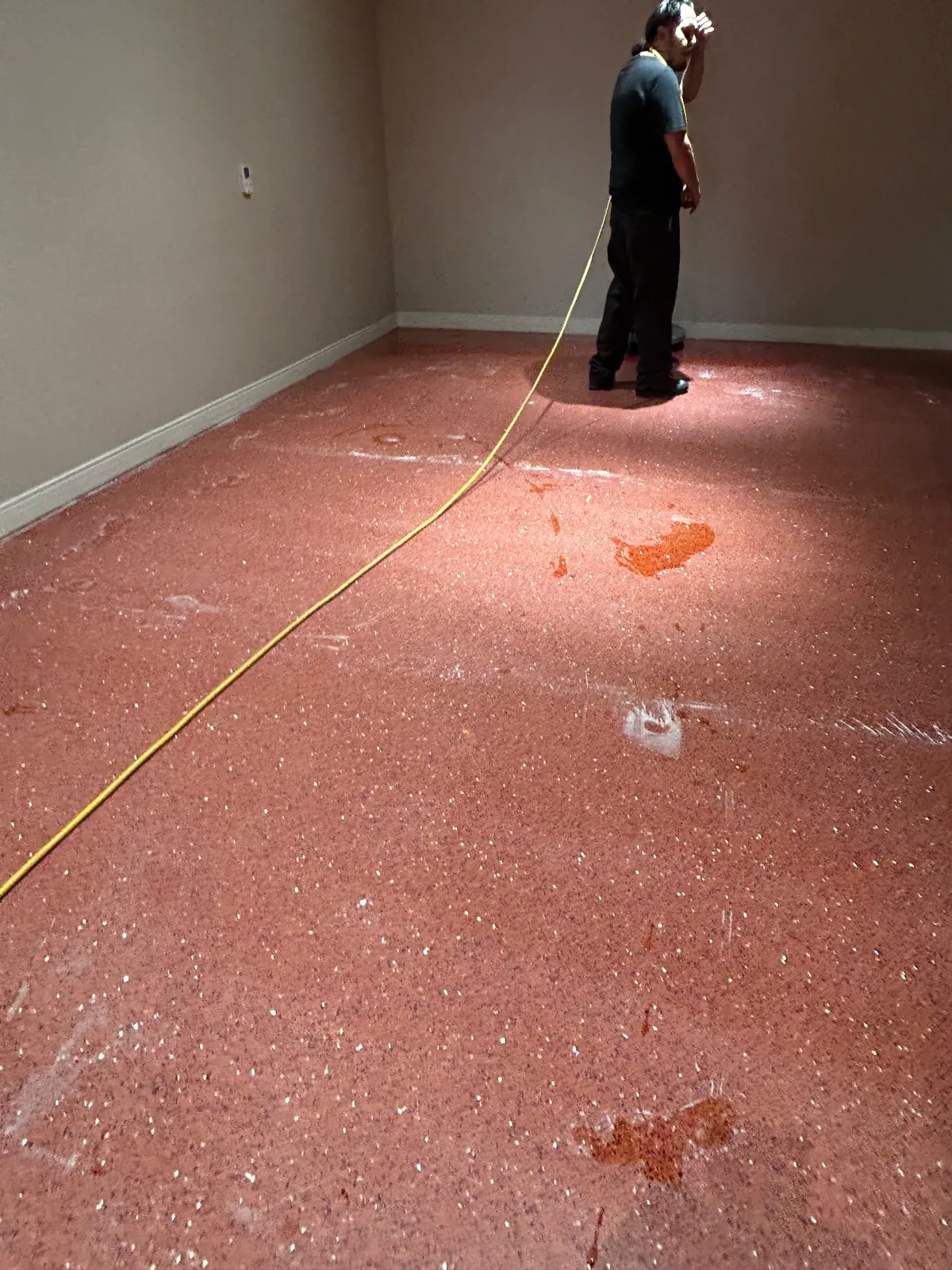
Daily care is mostly about grit. Sand and fine soil act like sandpaper under foot traffic, and on a polished surface that shows up quickly as dull lanes from the door to the elevators.
A typical daily routine:
- Dust mop the full floor with a clean, untreated dust mop, more than once a day at busy entrances
- Damp mop or auto-scrub with a pH-neutral cleaner made for stone
- Rinse if the product calls for it, so residue does not build up and attract soil
- Spot clean spills right away, especially coffee, juice and soft drinks
- Shake out or vacuum entrance mats so they keep catching grit before it reaches the floor
If your lobby sees steady traffic during the day, a day porter dust mopping the entry zone a few times between morning and evening does more for the floor than any polishing program.
Which cleaners damage terrazzo?
Most stone care guidance warns against acidic cleaners and strong alkaline degreasers on terrazzo. Acids can etch marble chips, leaving dull spots that look like water marks but do not wipe off. Harsh alkaline products can dull the surface and wear down any sealer.
The usual offenders are not exotic. They are general-purpose bathroom cleaners, vinegar-based products, citrus cleaners and heavy-duty degreasers borrowed from another part of the building. If a night crew uses one bucket of the same solution on every floor type, terrazzo is often where it shows first.
Ask your cleaning vendor to name the product they use on the terrazzo, and check that it is labeled for stone or as pH-neutral. It is a simple question, and the answer tells you a lot.
How often should terrazzo be polished?
There is no single interval that fits every building. The schedule should follow traffic. In most lobbies, the main entrance lanes and elevator landings dull long before the edges of the room, so they get attention first.
A practical approach is to walk the floor once a month and look at it at a low angle, toward a light source. When the traffic lanes look noticeably flatter than the low-traffic areas, it is time for a polish or burnish pass on those lanes. Waiting until the whole floor looks dull usually means more aggressive work later.
When does a terrazzo floor need full restoration?
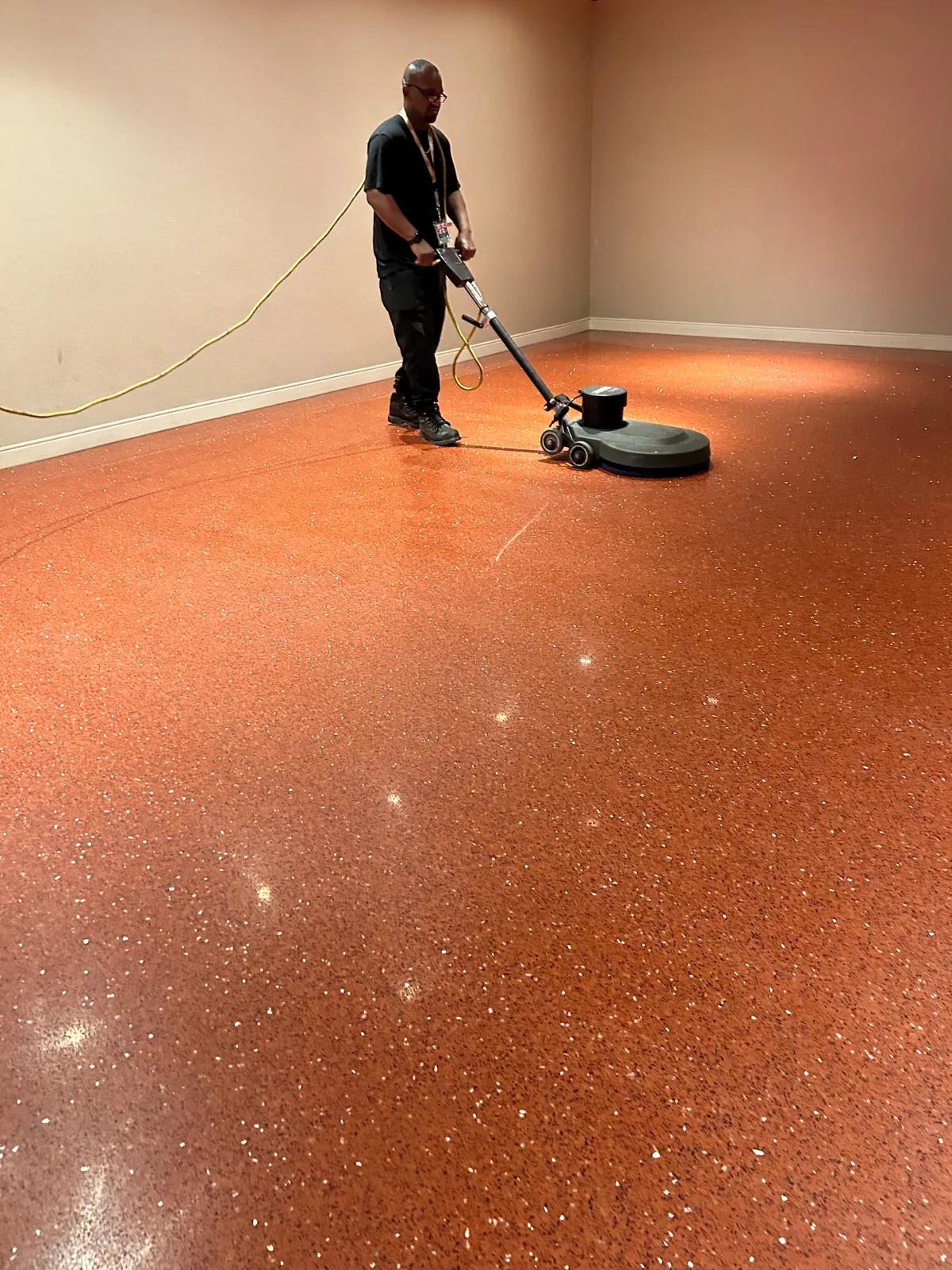
Routine polishing can only bring back the surface. Deeper scratches, etch marks, heavy staining or old coatings that have yellowed call for honing with progressively finer diamonds, then polishing back up to gloss. That is stone and concrete polishing work, not routine janitorial.
Signs you are past the routine stage:
- Dull areas that do not improve after a burnish pass
- Visible scratches or etch marks you can feel with a fingernail
- Stains that have soaked into the binder
- A cloudy or peeling topical coating left by a previous maintenance program
We always look at the floor in person before recommending a scope, since the right steps depend on the aggregate, the binder and how deep the damage goes.
Should terrazzo be sealed or coated?
Many terrazzo floors are treated with a penetrating sealer that helps resist staining without sitting on top as a film. Topical coatings are a different matter. Once a terrazzo floor has been coated, it often ends up on a strip-and-recoat cycle like vinyl, and old coatings can trap discoloration. If your floor already has a coating, removing it is usually part of a restoration scope.
Where Nexara fits
We hone, polish and maintain terrazzo in lobbies, corridors and event spaces across the Inland Empire and Southern California, and we can set up a daily care routine your crew can follow between visits. If your terrazzo has lost its shine, request a walkthrough and we will look at it with you.
Questions we get asked.
How often should a terrazzo floor be polished?
It depends on traffic. Busy lobbies and entrances typically need a polish or burnish pass more often than back corridors, and the right interval shows up in how fast the traffic lanes dull. Full honing is usually a once-in-several-years event when the floor is cared for well day to day.
Can you mop terrazzo with a regular floor cleaner?
Use a pH-neutral cleaner made for stone. Most stone care guidance warns against acidic and strongly alkaline products, which can etch or dull the surface and break down any sealer.
Is terrazzo stripped and waxed like VCT?
Not in a well-run program. Terrazzo is typically maintained by mechanical polishing rather than built-up coats of finish, so the shine comes from the floor itself instead of a layer sitting on top.