
Published · 4 min read
The way to cut janitorial costs without cutting quality is to match the work to how the building is actually used: clean high-traffic areas often, clean low-use areas less, and stop paying for tasks nobody needs. Most savings come from the scope, not from squeezing the crew. Cutting hours across the board almost always shows up as complaints within a month.
Here is how we walk through it with facility managers.
Why does cutting hours across the board backfire?
A flat cut, say one less crew member or one hour less per night, doesn't remove tasks. It just leaves the same list with less time to do it. The crew rushes, and the things that get skipped are usually the ones people notice: restrooms, trash, break rooms.
Then the callbacks start. Someone has to come back to fix a missed restroom, the facility team spends time chasing it, and tenants or employees lose confidence. The savings on paper disappear in time and goodwill.
A better approach is to decide what work comes out, and let the hours follow.
Where does a typical scope waste money?
In our experience, the biggest waste is uniform frequency. A lot of scopes clean every room every night because that was easier to write. But a storage room, a conference room used twice a week, or an empty suite does not need the same attention as a lobby or a main restroom.
Other common sources of waste:
- Detailed dusting done nightly when weekly would hold up
- Vacuuming every office nightly when only the traffic lanes need it
- Cleaning vacant or rarely used space on a full schedule
- Tasks still in the scope from a former tenant or an old layout
- Duplicate work, where your in-house staff and the vendor both do the same task
None of these touch quality where people see it. They just stop paying for effort that doesn't show.
How should you tune frequencies?
Start with a room-by-room list and mark each space as high, medium or low use. High-use areas like restrooms, entries, break rooms and main corridors stay daily. Medium-use areas might move to every other night. Low-use areas can go to weekly with a spot check.
Then look at the tasks inside each room. Trash may stay daily while dusting moves to weekly. Hard floors in a lobby may need daily mopping while a back office gets a weekly pass.
If you don't have a scope written this way, our janitorial scope of work template gives you the room-by-room format to start from.
Can a day porter replace some night hours?
Sometimes. In busy buildings, problems pile up during the day: restrooms run out of paper, a spill sits in the lobby, a break room gets messy after lunch. A night crew can't fix any of that until hours later.
A day porter handles those issues as they happen, which can mean the night crew has less to recover from. In some buildings that lets you trim the night scope. In others, the porter is an added cost that's only worth it if daytime complaints are the real problem. It depends on traffic and how many people are in the building.
Does skipping periodic work actually save money?
Usually not over time. Deferring carpet extraction, burnishing or a scrub-and-recoat feels like a saving this quarter. But floors and carpet wear faster without regular maintenance, and the bigger jobs, like a full strip or early carpet replacement, typically cost much more than the routine cycle would have.
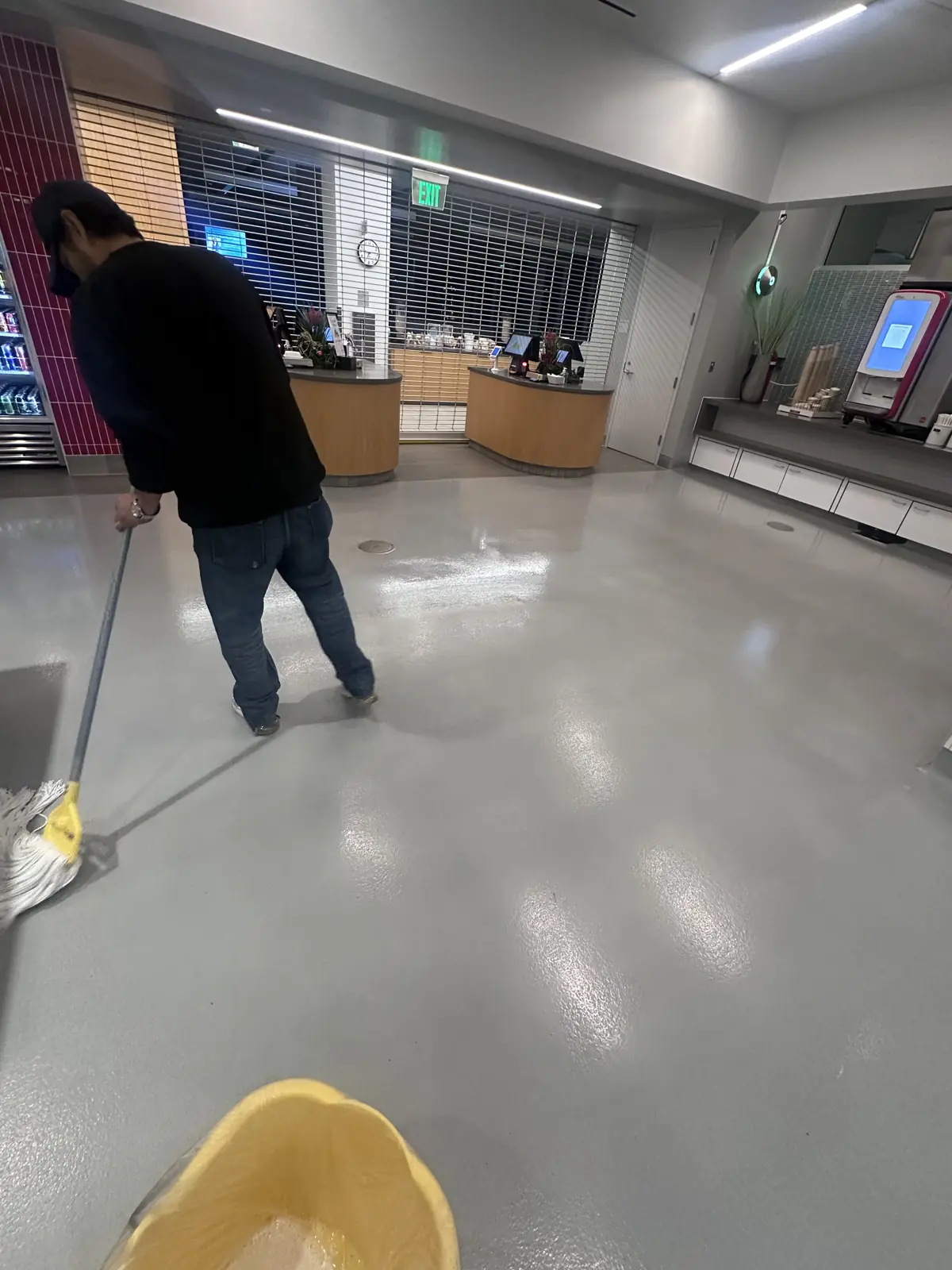
We would rather put periodic work on a predictable calendar, sized to traffic, than let it slide and then have to recover a floor. If you want to see how floor cycles are set, our guide on how often to strip and wax commercial floors covers it.
What else drives cost besides labor?
Consumables are the quiet one. Paper towels, toilet paper, soap and liners add up, and waste is common. Dispensers that over-dispense, liners sized too large for the bins, and mixed supply sources all push spend up. A simple review of who buys what, and how it is tracked, often finds savings.
Communication is another. If issues come to your vendor through three different people, things get missed and redone. One named contact on each side, and a regular inspection, keeps rework down.
How do you know quality held after the change?
Pick a few things to watch before you change anything: complaint volume, inspection scores if you run them, and how often restrooms run out of supplies. Check them again a month after the change. If they hold, the change worked. If complaints rise in one area, move that area back up a level instead of reversing everything.
Make changes in steps, not all at once. That way you can tell which change caused which result.
Where Nexara fits
We are owner-led, and we review scopes with facility managers across the Inland Empire and Southern California to find where frequencies can move and where they shouldn't. If you want a second look at what you're paying for, request a walkthrough and we'll walk the building with you.
Questions we get asked.
What is the fastest way to lower a janitorial bill?
Review frequencies room by room. Most scopes clean low-use areas as often as high-use ones, and moving those to a lighter schedule usually cuts hours without anyone noticing.
Should I cut restroom cleaning to save money?
Usually not. Restrooms drive most complaints, so cutting them tends to cost more in callbacks and tenant frustration than it saves.
Does periodic floor and carpet work really save money?
Often, yes. Regular maintenance like burnishing or carpet extraction on a set cycle typically delays the bigger jobs, like a full strip or carpet replacement, that cost far more.