Published · 4 min read
Polishing grinds the slab itself with diamond tooling until it is dense and smooth, so there is nothing on top to wear off. Sealing leaves the slab as it is and either soaks a product into the pores or puts a thin film on the surface. In a warehouse with steady forklift traffic, polishing usually holds up longer between major work, while sealing is the lower-cost, faster option for light-traffic areas or a building you don't plan to stay in long.
Our guide on polished concrete vs. epoxy covers the coating question. This post is about the choice many facility managers actually face first: the slab is bare or dusting, epoxy isn't in the budget or the plan, and someone has offered either a polish or a sealer.
What is the actual difference between polishing and sealing?
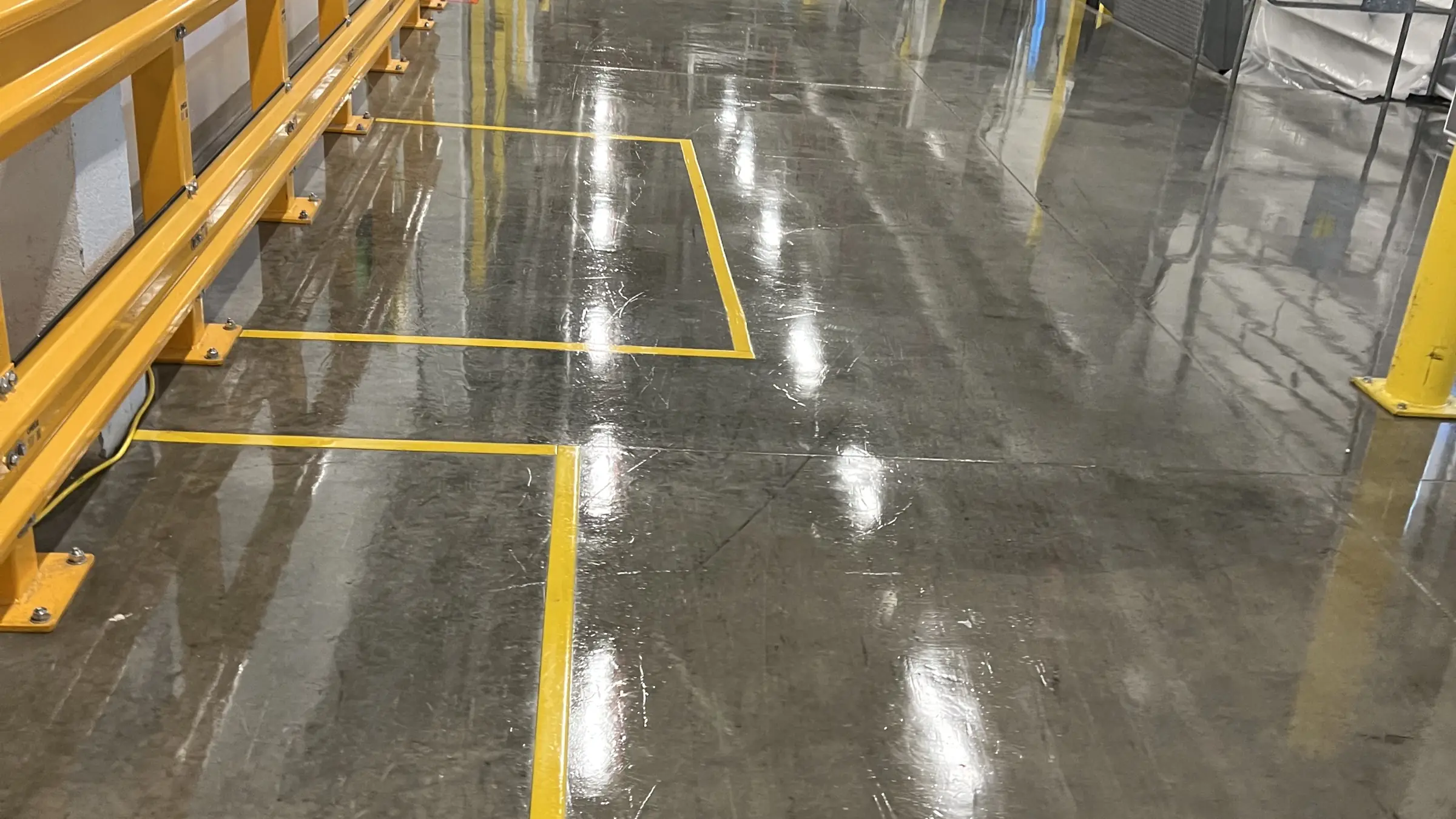
Polishing is a mechanical process. A crew grinds the slab in steps with progressively finer diamonds, applies a densifier partway through to harden the surface, then hones and polishes to the specified sheen. The shine comes from the concrete.
Sealing is a chemical process, and there are two broad kinds:
- Penetrating sealers soak into the slab and reduce how much liquid it absorbs. They change the look very little.
- Topical sealers, often acrylic or urethane, cure into a thin film on top. They add some gloss and stain resistance, and that film is what wears.
A lot of confusion comes from mixing up densifiers, penetrating sealers and topical sealers. Ask any bidder which one they are proposing and what the product data sheet says about traffic.
How does each hold up under forklift traffic?
This is where they split. A topical sealer is a film, and film wears first where wheels turn: dock aprons, aisle ends, the lane in front of a busy pick module. In a busy building that wear shows up as dull lanes against glossy edges, and the fix is to clean, prep and reapply.
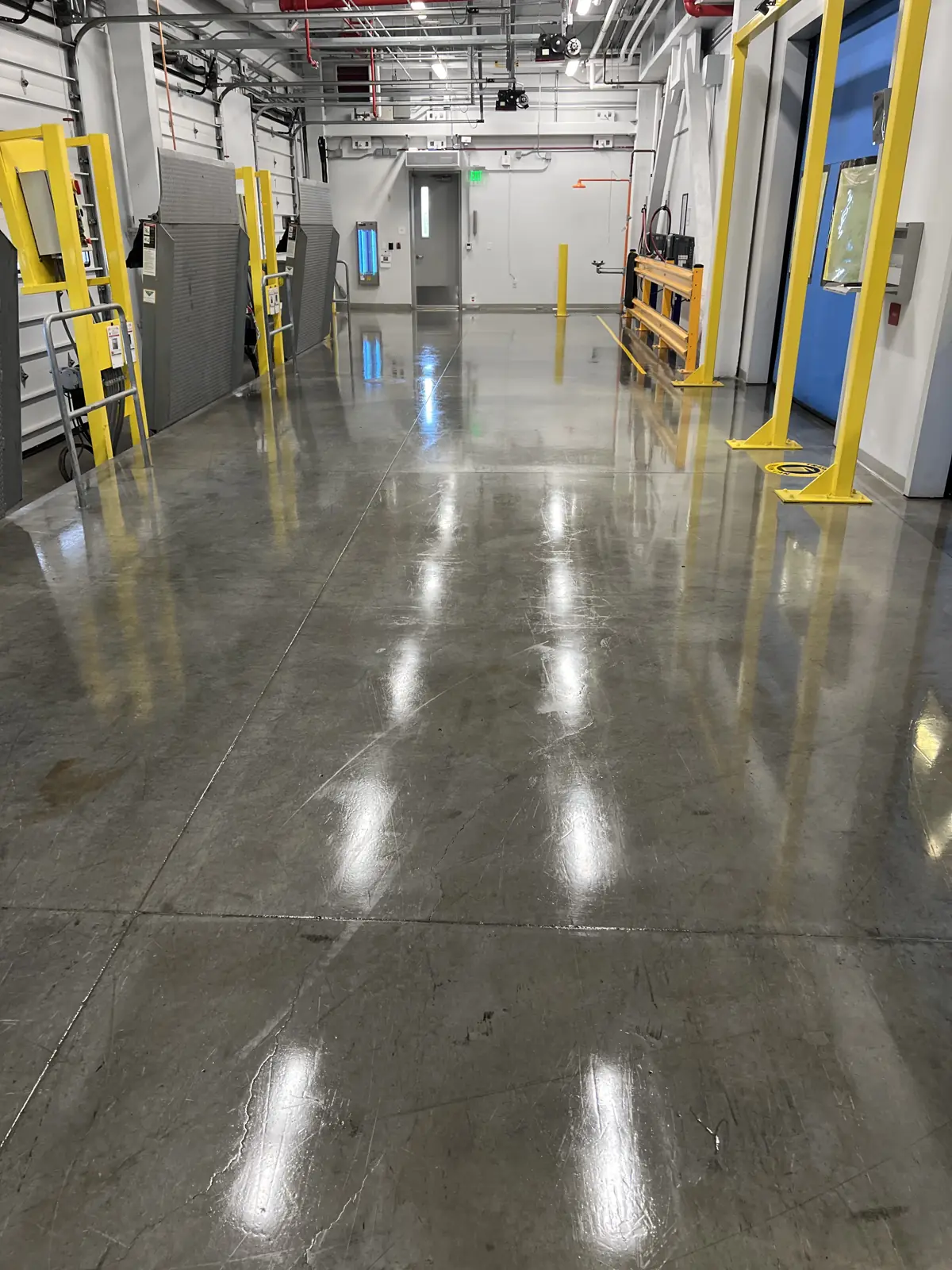
A polished floor has no film to lose. It wears too, but slowly and evenly, and it typically comes back with a burnish or a light re-hone of the worn zone rather than a full redo.
Penetrating sealers sit in between. There's no film to scuff, but most need reapplication on a schedule the manufacturer sets, and they don't harden the surface the way a densifier does.
When does sealing make more sense?
Sealing is a reasonable call in a few situations we see often:
- Low-traffic storage zones, mezzanines or back rooms
- A short remaining lease where a multi-year floor investment won't pay back
- A slab that needs dust control now while a bigger floor decision waits
- Areas where downtime for multi-step grinding isn't available
It's also faster. A sealer can often go down over a weekend shutdown, while a full polish takes more passes and more time per square foot.
When is polishing the better investment?
Polishing usually wins when traffic is heavy and the building is staying put. Main travel aisles, dock zones and production floors with forklifts running multiple shifts are the classic case. The higher upfront cost is offset by not having to reapply a coating every time the lanes wear through.
Polishing also suits slabs that are dusting. Concrete dust comes from a weak surface layer, and the grinding and densifying steps address that layer directly. A topical sealer can hold dust down for a while, but once the film wears, the dusting comes back.
What does each mean for daily maintenance?
Both floors need the same basics: daily dust mopping or sweeping to keep grit off the surface, spot cleanup of spills, and a regular auto-scrub with a neutral cleaner. OSHA's walking-working surfaces rule expects floors to be kept clean and, as far as possible, dry, and that applies whatever the finish.
The difference is in the deep-cycle work:
- Topical sealer: watch traffic lanes for dulling and plan a clean-and-reseal before the film wears through to bare concrete.
- Penetrating sealer: reapply on the interval the manufacturer gives, and check absorbency in stain-prone areas.
- Polished concrete: burnish on a schedule set by traffic, and re-hone heavily worn zones as needed.
Harsh or high-pH cleaners can dull either surface, so confirm the cleaning chemical with whoever installs the floor. Our distribution center floor care schedule walks through how to lay out the daily and weekly layers.
What should you ask before you choose?
Before you sign off on either option, get answers to these:
- Is the proposal a densifier, a penetrating sealer or a topical sealer, and which product?
- Which zones get which treatment? One building rarely needs the same answer everywhere.
- What does maintenance look like in year one, three and five?
- How long is each zone out of service, and can it be phased around shifts?
- Is there an existing sealer or coating that has to come off first?
A good bid answers these in writing, zone by zone.
Where Nexara fits
We do concrete and stone polishing alongside routine floor care for warehouses and plants across the Inland Empire and Southern California, so we can quote the install and the upkeep together. If you're weighing polish against sealer for your slab, request a walkthrough and we'll look at the floor with you.
Questions we get asked.
Is a densifier the same thing as a sealer?
No. A densifier soaks into the slab and reacts with it to harden the surface, while a sealer either fills pores below the surface or leaves a film on top. Most polishing systems use a densifier during grinding and may add a penetrating guard at the end.
Can a sealed warehouse floor be polished later?
Usually, yes. A topical sealer has to be ground off first, so the job takes longer than polishing a bare slab. Penetrating sealers typically come off as the slab is ground through the early diamond steps.
Which option is cheaper to maintain?
It depends on traffic. A topical sealer costs less up front but needs reapplication as it wears through in traffic lanes, while polished concrete costs more up front and is mostly kept up with scrubbing and periodic burnishing. Price both over several years, not just the install.