
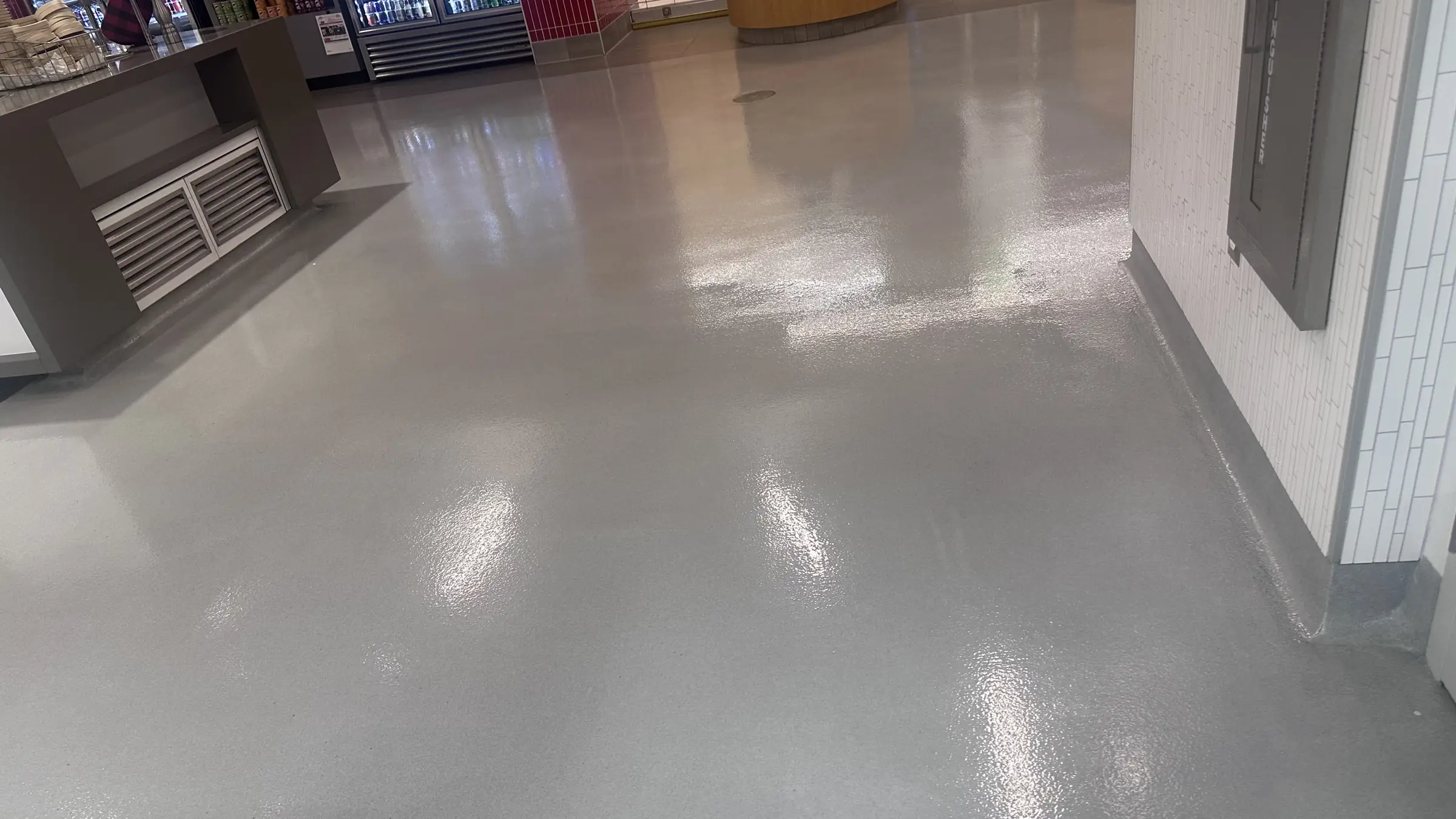
Published · 4 min read
A night cleaning crew empties trash and recycling, cleans and restocks restrooms, wipes touchpoints and break areas, dusts reachable surfaces, and cares for floors, then secures the building and leaves notes for the morning. The order matters as much as the task list. A crew that works in the wrong sequence spends half the shift redoing its own work.
Here is what a typical shift looks like in an office or a plant, and what you should expect to see the next morning.
What happens when the crew arrives?
The shift starts at the door. The crew lead signs in, checks the alarm and key procedure, and reads any notes left by the day staff or the facility manager. A note might be a spill in the warehouse office, a conference room that needs a reset for an early meeting, or a restroom that ran out of paper at 3 p.m.
Then the lead assigns areas. On most accounts each person owns a zone, so when something is missed you know who to ask. Carts get stocked with liners, paper, soap and the right chemicals for the building before anyone leaves the janitor closet.
What does the crew clean first?
Trash and recycling usually go first. Pulling liners early means the crew sees every desk, office and break room once before the detail work starts, and it spots problems (a leak, a broken chair, a light out) while there is still time to report them.
Dusting and surface work come next, top to bottom. Desks that are clear get wiped. Most scopes say papers and personal items stay untouched, and a crew should follow that every time. Touchpoints like door handles, light switches, elevator buttons and break room counters get attention every night.
Floors come last, because everything above them drops dust and debris.
How are restrooms handled on a night shift?
Restrooms are where a building gets judged, so most crews give them a fixed, unhurried block of time. A standard nightly pass includes:
- Restock toilet paper, hand towels, soap and seat covers
- Clean and disinfect toilets, urinals, sinks and counters
- Wipe partitions, handles, dispensers and other touchpoints
- Clean mirrors and spot clean walls around fixtures
- Empty trash and sanitary bins
- Sweep and mop the floor, working toward the door
- Check for leaks, running fixtures or anything broken, and log it
We wrote a separate post on how to write a restroom cleaning scope if you want to tighten what yours says.
What does floor care look like during the shift?
Most nights it is vacuuming carpet in traffic areas and offices, plus dust mopping and damp mopping hard floors. In larger buildings, an auto-scrubber runs the main corridors, lobbies or production aisles. On a plant floor, the crew works around equipment and follows the site's rules about marked lanes and restricted zones.
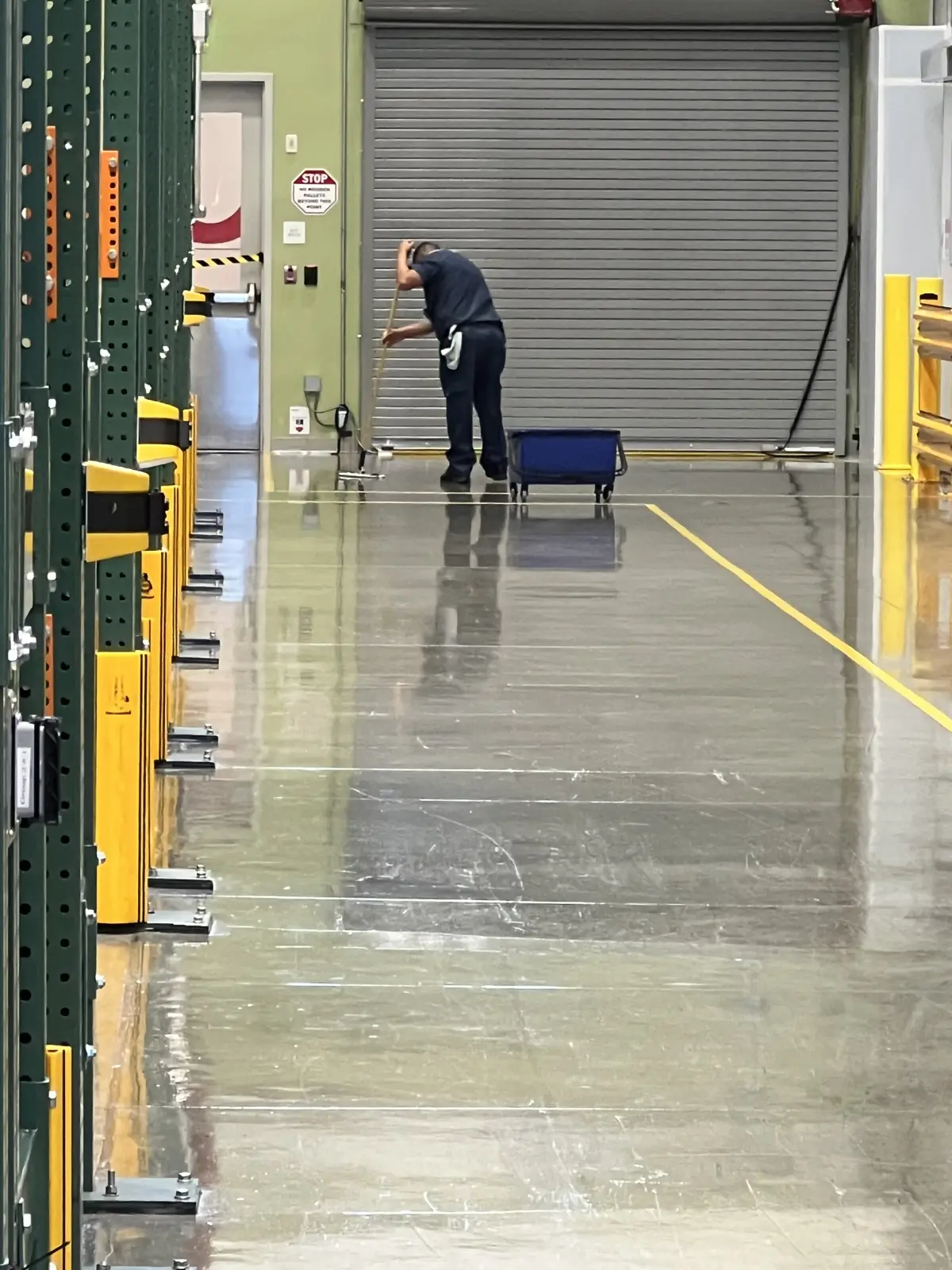
Deep floor work is usually not part of a regular night. Stripping, recoating, burnishing on a cycle and carpet extraction get scheduled as their own visits, often on weekends. That is covered under floor care, not the nightly scope.
How is a plant shift different from an office shift?
The sequence is similar, but the constraints are not. In a plant, the crew cleans around production, not after it, unless the line is down. That means break rooms, locker rooms, restrooms and offices may be cleaned while the floor is still running, with production areas saved for a shutdown window.
Plants also bring rules an office doesn't. There may be PPE requirements, lockout areas the crew must never enter, chemical restrictions near product, and forklift traffic. A good crew learns these during onboarding and follows the site's direction on every one. If your site has a documented cleaning program, the night scope follows it.
What should be done before the crew leaves?
The last half hour is quality control and lock-up. The lead walks the zones, checks restrooms one more time, and confirms lights, doors and alarms are set per the building's procedure.
Then the notes get written. A useful shift log records what was done, anything skipped and why, supplies running low, and maintenance issues found. "Men's room sink on 2 is leaking at the trap" is useful. "All done" is not.
What should you see the next morning?
Empty bins, stocked restrooms, clean floors and no surprises. If something was missed, you should hear about it from the crew's notes before you find it yourself.
If mornings regularly bring complaints, look at the scope and the sequence before you blame the people. Often the shift is too short for the building, or the crew is spending time on tasks that belong on a weekly or monthly cycle. If you are weighing a different coverage model, our guide on day porter vs night janitorial walks through when each one fits.
Where Nexara fits
We run night crews for offices, plants and warehouses across the Inland Empire and Southern California, built on a written scope and a shift log you can read. If you want to know what your night crew is actually doing, request a walkthrough and we'll walk the building with you. More on our janitorial services.
Questions we get asked.
What time does a night cleaning crew usually start?
Most office crews start after the building empties, often early evening. In plants that run more than one shift, the crew is scheduled around production, which can mean second shift, third shift or a weekend window.
What does a night crew not do on a normal shift?
Periodic work like carpet extraction, floor stripping, window cleaning and high dusting is usually scheduled separately. A nightly crew handles the recurring scope: trash, restrooms, surfaces and routine floor care.
How do I know the night crew actually did the work?
Ask for a written scope, a shift log or checklist, and regular inspections. Most good programs also give you a named contact who reads the notes and answers for misses the next day.